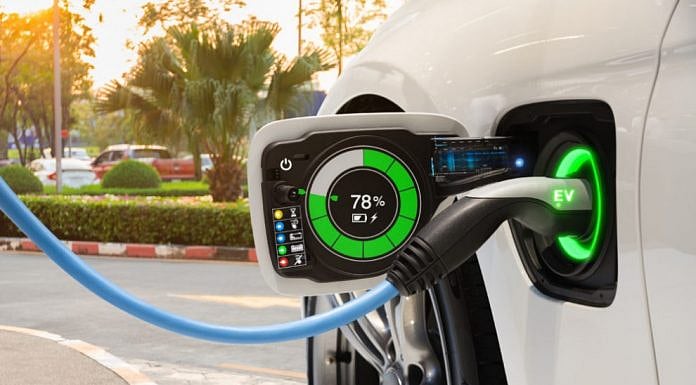
India has come a long way in transforming its roads to electric. Currently the fifth largest automotive industry in the world, the country is poised to become the third-largest by 2030. It also offers an opportunity to the world to focus on a largely untapped market which is advancing to a future that is electric.
Understanding the vast opportunities and benefits of electric vehicles, the Indian Government in recent years has taken commendable and encouraging steps to develop and strengthen this ecosystem. India today is one of those countries which proudly supports the EV 30@30 Campaign, aimed at realizing the benefits of electric mobility for innovation, economic, industrial development, energy security, and reduction of local air pollution by reaching 30 percent sales share for EVs by 2030.
The Finance Minister of India, Nirmala Sitharaman, will table the Union Budget 2022 on February 1, and we expect that this will lay the foundation stone of developing a robust EV ecosystem in the country to achieve our sustainable development goals and position India as a global EV leader.
The EV sector in the country scaled new heights recently with 100 percent FDI, new manufacturing hubs, better charging infrastructure, battery manufacturing, subsidies, favourable policies and incentives. The Union Cabinet also paved the way for a production-linked incentive scheme to boost the manufacturing of electric vehicles and hydrogen fuel cell vehicles.
The EV market in India, as per an independent study by CEEW Centre for Energy Finance (CEEW-CEF), will be a $206 billion opportunity by 2030. A shift towards clean mobility is surely a much-needed step here and for this, along with rationalization of taxation policies, this year we expect more announcements of schemes, policies and moves such as the Faster Adoption and Manufacturing of Hybrid and Electric Vehicles in India (FAME) II scheme to make electric vehicles affordable and develop EV infrastructure in the country.
As per reports, under the phase II of this scheme, over 1.6 lakh electric vehicles have been supported by way of demand incentive amounting to about Rs 5.64 billion ($75.16 million). The government under this scheme has also granted approvals for 6,315 electrical buses, 2,877 EV charging stations amounting to Rs 5 billion ($66.63 million) in 68 cities across 25 states/Union Territories and 1,576 charging stations amounting to Rs 1.08 billion ($14.39 million) across nine expressways and 16 highways. We expect that the government will continue to boost such initiatives to develop a robust charging infrastructure across the country that will go a long way in broadening the scope of opportunities.
This year, we expect announcements that will address the existing challenges such as reduced criteria in PLI to support young companies; push to nationalized banks for financing of EVs; and a small budget for standing guarantor for young OEM vehicle financing. We also expect rationalization of taxation policies e.g., the government should encourage EV buyers by extending FAME- II beyond 2024 (until battery manufacturing is indigenized at commercial scale) and giving them additional reliefs or benefits on purchase like those given to 2-wheelers.
Retrofit conversion of fossil-fuel vehicles to EVs will be an important step towards reducing vehicular pollution on the road. Though the Scrappage Policy did not mention anything about retrofits, we expect the extension of FAME-II benefits for retrofits, i.e., offering a subsidy on the battery pack and conversion kits used in the retrofits.
Today, there is also a strict need to pump investments in infrastructure building and an efficient regulatory approval mechanism will also benefit the sector. Moreover, tax reliefs on EV charging-as-a-service will motivate charging point operators to set up businesses and tackle the issue of lack of availability of charging points practically and easily. There is also a need to be more liberal with infrastructure spending and subsidizing services in residential areas for better EV penetration in the country.
We also expect major announcements in the Budget to make Bharat completely Atmanirbhar in terms of battery manufacturing. After the PLI, we expect the government will make announcements and will allocate funds for research and development in PPP mode to manufacture batteries which are best suited for Indian conditions.
With large-scale internet penetration, e-commerce and logistics services have boomed in the country, leading to a surge in demand for last-mile delivery vehicles. The big e-commerce players in India are now revamping their approach to adopt sustainable and responsible delivery models to reach their customers and many of them have set a target of introducing electric vehicles in their logistics and delivery network.
There is an increased awareness and interest in having sustainable modes of transport as several cities continue to face higher pollution levels than ever before.
We expect the Budget 2022 will focus on giving incentives to businesses who adopt EVs for last-mile delivery operations and will also make announcements on creating robust manufacturing capabilities to cater to the rising demand across the country.
Also, the EV ecosystem in India is still in a nascent stage and there is a need to train a large part of the workforce in manufacturing and after-sales services. There is a need to focus on large upskilling schemes and programs to make the workforce ready to work in this growing industry.
We expect the Budget will announce funds to Skill India and also on reskilling the workforce as per the technology demands. India’s sustainable goals cannot be achieved without large public participation and there is a dire need to engage the consumers in this EV movement for a sustainable future.
We expect Budget 2022 will announce incentives to encourage the buyers who go for EV options over the conventional IC engines. The availability of good subsidy schemes can act as a catalyst to fast pace purchase decisions and encourage customers. Like LED and rooftop solar campaigns, there is also a need for mass public programs and schemes to raise awareness, influence customer behaviors and encourage buyers to adopt electric mobility for a better future and greener India.
(The writer is Founder & CEO, Altigreen Propulsion Labs-Bengaluru-based startup)

