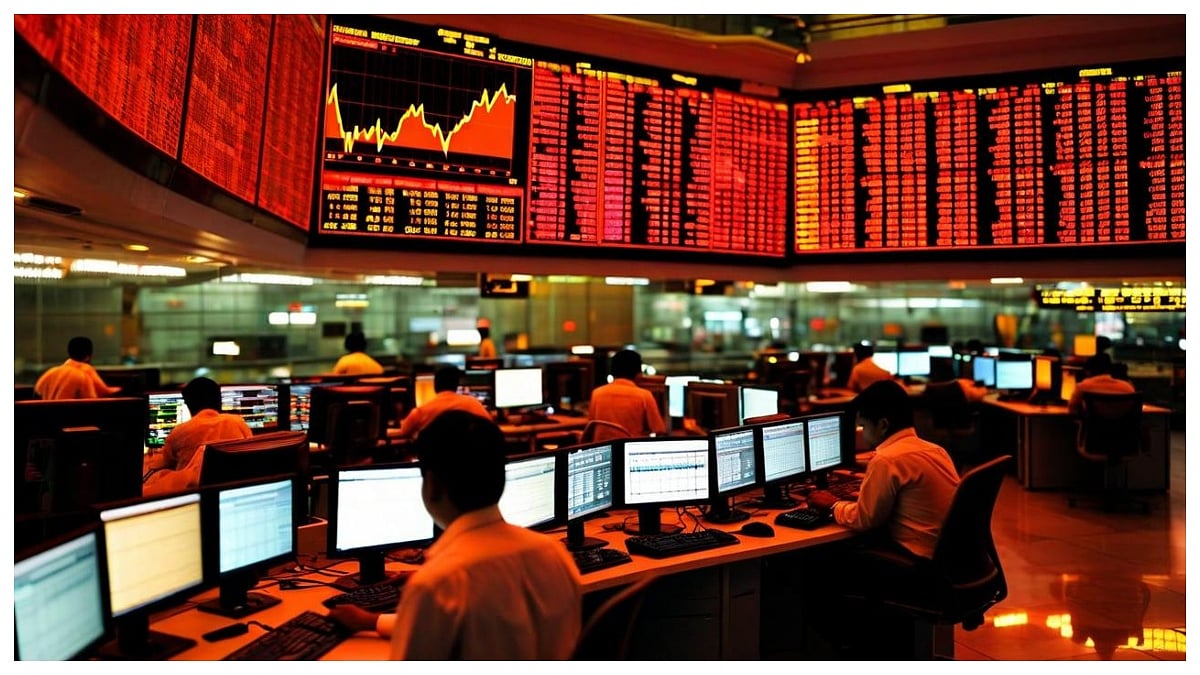
Shares of major banks and non-banking financial companies came under pressure on September 24 after the Insurance Regulatory and Development Authority of India (IRDAI) proposed tighter regulations on insurance products sold along with loan offerings.
Financial institutions that earn sizeable fee income from credit-life insurance and bancassurance channels witnessed selling pressure following the regulator’s consultation paper titled Recalibrating Economics of Insurance Distribution.
Banks and NBFCs face pressure over insurance revenue
Among non-bank lenders, L&T Finance recorded the sharpest decline, falling 3.8% to ₹310.70. Private sector banks also declined, with Axis Bank losing 2.1% to ₹1,244.60 and HDFC Bank falling 1.9% to ₹1,710.50. Kotak Mahindra Bank dropped 1.4%, Bank of Baroda declined 1.2%, while State Bank of India slipped 0.5%.

The proposed framework aims to prevent borrowers from being compelled to buy insurance policies while taking loans such as home, auto, microfinance and personal loans.
Under the draft rules, banks and NBFCs acting as insurance distributors will not be allowed to make insurance purchase a condition for loan approval. Lenders will also have to provide customers with clear comparisons of loan costs with and without optional insurance coverage.
The regulator has proposed restrictions on sales incentives linked to insurance targets, including cash rewards, foreign trips and volume-based contests.
Commission caps may impact bancassurance income
The draft framework also proposes reducing commissions earned by lenders on loan-linked insurance policies. First-year commissions on term insurance policies distributed with loans would be capped at 2% to 2.5%, compared with much higher payouts currently earned in some segments.
Motor insurance commissions through bank channels would also face limits, with own-damage policies capped at 5% and third-party cover receiving no commission.
Analysts said private banks with significant bancassurance income could face greater pressure on fee earnings. Axis Bank and HDFC Bank have higher exposure, while lenders such as State Bank of India and ICICI Bank are expected to see relatively lower impact due to limited dependence on insurance distribution revenue.

