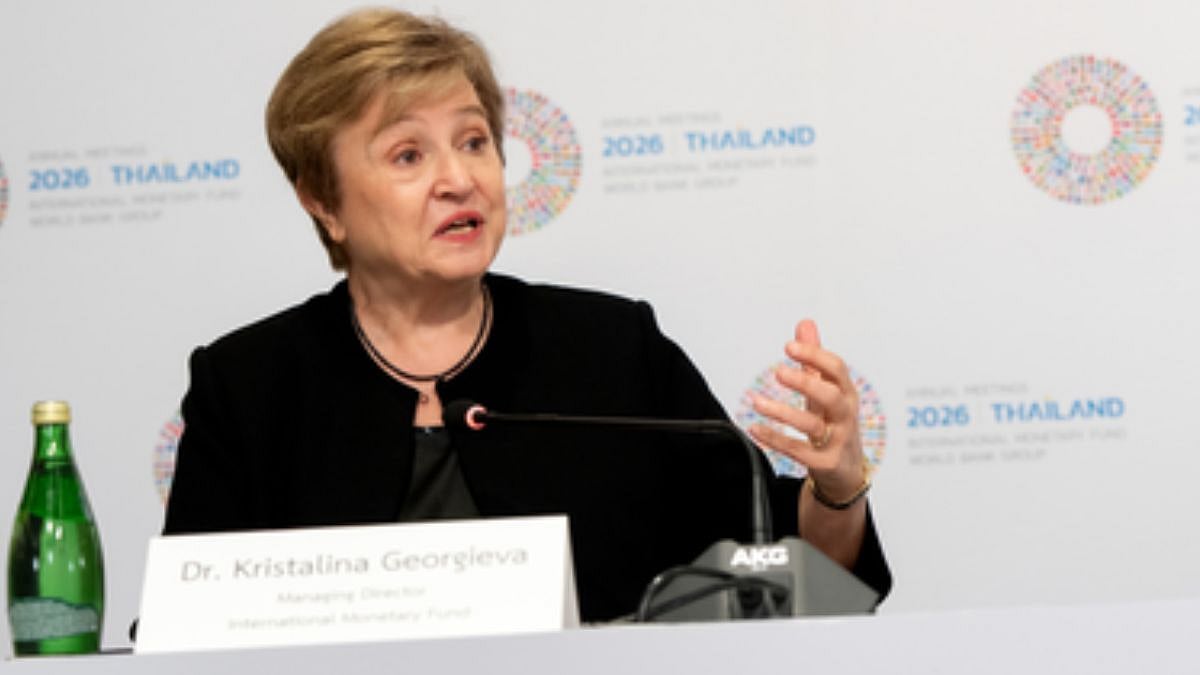
New Delhi, March 5: Policymakers and businesses in Asia must remain agile and financially strong as the world faces more frequent and unpredictable shocks, Kristalina Georgieva, Managing Director of the International Monetary Fund, said on Thursday.
Speaking at a conference in Bangkok, Georgieva said the global economy is entering a period of constant uncertainty where countries need to be ready for new challenges that can emerge at any time.
Call to strengthen domestic economies
She stressed that governments should focus on strengthening their own economies instead of worrying about factors beyond their control.
“The world is currently witnessing major transformations in technology, demographics, trade and geopolitics,” Georgieva noted.
“These changes, combined with repeated global shocks, are creating a more uncertain economic environment,” she added.
Middle East conflict raises concerns
She also referred to the latest conflict in the Middle East, which she said could affect global economic stability if it continues for a longer period.
“A prolonged conflict may influence global energy prices, market sentiment, economic growth and inflation, while creating additional pressure on policymakers around the world,” she stated.
For many Asian economies, energy security remains a major concern, she said, adding that recent developments have already caused volatility in stock markets across the region.
“A quick resolution to the conflict would be beneficial for the global economy,” Georgieva said.
Asia’s economic progress and future focus
At the same time, she pointed out that Asia has achieved remarkable economic progress over the past 25 years.
“Since the early 2000s, when several countries in the region were recovering from financial crises, Asia has strengthened financial sector oversight, built stronger reserves and improved economic stability,” Georgieva explained.
Looking ahead, the IMF chief said Asian countries must focus on improving productivity and competitiveness, particularly by making better use of new technologies such as Artificial Intelligence.
“Harnessing the benefits of AI will require large investments in digital infrastructure, internet connectivity and skill development,” she added.
Also Watch:

Need for strong policy support
Georgieva also emphasised the need for strong policies that encourage innovation, remove regulatory barriers and strengthen financial markets to support private investment.
“Putting proper safeguards around AI will also be important as the technology spreads across economies,” she said.
(Disclaimer: Except for the headline, this article has not been edited by FPJ's editorial team and is auto-generated from an agency feed.)

