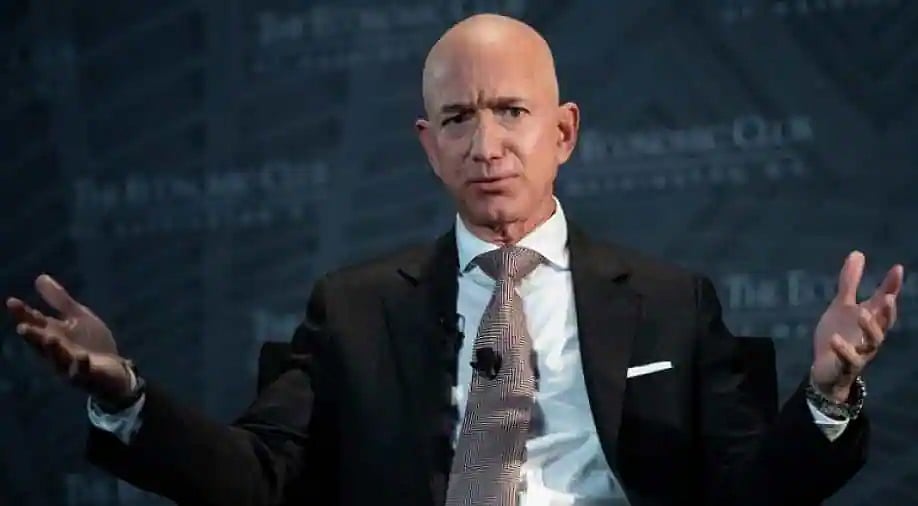
In a tweet posted Monday evening, Amazon founder and executive chairman Jeff Bezos questioned the possibility of Chinese influence on Twitter after fellow billionaire and Tesla CEO Elon Musk’s recent purchase of Twitter.
Bezos responded to a tweet by New York Times reporter Mike Forsythe outlining links between Musk and China.
“Tesla’s second-biggest market in 2021 was China (after the US),” the tweet read, noting that “Chinese battery makers are major suppliers for Tesla’s EVs” and that “After 2009, when China banned Twitter, the government there had almost no leverage over the platform.”
“That may have just changed,” wrote Forsythe.
Bezos, who also owns The Washington Post, quote-tweeted the message, writing, “Interesting question. Did the Chinese government just gain a bit of leverage over the town square?”
Musk reached an agreement with Twitter earlier Monday to buy the platform for $44 billion.
Under the post, however, Bezos conveyed his skepticism, musing further on the role China will have to play in both Tesla and Twitter. "My own answer to this question is probably not. The more likely outcome in this regard is complexity in China for Tesla, rather than censorship at Twitter," said the world's number-two billionaire.
"But we'll see. Musk is extremely good at navigating this kind of complexity," added Bezos, giving a quick nod to Musk, with whom he has shared a legendary public rivalry on Twitter. The Musk-Bezos feud is particularly memorable for when Musk tweeted a 'second place' medal in response to Bezos after the Amazon founder hailed the company's global success.
Bezos is far from the only person with questions, comments, and criticisms over Elon Musk buying Twitter. However, unlike most, he owns The Washington Post and has a net worth ($177.5 billion); vaguely within Musk’s range ($264.6 billion).
Bezos’ commentary on Tesla’s relationship with China is peculiar given a Reuters investigation in December that found Amazon had capitulated to demands from China to continue doing business and grow the company there.
And in 2019, the Washington Post – which Bezos bought in 2013 – included an eight-page "advertising supplement" touting the achievements and talking points of the Chinese government in a section that was off-limits to the paper’s editors.
Bezos stepped down as Amazon’s chief executive last summer after nearly 27 years with the company and transitioned to executive chairman of the company.
Bezos and Musk have traded barbs over the years, taking shots at each other’s companies. Earlier this month, Musk quipped on Twitter that the Washington Post was "always good for a laugh," in response to an op-ed titled: "Elon Musk’s Twitter Investment Could Be Bad News for Free Speech."
“Free speech is the bedrock of a functioning democracy, and Twitter is the digital town square where matters vital to the future of humanity are debated,” Musk wrote in a statement about his purchase.
“I also want to make Twitter better than ever by enhancing the product with new features, making the algorithms open source to increase trust, defeating the spam bots, and authenticating all humans. Twitter has tremendous potential — I look forward to working with the company and the community of users to unlock it.”


