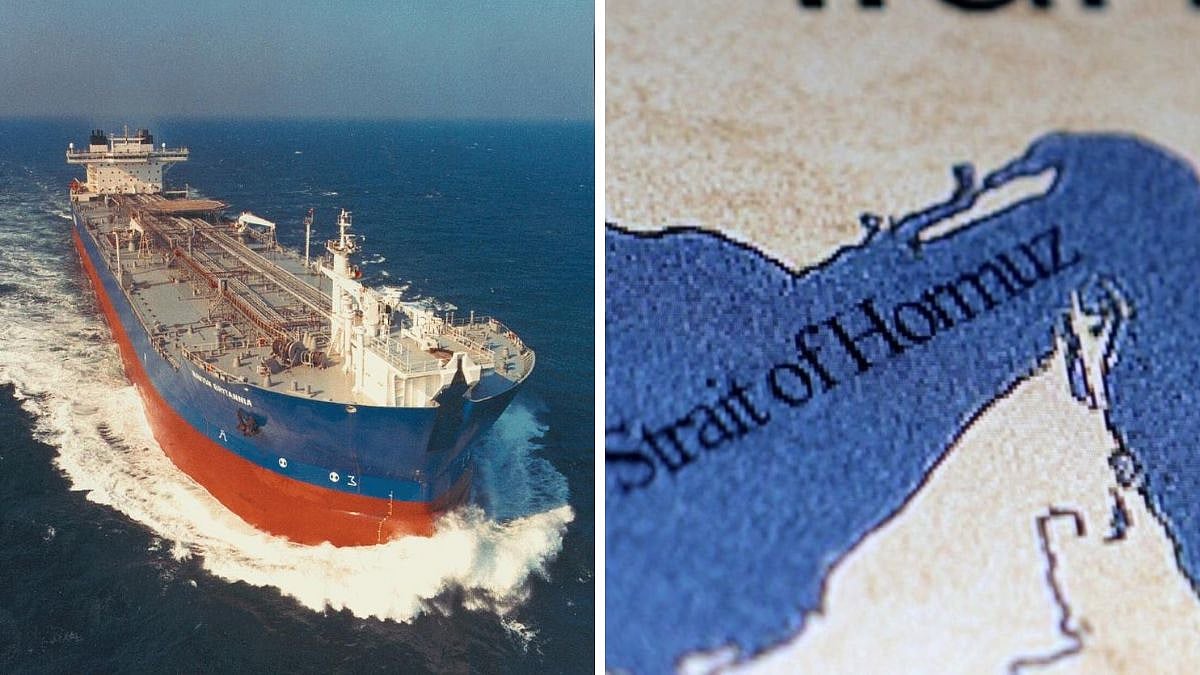
Around 80 million barrels of crude oil are currently waiting at the entrance of the Persian Gulf, ready to move through the Strait of Hormuz if ongoing diplomatic efforts between the United States and Iran lead to a sustained reopening of the critical energy route.
The data, compiled by Vortexa and reported by Bloomberg, indicates that approximately 40 very large crude carriers (VLCCs) carrying non-sanctioned Gulf oil are currently stationed inside the Persian Gulf.
This estimate does not include Iranian shipments or smaller vessels, suggesting that the actual volume of oil waiting to pass through the strait could be significantly higher.
The buildup highlights the strategic importance of the waterway, which handles a large share of global seaborne crude exports, particularly from Gulf nations to Asian markets.
Before disruptions to shipping, around 15 million barrels per day of crude moved through the Strait of Hormuz.
Markets are now closely monitoring whether a tentative US–Iran understanding to restore maritime passage can translate into sustained energy flows.

According to Bloomberg, 21 VLCCs are currently en route toward Asia, including five headed for China.
Another set of vessels is moving toward ship-to-ship transfer hubs near Malaysia and Singapore, while at least three tankers are approaching the strait at normal speeds.
Oil tankers are expected to be among the first vessels to test the reopening route due to the urgency of deliveries to refineries.
However, uncertainty persists. Shipping group BIMCO has warned that security risks remain despite diplomatic progress.
Signs of cautious confidence are also emerging from the UAE. Abu Dhabi National Oil Co. (ADNOC) has instructed customers to resume crude lifting from its export terminals at Das and Zirku islands.
The company has also warned that failure to collect shipments may violate contracts and offered vessel support if needed.
If the Strait of Hormuz reopens fully, tens of millions of barrels currently stranded in the Gulf could move to global markets, potentially easing supply shortages and reducing volatility in oil prices.

