For years, agencies quietly operated on an unspoken equation.
A small percentage of work won awards.
Another layer created cultural relevance.
And the majority of business came from execution — production, adaptation, optimisation, delivery.
That model built modern advertising.
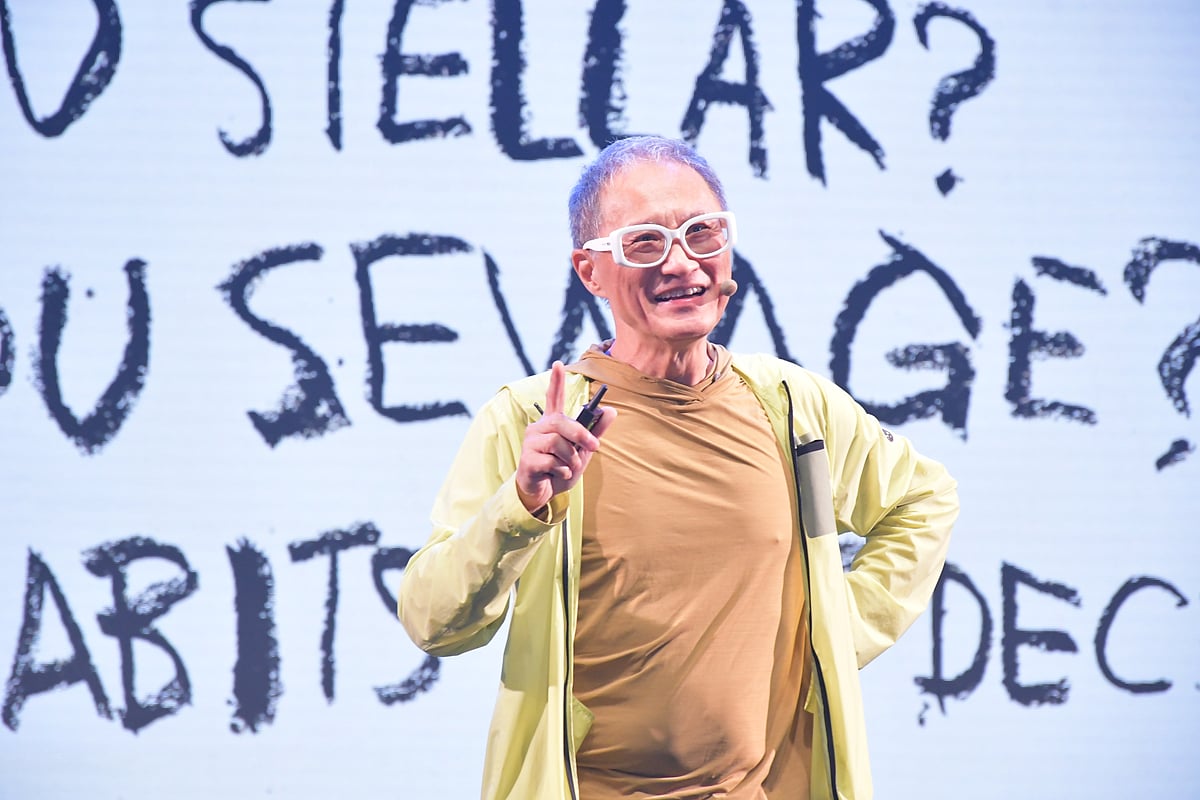
At Goafest 2026, Eugene Cheong’s keynote, “Resetting for Growth: Why Bravery Is the Only Real Strategy”, was a reminder that advertising’s greatest advantage was never efficiency. It was courage.
Cheong challenged one of the industry’s most comfortable assumptions: that growth comes from becoming larger, faster and more optimised.
Because increasingly, those are becoming machine advantages.
AI is accelerating production. Automation is removing repetitive tasks. Clients are building in-house capabilities. The execution-heavy work that agencies once depended on for stability is shrinking.
And according to Cheong, that changes everything.
He described the traditional agency structure almost like a pyramid: around 10% breakthrough global work, 20% culturally meaningful local creativity, and 70% operational execution.
That 70% is disappearing.
Not because creativity is dying.
Because execution is becoming abundant.
Which means the future value of agencies will increasingly sit in the top layer — the work that cannot be automated.
Original thinking. Creative judgement. Strategic imagination. Taste.
This creates an uncomfortable reality.
Average agencies become vulnerable first.
Because AI does not compete with exceptional work. It competes with predictable work.
The more organisations optimise for consensus, approvals and process, the more they unintentionally produce outputs that are easier to replicate.
Cheong argued that bureaucracy has become one of creativity’s biggest threats.
Large systems often flatten ideas. Multiple approval layers remove edges. Safe decisions become default decisions.
Eventually everyone agrees.
And nobody remembers.
His response was not to reject scale but to protect the behaviours that make creativity possible.
Curiosity.
Playfulness.
Idealism.
Intuition.
Authenticity.
Persistence.
Courage.
Not personality traits.
Creative disciplines.
His idea of the future agency was simple: become a “big little agency” — large enough to deliver, small enough to stay hungry.

