Every few years, a familiar narrative emerges across boardrooms and marketing conferences: the consumer has changed.
New technologies, digital platforms, economic uncertainty, and shifting social behaviours are often presented as plain-as-day evidence that people think and act in fundamentally different ways than before.
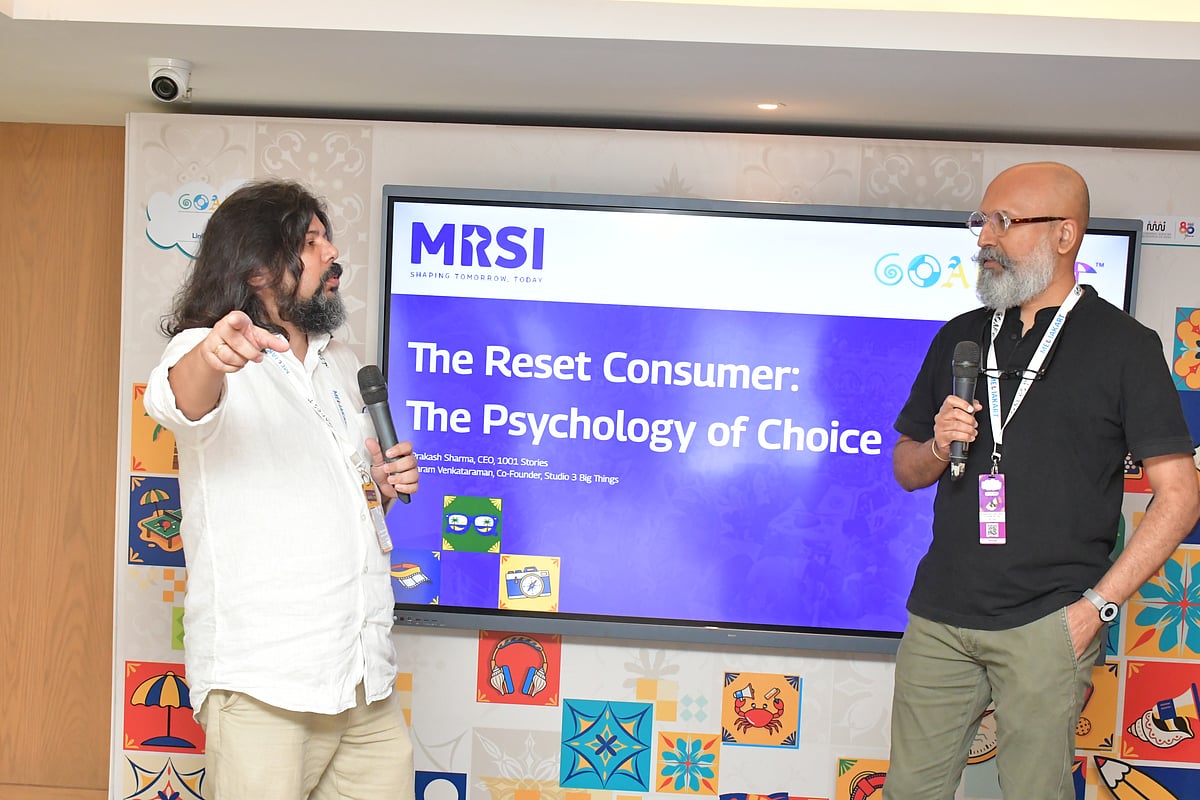
At the MRSI masterclass “The Reset Consumer: Understanding the New Psychology of Choice”, speakers Param Venkataraman and Prakash Sharma argued that while the world around consumers has transformed dramatically, the underlying drivers of human behaviour remain remarkably consistent.
People still seek safety. They still fear loss. They still aspire for progress, crave social acceptance, and look for reassurance when faced with uncertainty.
One of the session’s strongest insights was the idea of the “false dilemma” — situations where consumers are presented with choices that feel difficult, risky, or unsatisfying. In such moments, consumers often delay action, seek validation, or avoid deciding altogether.
This behaviour is not irrational. It is deeply human.
Consumers rarely evaluate every option objectively. But they look for signals that make their actions feel safer.
The session introduced an important shift in thinking: consumers are not always asking for more information — they are asking for more confidence.
The consumer has not changed.
But the way you present a choice can.

