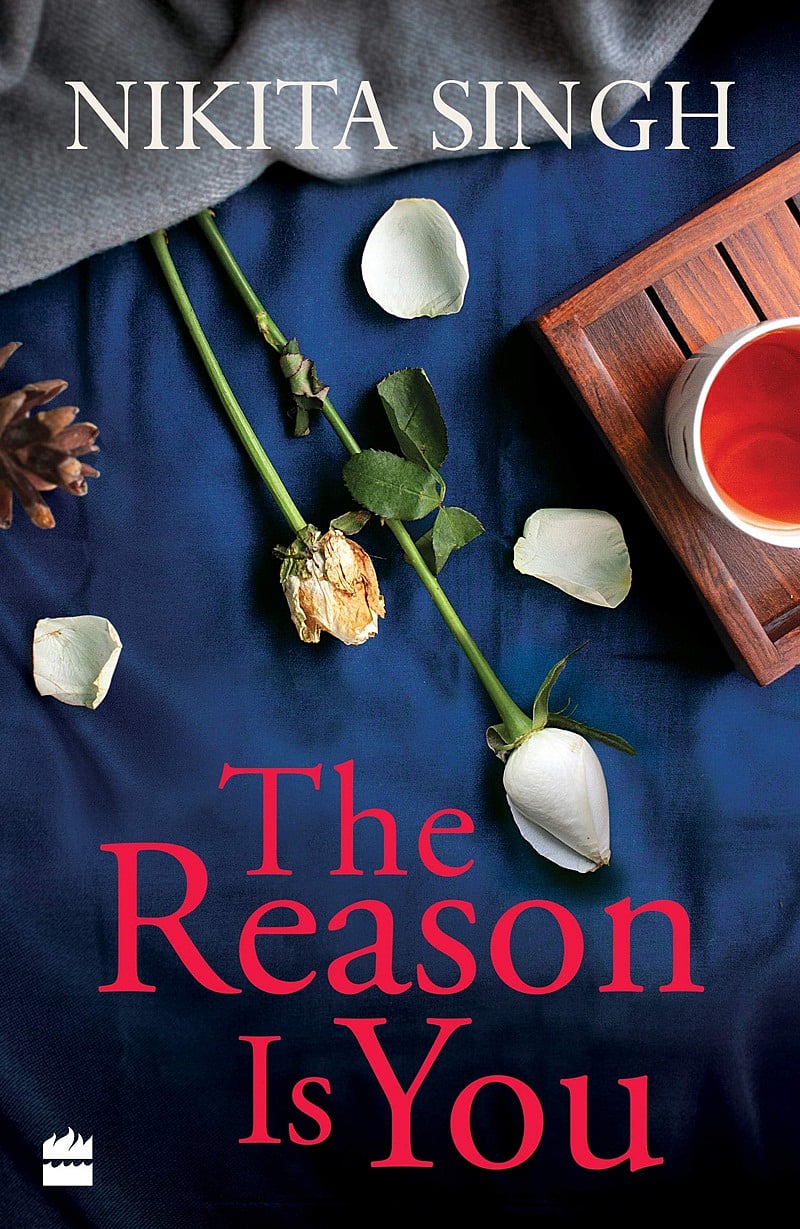
Book: The Reason Is You
Author: Nikita Singh
Publisher: Harper Collins
Pages: 236;
Price: Rs 199
After making her debut with Like A Love Song Nikita Singh takes the readers into an utterly chaotic and disarrayed world. Her second novel The Reason Is You which can be partly categorised a sequel to her first novel Like A Love Song, is a comprehensive study of a suffocating and dysfunctional relationship between Siddhant and Akriti.
The novelist deftly depicts the psychological mayhem and upheaval that play havoc with the normalcy of life. Undoubtedly, writers are the mouthpieces of an age they live in and their works subtly mirror the various sides of their society. Similarly, depression is also one of the seamy sides of our highly competitive and materialistic world which has taken a heavy toll on our holistic health.
In this book, the bereaved daughter Akriti falls in the quagmire of depression which deteriorates with the passage of time and makes her life a veritable hell. The readers develop their sympathies for the victim but they are more agitated at the predicament of her chief caretaker Siddhant. Undeniably, Siddhant is a loyal friend to Akriti. He leaves no stone unturned to drag her out of the bottomless pit of despondency. In fact, we view him as a sacrificial goat who sacrifices his personal happiness at the altar of friendship. It seems that the author has wittingly chosen the efficient surgeons from AIMS as her primary characters and one of them (Akriti) battles depression.
Irrefutably, dealing with depression is really an uphill task, but equally difficult is to deal with a depressed one. In the process of restoring the mental equanimity of Akriti, Siddhant himself begins to go off balance. Deeply drowned in her own sorrows, Akriti fails to realise that Siddhant too has a life. He is not a mere punching bag on whom she can unleash her pent-up frustration as per her convenience. Finally, Siddhant cuts the Gordian knot of this stifling relation when Akriti’s behaviour becomes life-threatening.
The novel is an apt subject for the critics who have a predilection for the psychoanalytical genre of literature. It meticulously explores the inner landscape of human beings. The inner conflict raging in the subterranean recesses of mind is always more perilous than the outer conflict.
Dwelling upon characters, Akriti appears excruciatingly exasperating whereas Siddhant’s beloved Mahi has a genial personality. Siddhant himself remains the alter ego of Akriti till he gains his freedom and individuality. Priyesh and Laila could have been better developed with more personal attributes. The language of the novel is easy to understand and narration has a free flow with no twists and turns.
By Shiv Sethi
