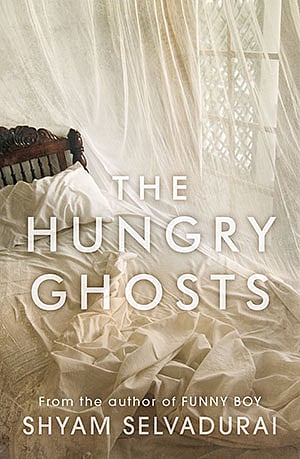
The Hungry Ghosts
Shyam Selvadurai
Penguin Viking
Pages: 371;
Price: Rs 599
A lush, complex novel of migration, sexuality, family and exile, The Hungry Ghosts brings to life the author’s native Sri Lanka and his adopted homeland Canada.
From the author of Funny Boy and Cinnamon Gardens comes the tale of Shivam Rassiah, his growing up years (at a time when tensions between the majority Sinhalese and minority Tamils were escalating) and his travelling between his native Sri Lanka and Canada. Shivam’s mother had married a Tamilian against the wishes of her mother but after her husband’s death due to financial constraints she is forced to return to her mother. She is initially not accepted by her mother but the ayah, who is wise in the ways of the world, knows that the grandmother’s heart will melt if she were to see her grandson (Shivam) and allow them to stay at her place. Things go as planned and Shivam’s grandmother accepts them.
In the first chapter, Shivam’s grandmother’s thoughtfulness and generosity shines through when he turns 13. As a birthday gift, she not only buys him an imported Raleigh 10-speed bicycle that he had been dropping hints about, but also the same colour and outfitted with an imported headlamp and pedals that glow in the dark. Later, when the sectarian violence seems like it might engulf them in view of his Tamil links, Shivam along with his mother and sister opts for fast-track immigration offered by Canada to Tamils who want to leave Sri Lanka. Even though hurt by their decision to leave her, Shivam’s grandmother even buys him a house in Canada.
But the family does not find any peace in Canada. In a used bookstore Shivam finds a pamphlet that offers gays an opportunity to connect with members of their community or help them in coming to terms with their sexual orientation. Shivam’s mother is forced to put up with an ignorant supervisor in the office who thinks “Third World people live in trees” and whose grammar and spelling are appalling. Such heartburn in the office extends to the home, angry evenings become routine, and they stop eating as a family.
Shivam has a complicated love-hate sort of relationship with his grandmother and even returns to Sri Lanka to meet her. Will his visit result in good? A common recurring theme in the book is that of karma whereby there is no escape from vile acts committed during one’s lifetime and the myth of Perethaya or hungry ghost. As per the myth, a person who during his life span desires too much or is greedy is condemned to live the life of a Perethaya – hence its small mouth and large insatiable appetite.
War-torn Sri Lanka of the 1980s and ’90s ensures mention of the role of the Indian Peace Keeping Force: “The Indian Peace Keeping Force, too, had met an ignoble death, becoming so unpopular that the old government had united with the Tigers to oust them from the country. The Indians had suffered a high number of casualties, but also stood accused of civilian massacres, disappearances and rapes”.
All the characters are well etched-out and even the brief portrayal of Shivam’s father shows him as a person who, due to circumstances, is unable to make a success of both his professional as well as personal life. Try as he might, even his efforts to win the affection of his wife or his children are in vain. The attractive hardbound cover entices, the book itself is well written and reveals the author’s eye for the minutest of details.
R SRINIVASAN

