Disquiet On The Kaveri
Rivers fascinate, whether they have nurtured civilisations or not. We have had poets singing their praises beyond the direct and obvious benefits of flowing water… from Tennyson’s Brook that literally goes on forever to Campbell’s Hohenlinden where the Iser rolls rapidly– having its dark waters turned into blood as it flowed passed the battle between Napoleonic and Austrian forces.
Also Read: The Assassination of Rajiv Gandhi
The Nile, the Tigris-Euphrates and the Indus (Sindhu) supported gigantic leaps in human communal living while Huánghé earned the reputation also as China’s Sorrow. The Mississippi was the subject in the 1927 musical (Show Boat) as it flowed unconcerned while the African-Americans struggled through their lives.
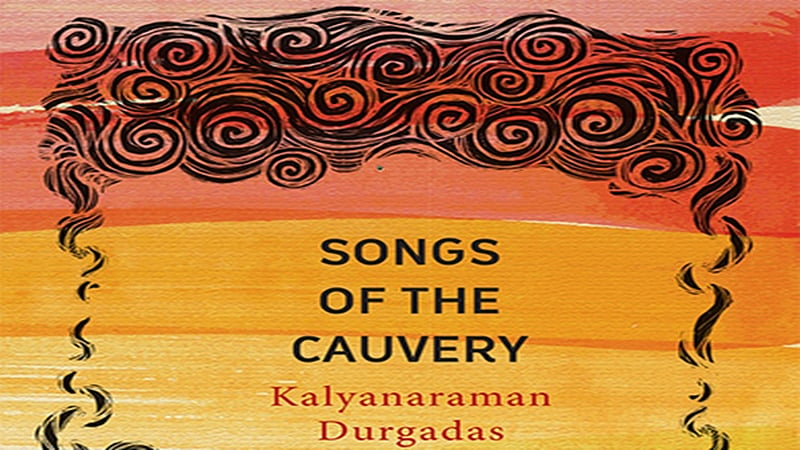
Robindro Shongeet had its own version on the Ganga……and amidst today’s tumult and arson over the sharing of its waters; the Kaveri comes lilting along with its songs – and a Story. After a near poetic eulogy of the river that rises in the Western Ghats and ends about 400 miles eastward in the Bay of Bengal, the tale commences with a woman’s suicide in Thiruvaiyuru (a town in the district of Tanjavur/Tanjore, Tamil Nadu) and ends in south India’s violent claim to a share in India’s freedom struggle.
The suicide is caused by the woman’s guilt over her father’s attempt at doctoring the horoscope at the time of her marriage; the original horoscope had indicated a short life for her husband; she decides to shorten her own so that he may live long. The violence at the end of the story… well, the telling of that would be a spoiler!
History and fiction mingle easily, thanks to the facile style of the author, although the Tamil names of people and places could keep your tongue in a state of physical fitness for quite some time. What effectively comes out of the story, however, is the strong traditional base of the region.
The customs at marriages and other important milestones in life strongly supported with beliefs that are as much based on the sacred scriptures as on local folklore; the rituals for conception (for instance) are performed with faith so fierce as to ignore several depressing signs to the contrary; and medical attention is obtained through ayurvedic preparations.
Quotes from the Upanishad and the Bhagwad Gita flow freely through the mouths of the protagonists with a familiarity born out of constant proximity. And these are put to good effect in creating the atmosphere of deep cultural foundations.
Also Read: Theatres of Democracy: Between the Epic and the Everyday
In this veritable fortress of Tamil-Brahmin society, there is revolt. The daughter, nurtured on Gibbons and Cicero, goes on to do her BA– the only girl in the college. The son trains himself for body building and wrestling (a distinctly un-Brahmin inclination), and later joins the freedom struggle.
His brawn comes in to good use in some sticky situations as the story progresses. Self-sacrifice, as mentioned in the Upanishad, and variously interpreted, becomes the central theme. There is a plausible set of references to relatives staying in Madras and working for the British government. Clear instances of the “natives” ingratiating themselves with the white man, even to the betrayal of one’s own kin, are narrated in a matter-of-fact manner; the background of some of the British civil servants – the riff-raff as much as the other kind- is brought out with just the adequate detail.
But, the author’s handling of the delicate situation of a catholic seminarian leaving his “vocation” is impressive; the dialogues with the church authorities, being set against the Tamil-Brahmin discourses that precede this situation, sound very authentic. So do the “meetings” with Sri Aurobindo Ghose and Subramania Bharati. The choice of the British spelling of the name of the river is not quite clear, though.
Overall the structure of the novel is one that sustains interest till the end. “Unputdownable” is hardly adequate to describe the compelling style that keeps the reader turning the pages… but climactic as the final violence (referred to earlier) is intended to be, the end is rather disappointing.
The entire narrative that moves at a measured pace in the simple past tense, suddenly shifts to the present tense for handling the climax- in keeping with the fast pace of events over a few minutes. The transition, to say the least, is not very smooth.
Then the climax, such as it is, comes too close to the end to provide a suitable, satisfactory dénouement. As it stands, it looks like an attempt to quickly tie up the loose ends, a sort of “turn-over-and-go-to-sleep” where the satisfaction levels lie undefined. With that said, the story and the culture of the time between 1877 and 1911 that forms its backdrop are incredible for a first novel.
