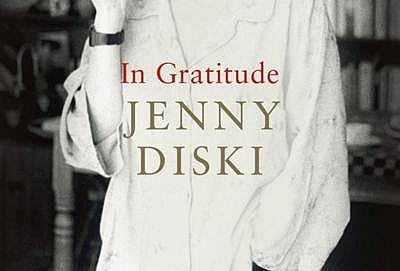
“In Gratitude”
by Jenny Dinski.
Published: 2016
ISBN No: 978-1-4088-7991-7
Pages: 250
Publisher: Bloomsbury
Price: 374(Paperback) £12.99
In Gratitude is Jenny Diski’s last deliberations on cancer and her relationship with the famous Nobel Prize recipient novelist, Doris Lessing. It is also a memoir of her life that starts with a troubled childhood, an unusual adolescence spent in and out of psychiatric wards, a fairy tale like luck; being adopted by Doris,negotiating a domestic relationship with Ian Pettreson (she addresses him as ‘The Poet’ in the book) and lastly her encounter with the “double death sentence” lung cancer and pulmonary fibrosis. Though a personal journey, the book opens the possibility of exploring the sociological conceptualization of medical knowledge and power and a number of ethical questions related to the notion of gratitude/ingratitude.
The book opens with a description of a feeling of “embarrassment” on being diagnosed with cancer. The disease much known in all its forms and its discussion seemed too clichéd and predictable. Yet, she feels compelled to write a cancer diary as every narration (of the experience) is different and because being a writer, it is the only choice she has of engaging with the world. With a predictable future of living through the procedures of cancer treatment, the diagnosis brings forth the memories of her troubled childhood and being “adopted”(not officially) by Doris Lessing.
The book is divided into three parts. The first part is a reflection of her complicated relationship with Lessing, the second part describes her struggles with medical power and practice and lastly, the third section in a deeply philosophical spirit explores death and contemplates on the eventual “nothingness” of life that paradoxically defines it. Primarily the book is an exploration of her negotiation with an impending death and a feeling of debt she ought to feel for her mother figure.

Since she had never been adopted, Diski struggled to give a proper name to their relationship. Diski had a difficult childhood, her parents had separated when she was small and both found it difficult to cope with her defiant behavior. Her father lived with his partner at Banbury. Fourteen years of age, she expelled from school for playing truant. She also found it difficult at work where she was a shop assistant, Diski then goes to Hove to live with her mother suffering from depression where she attempts suicide.
After spending a few months in a psychiatric unit, that seemed like a pleasant refuge from her parents. Diskimade plans to constructed her future there, when suddenly she received a letter from Lessing, offering to take her in. Lessing’s son Peter had been in the same class as her and it was he who had suggested the same. Disky describes her discomfort in her “new residence”, yet she knew that living with a writer was a rare opportunity(as she always wanted to be a one). The part describes her anxieties, guilt, rage, contarniess and confusion of being a recipient of a stranger’s generosity.
Yet, Lessing dint ask for gratitude, which was an addition to Diski’s perils as she felt anger and resentment with the burden of charity. After a few unpleasant encounters, their domestic relationship ended when Diski jumped out of the bedroom window to avoid Lessing and her friends. They continue to keep in touch inspite of the discomfort and tension in their relationship.
Their relationship is interesting as it provides an opportunity to explore the paradoxical nature of the virtue of gratitude(as explored by French Algerian thinker Jacques Derrida). Gratitude is an acknowledgement of a gift; a true gift by definition is unconditional, unrecognizable and unsigned. Thus, gratitude; a virtue that recognizes something as a gift, violates this. Yet, to not show gratitude is to reject the gift altogether.
This tension makes any discourse on gratitude impossible, but opens the possibility of negotiating an ethics not determined by power or desire. Disky and Lessing’s relationship is unique as it defined by this constant confrontation with the issue of gratitude/ ingratitude; the tension in their relationship is because of the impossibility of its resolution, making possible a truly ethical relationship.
The book is also a description of Diski’s experience of the sociological conceptualizations of medical power and knowledge.Power understood as a strategy to regulate the activities of people, depend on systems of knowledge and truths, the role of experts (such as doctors in this context) and their expertise is thus central. In the case of medicine, power is embodied in and comes with the daily rational and scientific practices associated with the work of doctors in the hospitals, whichFrench thinker Michel Foucault termed as the “clinical gaze”. This gaze is so internalized that the subject (the patient) becomes her/him own overseer, each individual exercises surveillance over and against herself/himself. The medical treatments thus exercise extreme power of disconnecting the subject from its own self. Her visits to the ‘Onc Doc’, oncology wards and radiotherapy departments well illustrate the oppressive nature of clinical gaze. Diski detests all talks of either pity or courage against the battle of cancer, she challenges the ‘docile body’ view of the patient, subject to the clinical gaze. Her detailed discussions of her cancer treatment procedures, interactions with doctors and clinic spaces(especially the description of the empty clinic aquarium in the radiotherapy department)illustrate ways in which the discourse may be resisted by patients. It is an examination of how medical discursive practice are negotiated by lay people in their avoidance of suffering and in maximizing their health status.
Deeply philosophical, the last part of the book has insights from the Sufi and Buddhist traditions. It is a contemplation of the notion of the eventuality of death and the meaning(or meaninglessness) it provides to everything that has been central to existence. From speculations about the possible reasons of being taken care of by Doris, to the role that writing has played in defining her (as well as providing her with a sense of purpose) to the encounter with the “finality”(death) of life that always seems unfair when it strikes, Disky book takes us into the journey of living the paradox of life, that is, understanding and experiencing it as preparation for death.
