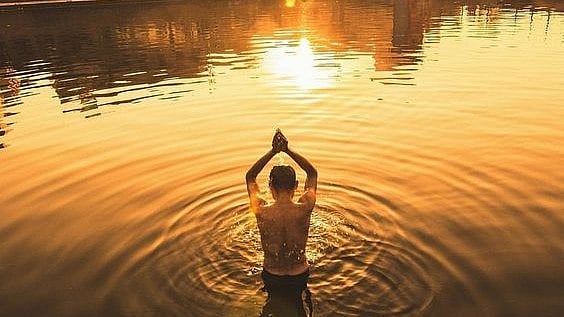
O Sun, the light of the universe, remove sickness of my heart, and the yellowness of my body with your radiant light
- Surya Suktam, The Rigveda
It is the second week of January, and winter is at its peak. Mornings are usually foggy. The sunlight is dull though delightful.
Yet, in terms of sunlight, Bhopal has an advantage over other cities, like Lucknow and Patna, where the sun remains cloaked in fog from the last week of December to the first week of January, making the days chillier and the nights wintrier.
It is, however, different in Bhopal, where winter is not as harsh as it is in any other cities of northern India and central India. It is blessed with sunshine in winter. So, the city offers comforts.
Though the temperatures go down at times, especially in the first week of January, the sun keeps the harshness of winter at bay, particularly during the daytime. The sun’s northward journey begins right after the winter solstice around December 21 or 22. As the sun heads towards the Tropic of Cancer, the days become longer in the Northern Hemisphere.
But this change becomes apparent on January 14, when the country celebrates Makar Sankranti.
The history of Madhya Pradesh breathes in the womb of antiquity. So, the state has been celebrating the day since time immemorial, like any other state across the country.
The day is celebrated to seek the blessings of the sun god for material and spiritual prosperity. There are many archaeological proofs in different parts of the state, indicating that sun worship prevailed across the state, spanning various historical periods.
The evidence of it has been found in Khajuraho, Madhkhera, Udayagiri, Sidhi, and Gwalior. The main deity in the 11th-century Chitragupta temple in Khajuraho, belonging to the Chandela period, is the sun, or Surya.
The icon is shown seated on a chariot drawn by seven horses. A British Indologist, John Faithful Fleet, documented three inscriptions about the Sun Temples in Madhya Pradesh. They are the Mandsaur inscription of the kings Kumaragupta and Bandhuvarman, the Skandagupta inscription of a Sun temple at Indrapur, and the Gwalior inscription of the Huna king Mihirkul. Another Sun temple, built by the Pratihara dynasty, was found at Madhkhera in the Tikamgarh district.
The smaller rock-cut sites like Deogarh village in Lalitpur district on the borders of MP and UP also reveal the antiquity of Sun worship. There is artistic diversity in the images found in different places in the country.
Similarly, the name of Udayagiri Mountain is associated with the rising sun. A lion capital found in one of the caves in Udayagiri is over 2,000 years old. It indicates Sun worship has been in vogue in the state since time immemorial.
An over 1,500-year-old Sun temple was found in Gwalior. A local king, Suraj Sen, built the temple to get rid of leprosy. This is also the day when the divine Ganga River arrived on earth, answering to the prayers of King Bhagirath. The Mahabharata says Bhisma Pitamah left his physical body on the day of Makar Sankranti.
There is another temple in the Sidhi district of the state, named Chandreh Temple, which stands near the confluence of the Son and Banas rivers. A sculpture of the sun god stands at the top of the temple.
The sun is synonymous with life on Earth. In 536 CE, when the sun remained cloaked in the dark clouds for over 18 months because of some volcanic eruptions, which released a huge amount of ash into the air, caused deaths, crop loss, a long winter, and famine. A handful of rice was sold for gold. The earth was on the verge of ruin. This was the time when the necessity of the sun was realised.
Historians differ from one another over whether it had any adverse impact on India, too. But the people of this country know the importance of the sun after the winter. So, they celebrate Makar Sankranti, worshipping the sun, or Aditya, seeking his blessings. The festival, known by different names in different places, began in the days of the Vedas. It also heralds the arrival of the new season.

