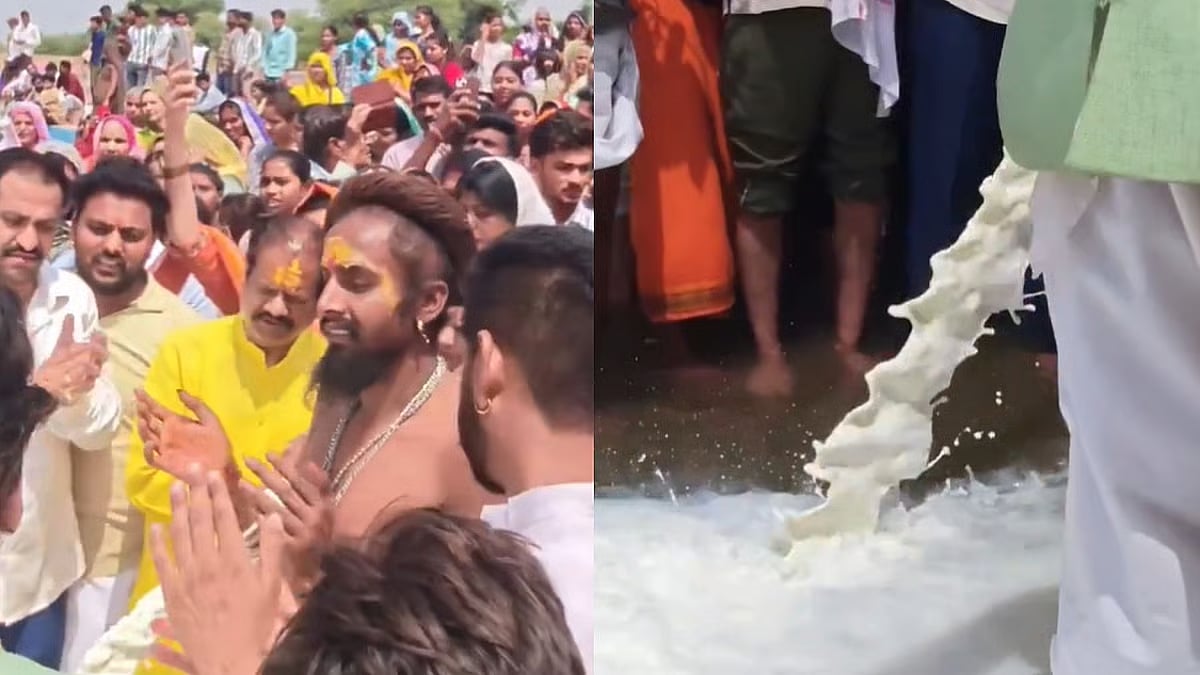
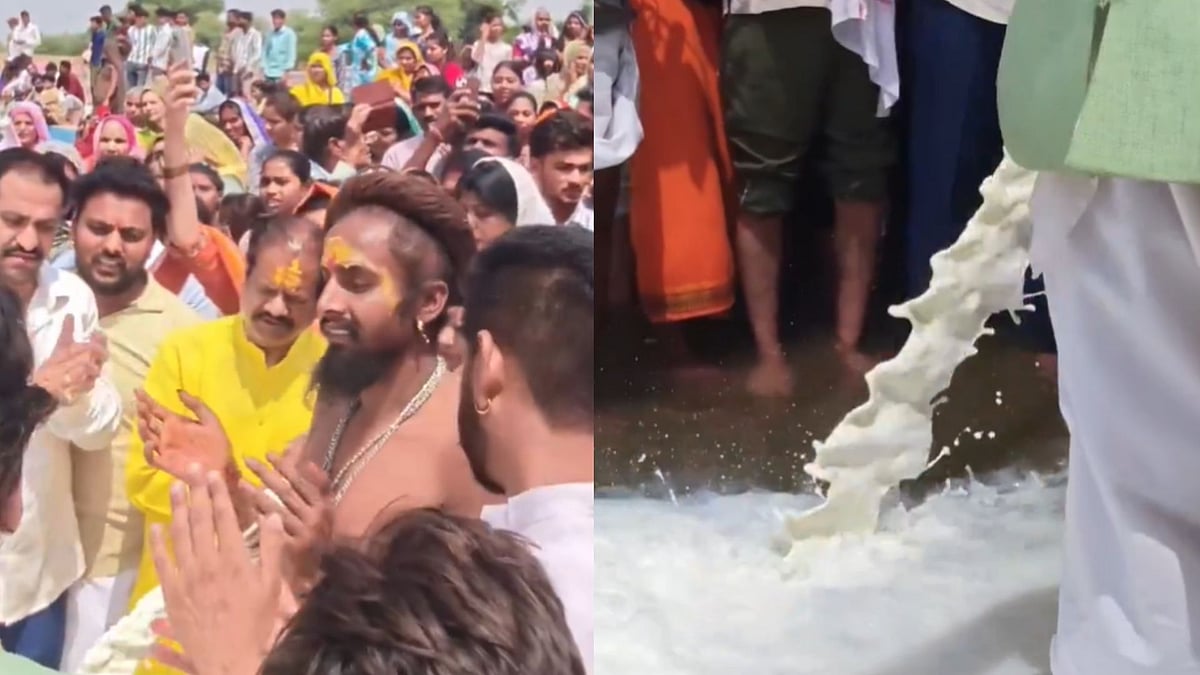
Sehore (Madhya Pradesh): The National Green Tribunal has sought a scientific report over the immersion of nearly 11,000 litres of milk and 210 sarees into the Narmada River during a religious event held in Madhya Pradesh’s Sehore district in April.
The next hearing in the case is scheduled for July 17. The pollution control boards have been directed to submit their report before the hearing.
The matter came up before the Central Zone Bench of the tribunal in Bhopal, where Justice Sheo Kumar Singh and Sudhir Kumar Chaturvedi heard a petition related to the incident.
According to the petition, a religious programme was organised in the villages of Satdev and Bherunda under Nasrullaganj tehsil in Sehore district. During the event, thousands of litres of milk and hundreds of sarees were immersed into the Narmada River as part of religious rituals.
The petition raised concerns over possible water pollution and its impact on aquatic life, irrigation and drinking water sources.
After hearing the matter, the tribunal directed the Central Pollution Control Board and the Madhya Pradesh Pollution Control Board to conduct a scientific study and submit a detailed report.
In its order, the NGT noted that no scientific evidence had yet been presented directly linking milk immersion to water pollution. However, the tribunal also pointed out that Section 24 of the Water (Prevention and Control of Pollution) Act, 1974 prohibits the discharge of polluting substances into water bodies.
The bench observed that organic substances like milk could increase the Biological Oxygen Demand (BOD) in water, which may negatively affect aquatic life.
The tribunal further said that the practice of pouring milk into rivers during religious rituals has become a matter of public and environmental concern and requires serious examination.
The NGT has asked the pollution control boards to study whether such activities are already covered under existing environmental guidelines, whether new rules are needed, and whether pouring milk into rivers during religious events causes pollution.