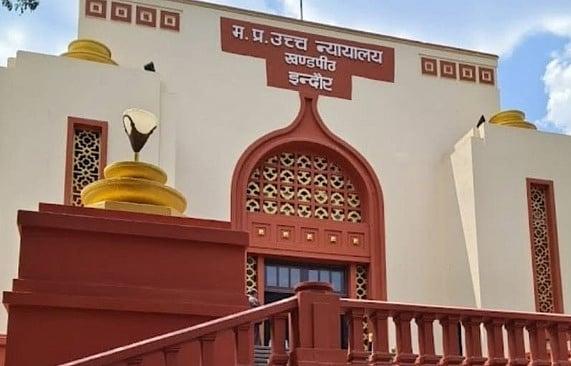
Indore (Madhya Pradesh): Terming the Bhagirathpura water contamination tragedy ‘a public health emergency’, Indore bench of Madhya Pradesh High Court on Tuesday held that the right to clean drinking water is an integral part of the right to life under Article 21 of the Constitution.
The court summoned the chief secretary to be present via video conferencing on January 15, the next date of hearing.
Hearing a bunch of writ petitions, including public interest litigations, relating to water contamination tragedy in Bhagirathpura (Ward No 11) and other parts of Indore, a division bench of Justice Vijay Kumar Shukla and Justice Alok Awasthi issued a series of immediate and preventive directions to the State government and Indore Municipal Corporation.
The petitions alleged that negligence, mismanagement, corruption and a lackadaisical approach by authorities led to the contamination, resulting in several casualties. The court recalled that on December 31, 2025, it had already directed the State and the IMC to ensure the supply of clean drinking water and provide the best possible medical treatment to affected persons.
However, petitioners argued that contaminated water was still being supplied and that affected residents were not receiving proper medical care. It was also pointed out that complaints about water quality had been made much before the incident, but were ignored.
Senior advocate Ajay Bagadia informed the court that despite a Mayor-in-Council decision in 2022 to lay new water pipelines, the work did not commence due to non-disbursement of funds by erring officials. He further cited a 2017–18 report of Madhya Pradesh Pollution Control Board in which 59 out of 60 water samples collected across Indore were found non-potable, yet no corrective action was taken.
During the hearing on Tuesday, the HC orally observed that the incident has brought disrepute to the city, which was once recognised as the cleanest city of the country and has attracted international attention for all the wrong reasons.
Statewide implications
Observing that water contamination is not confined to Indore alone, the HC directed the chief secretary to personally address the court via video conferencing on the next date of hearing. Chief secretary has been asked to inform the court about state-level measures being taken to prevent similar incidents across Madhya Pradesh.
The court also fixed responsibility on senior officials, including the Indore commissioner, district collector, municipal commissioner, health officer, chief medical and health officer, PHE chief engineer and joint director (urban development), to ensure strict compliance with interim directions before the next hearing.
Besides, the respondents have been directed to produce files related to tenders for fresh drinking water pipelines and the MPCB water quality reports of 2017–18.
Another woman allegedly dies of diarrhoea
Another woman from Bhagirathipura has allegedly died due to diarrhoea caused by contaminated water. However, the authorities are not treating the incident as a water-contamination-related death. Family members claimed that the woman, identified as Harkuwar Grairaiya, was suffering from diarrhoea and vomiting, which led to her death on January 1. They added that initially they did not realise that her condition was caused by consuming contaminated water.

Immediate and emergency directions
Supply safe drinking water through tankers or packaged water at government cost in affected areas
Stop the use of contaminated sources, including specific pipelines, overhead tanks, borewells and rivers
Organise health camps and medical screening for residents
Provide free treatment in government as well as empanelled private hospitals
Conduct water quality testing at multiple points through NABL-accredited laboratories
Repair or replace pipelines, especially where sewer and water lines run parallel
Implement chlorination and disinfection protocols
Install online water quality monitoring systems
Prepare a long-term water safety plan for Indore city

