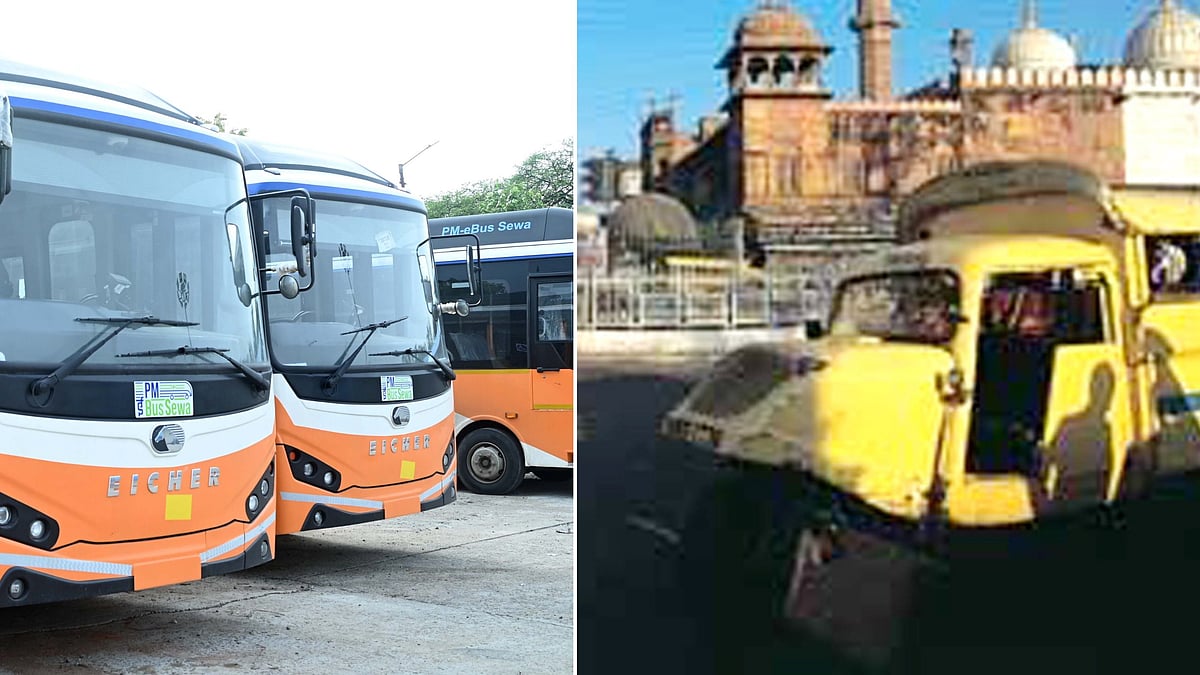
Bhopal (Madhya Pradesh): Bhopal's public transport system has undergone a rapid transformation over the past 25 years, from tampos (locally known as 'Bhat-Suar') three-wheelers to a fleet of 20 newly arrived modern electric buses.
Yet, the state capital is struggling to establish a reliable and sustainable public transport network.
Urban mobility experts attribute this to inconsistent planning, poor maintenance and the city's challenging hilly terrain, which have repeatedly undermined public transport initiatives.
Until the late 1990s, tangas (horse carts) were among the city's most common modes of transport. Around 2000, they gradually disappeared as motorised three-wheelers, tampos, and mini buses emerged as faster alternatives.
A major shift came in 2005 under the Centre's Jawaharlal Nehru National Urban Renewal Mission (JNNURM), when over 200 government-operated buses were introduced on 15 routes.
However, the buses proved unsuitable for Bhopal's narrow roads and suffered from poor maintenance, eventually forcing commuters back to privately operated mini buses.
To create an organised and affordable transport network, the Bhopal Municipal Corporation established Bhopal City Link Limited (BCLL), which began city bus operations in October 2006.
According to the Sustainable Urban Transport Index, 43% of daily trips in Bhopal are made on foot or by cycle, while two-wheelers account for 25%. Cars contribute just 3% of trips, underscoring the need for a robust public transport system.
Experts flag planning flaws; BRTS failed
Mobility expert and MANIT professor Rahul Tiwari said Bhopal's transport planning has largely favoured private vehicles over public mobility. "The city has road gradients of 12-15%, compared with 8-10% in most major cities, making public transport planning more challenging.
Unfortunately, development has prioritised private vehicles instead of sustainable mobility," he said.
He also criticised the widening of urban roads without creating adequate space for pedestrians, cyclists and green areas. Bhopal's 24-km Bus Rapid Transit System (BRTS), launched in 2013, was dismantled in 2025, becoming the first BRTS corridor in India to be removed.
Tiwari said less than 20% of the actual BRTS model was implemented, resulting in poor passenger acceptance.
Electric buses to redefine city transport
Bhopal is now preparing for another major transition with the rollout of electric buses under the PM e-Bus Sewa initiative.
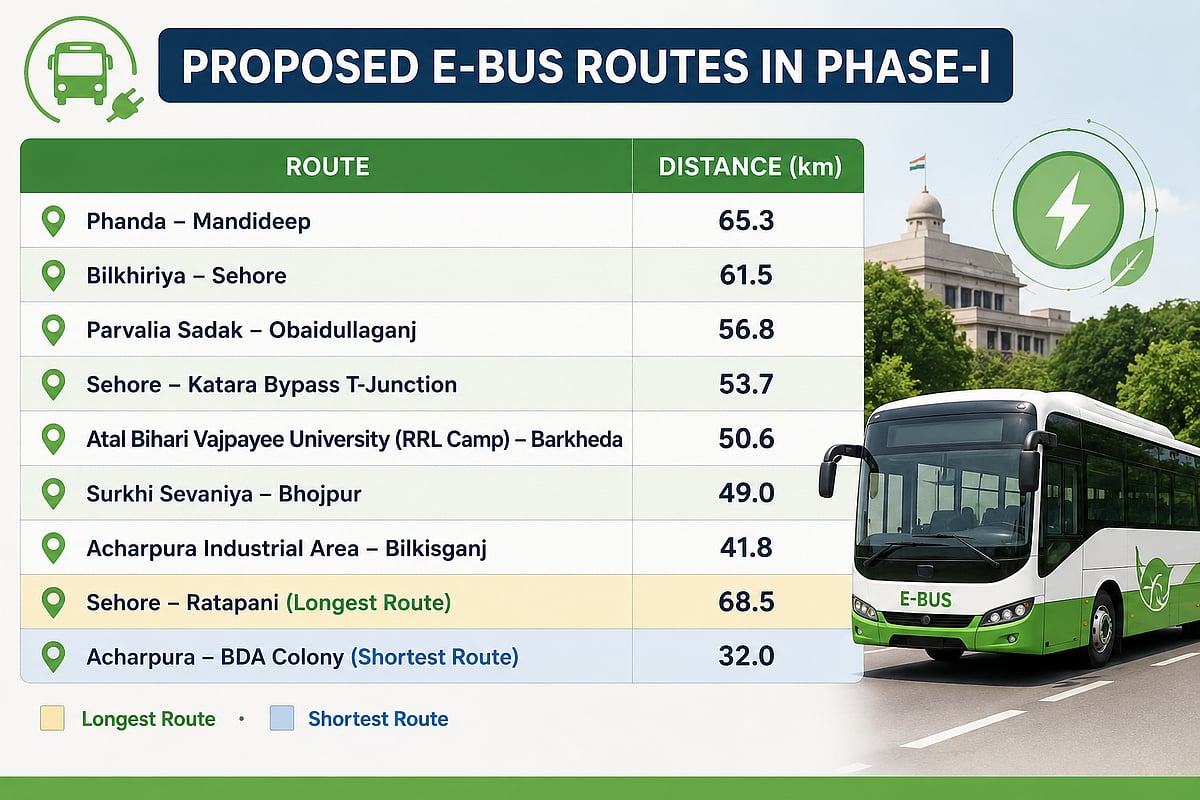
The first batch of 20 buses has reached the Bairagarh depot and will begin operations initially on six routes from Aug 15.
The low-floor buses feature wheelchair ramps and lifts, CCTV cameras, panic buttons, Wi-Fi and charging ports.
In the first phase, Bhopal will receive 100 electric buses, with another 150 scheduled to arrive in 2027, taking the total fleet to 250 buses across 26 routes. The initial fleet is expected to serve more than 80,000 passengers daily.
Official statement
BCLL CEO Anju Arun Kumar said the Bairagarh depot is nearly complete and trial runs are expected to be completed by the end of the month.