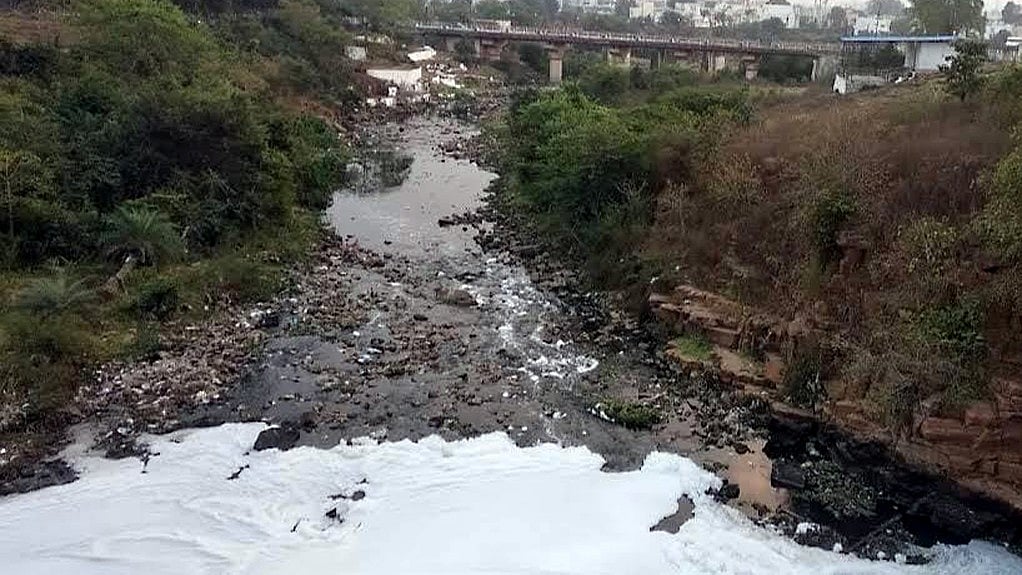
Bhopal (Madhya Pradesh): Once envisioned as a rainwater conservation reservoir, the Laharpur dam in Bagmugalia area of Bhopal has now turned into a massive sewage pool, raising serious environmental and public health concern, including cancer.
Built at a cost of approximately Rs 80 crore, the dam is receiving untreated sewage from four major city drains and several smaller ones. Its water has turned black, foul-smelling and highly toxic.
Experts warn that contamination of the reservoir poses a direct cancer risk and threatens thousands of residents. The alarming condition of the dam was highlighted in a PhD study by Dr Sadhana Malhotra Singh titled “Eco-toxicological Evaluation of Laharpur Lake (Bhopal) with Respect to its Conservation and Management.”
BMC negligence
With Bhopal’s growing population and expanding sewage network, the Bhopal Municipal Corporation (BMC) failed to plan proper wastewater treatment. As a result, sewage from areas, including HabibganjUnder Bridge, Saket Nagar, AIIMS-Saket Nagar, and BHEL zone is being diverted directly into the dam. Spread over nearly one kilometre and about 25 metres deep, the reservoir now emits a stench detectable up to 600 metres away.
Toxic water used for farming
Despite its polluted state, water from the dam is being used to irrigate around 800 hectares of farmland in villages including Amravatkhurd, Laharpur, Bag Mugalia, Bag Sewania, BarkhedaPathani and PipaniyaPende Khan. Crops such as vegetables, wheat and rice grown with this water are entering local markets, in clear violation of the National Green Tribunal’s ban on using sewage water for irrigation.
Threat to Betwa river
Contaminated water released from Laharpurdam ultimately flows into the Betwariver near Bhojpur, further polluting the river and increasing siltation, compounding environmental damage beyond city limits.

Experts warn of cancer risk
Environmental expert Dr. Subhash C. Panday warned that heavy metal contamination has wiped out aquatic life and caused toxic foam on the water’s surface. “Such pollutants can lead to serious diseases, including cancer. This water must not be used for irrigation,” Dr. Panday said.

