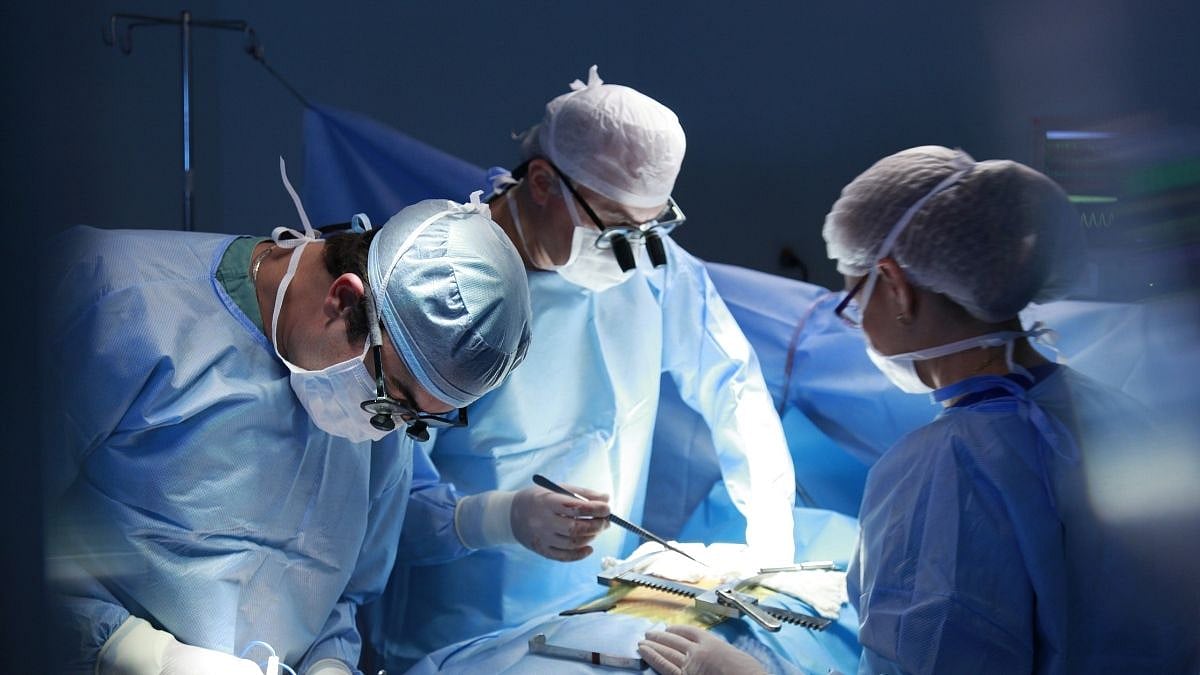
Bhopal (Madhya Pradesh): AIIMS Bhopal performed a highly complex and challenging surgery on a 45-year-old man who had been experiencing persistent difficulty swallowing. The procedure, medically known as an esophagectomy, involved the surgical removal of the oesophagus (food pipe).
During the procedure, surgeons constructed a new passage for food using part of the stomach, known as a gastric conduit, and connected it to the remaining oesophagus through a procedure called oesophagogastric anastomosis. Additionally, an extensive two-field lymphadenectomy, involving the removal of lymph nodes from two distinct anatomical regions, was performed.
Patient Complained Of Difficulty Swallowing And Weight Loss
The 45-year-old patient approached doctors at AIIMS Bhopal with complaints of difficulty swallowing (dysphagia), significant weight loss and mild chest discomfort.
An upper gastrointestinal endoscopy, which involves examining the oesophagus and stomach using a camera-equipped endoscope, revealed a malignant tumour (cancer) located 23 to 27 centimetres from the incisors (front teeth).
Tumour Found Close To Left Bronchus
The patient initially underwent concurrent chemoradiotherapy, a combination of chemotherapy and radiation therapy.
Subsequent PET-CT and contrast-enhanced CT (CECT) scans revealed that the tumour was located extremely close to the left bronchus, the airway leading to the left lung.
To assess the extent of the tumour, doctors carefully performed a bronchoscopy, an endoscopic examination of the airways.
The examination confirmed that the tumour had not directly invaded the airway, making surgical removal of the affected tissue feasible.

