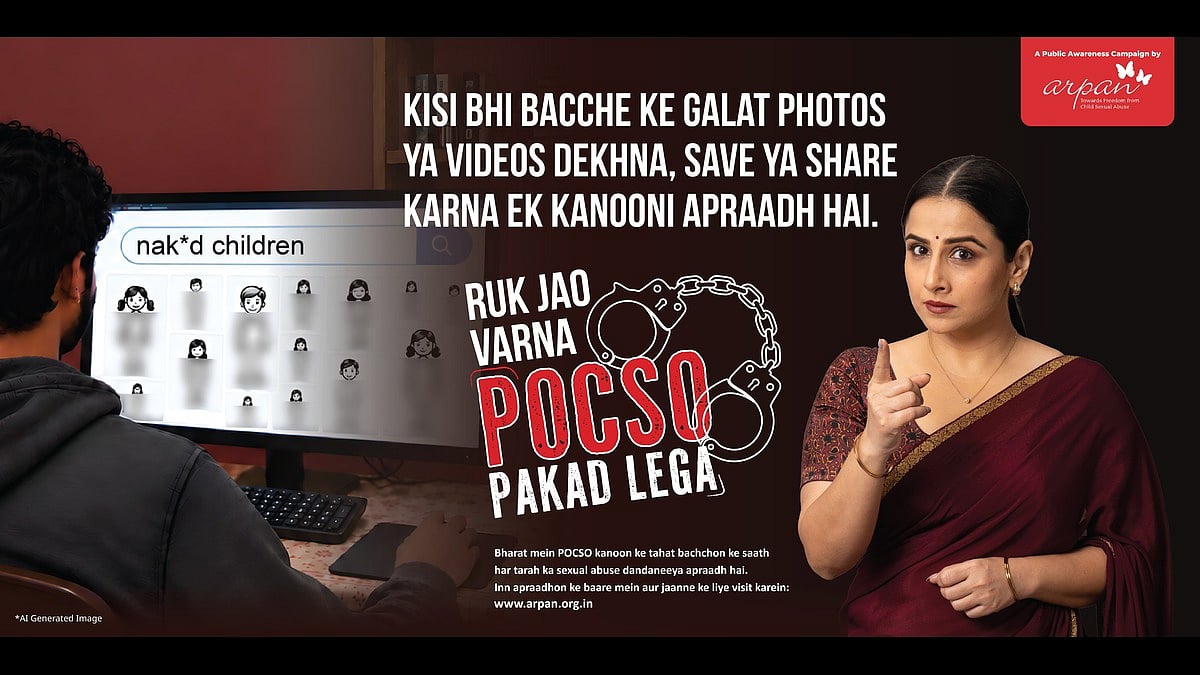
It takes less than a second to forward an inappropriate photo of a child. It can take that child years to recover from it. Somewhere today, a sexually explicit picture of a child will be asked for, taken, seen, saved or shown, and no one will stop to ask whether it is right, or whether it is a crime. Most of the people involved will never think of themselves as offenders. That is exactly the problem. This Child Safety Week, Arpan is asking every adult to see these everyday acts for what they are: child sexual abuse and a punishable offence.
The law is clear: asking for, taking, creating, seeing, saving, sharing or showing sexual images of a child are all punishable offences under the Protection of Children from Sexual Offences (POCSO) Act, 2012 and the Information Technology Act, 2000. Even keeping such an image on your phone, instead of deleting and reporting it, can be an offence.
The scale of the problem
That one-second forward is not a rare event. According to the National Crime Records Bureau (NCRB), 2024, nearly nine in ten cybercrime cases against children registered under the Information Technology (IT) Act, 2000.
In 2024 – 1,099 out of 1,238 – involved publishing or transmitting sexually explicit material depicting children. Under Section 67B of the IT Act, that is a criminal offence.
Yet awareness has not kept pace. Arpan’s 2024 Mumbai assessment, conducted before the #ProtectedByPOCSO campaign during Child Safety Week, found that only 14 per cent of adults knew that POCSO is the law protecting children from sexual abuse.
What is happening this Child Safety Week, 2026
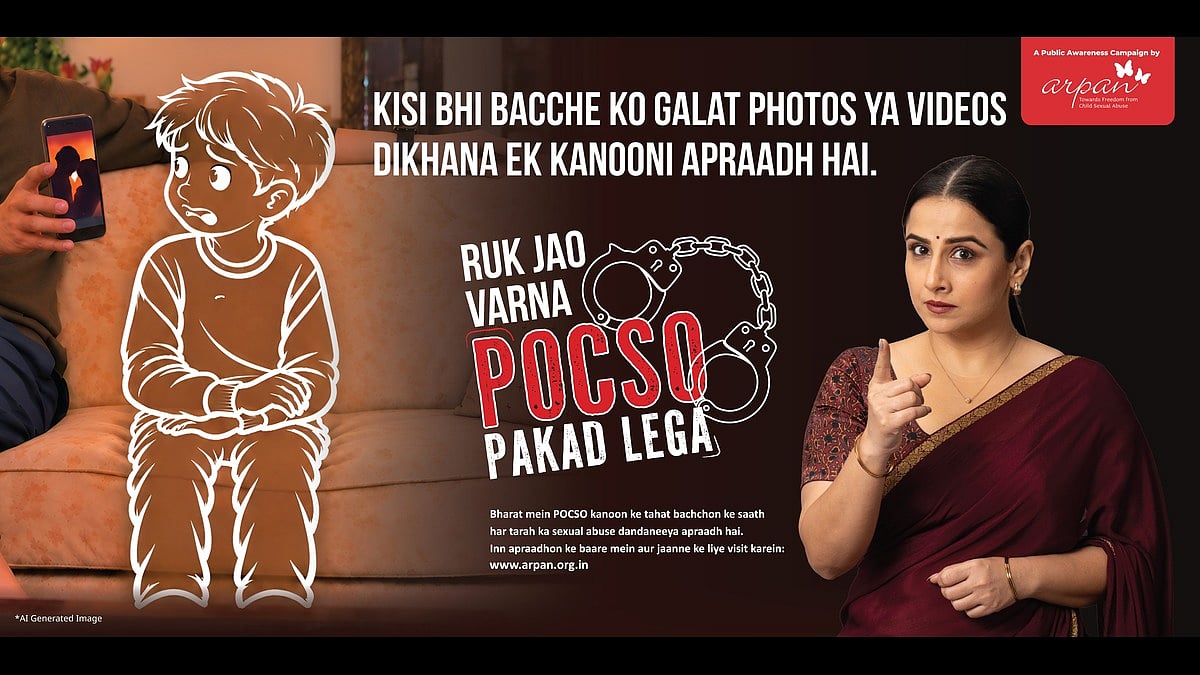
This year, from 14th to 20th November, Arpan’s Child Safety Week campaign #RukJaoVarnaPOCSOPakadLega takes that effort to the digital space. It speaks directly to those who harm children, with one warning: Stop, or POCSO will catch you.
Of the campaign’s six messages, four focus on acts that happen on phones and cameras,
Galat photos ya videos maangna: asking a child for sexual photos or videos
Galat photos ya videos kheechna: taking sexual photos or videos of a child
Galat photos ya videos dikhana: showing a child sexual photos or videos
Galat photos ya videos dekhna, save ya share karna: viewing, saving or sharing sexual photos or videos of a child
Each of these is an offence.
However, they are too often ignored, laughed off or treated as normal. The campaign calls them out for what they are: forms of online sexual abuse that children face every day.
The many forms of online abuse
Online, sexual abuse takes many forms, and each one causes real harm to a child. It can be cyberbullying, where sexually explicit photos or videos of a child are posted to mock or shame them. It can be sexting, where sexual messages, photos or videos, including images of private parts, are sent to a child or asked for. It can be cyber sexual blackmail, where a child’s private images or videos are used to threaten them into paying or obeying. It can be live streaming of child sexual abuse, where video apps are used to watch a child being sexually abused in real time. And it can be Child Sexual Exploitation and Abuse Material (CSEAM): accessing, possessing, producing or distributing sexual images and videos of children. Whatever the form, the message of #RukJaoVarnaPOCSOPakadLega to offenders is the same: sexually abusing a child online or offline is a punishable offence, and the law will catch you.
Where it happens
Not all child sexual abuse is physical. Not all of it happens in dark corners. Sometimes it happens in a school WhatsApp group, when someone zooms in on a child’s private parts in a photo and forwards it. Sometimes it happens at a family wedding, when an inappropriate picture of a child is shared for a laugh. And too often, it happens in front of adults who don’t want to take a stand, or don’t know what to do, and so say nothing.
So what can each of us do?
Stop the forward. If a sexual photo or video of a child reaches you, don’t forward it, don’t save it, and don’t blame the child for it. Report it at cybercrime.gov.in (you can do so anonymously) or call 1930. Every forward you stop protects that child from being harmed again.
Speak up when you see it. If someone in your group chat or at a family gathering shares such an image, say clearly that it is wrong and that it is a crime under the POCSO Act. One adult speaking up can stop the sexual abuse from happening. .
Think before you post. Never share pictures of a child undressed, however innocent they seem, and don’t post a child’s photo without their parents’ permission.
Talk to children early. Don’t wait for something to happen. Tell children, in simple words, that no one, not a stranger, not a relative, not someone they know and trust, should ask them for pictures showing their private parts or show them pictures that make them feel unsafe and uncomfortable. Arpan offers various digital modules, courses and audio-visual aids that cater to children aged 4–18 years. These courses are designed in a simple manner to enable children with a nuanced understanding of how they can identify unsafe situations and touch, refuse and seek help in case they face an unsafe situation. You can take the courses with you child on https://arpanelearn.com/
Believe a child who tells you. Stay calm and say, “Thank you for telling me. It is not your fault. I will help you.”
Call to Action
Silence protects offenders, never children. Chup rehna kabhi jawaab nahi hota. A forward you stop, a question you ask, a report you make: speaking up is how protection begins. This Child Safety Week, stand with Arpan and send offenders a clear message: Ruk Jao Varna POCSO Pakad Lega.
This Child Safety Week, 14 to 20 November, join #RukJaoVarnaPOCSOPakadLega. Watch the campaign film, share its messages and send offenders a clear warning: Ruk jao, varna POCSO Pakad Lega. Follow and share the campaign on Instagram @arpan_csa, Facebook Arpan, X @Arpan_CSA, LinkedIn ARPAN and YouTube @arpancsa.
About Arpan
Founded in 2007, Arpan is a globally recognised, award-winning non-profit working towards the elimination of Child Sexual Abuse (CSA) in India. Since inception Arpan has impacted 20.4 million (2 crore and 4 lakh) children and adults through its work. To know more, visit www.arpan.org.in.

