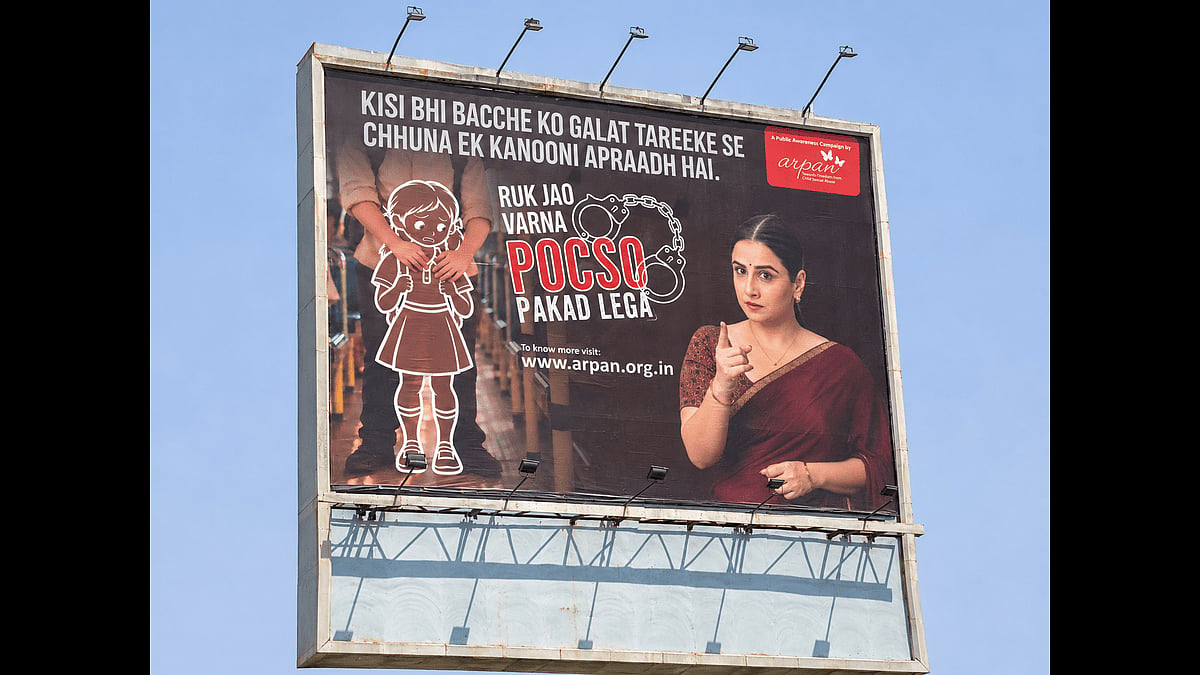
As Arpan’s Child Safety Week 2026 concludes, #RukJaoVarnaPOCSOPakadLega serves as a reminder that protecting children cannot be limited to one week. It must become a shared, everyday responsibility.
From 14 to 20 November, Child Safety Week brought conversations around child sexual abuse and the POCSO Act into public spaces, communities and digital platforms. Through its campaign, #RukJaoVarnaPOCSOPakadLega, Arpan sought to make child safety a more visible and accessible conversation, encouraging people to recognise unsafe behaviour and understand the role of the law in protecting children.
But as the week comes to an end, the larger question remains: Will we continue talking about child safety once the hashtag fades?
Child safety cannot be a conversation we revisit only during awareness campaigns or when an incident makes headlines. It has to be a 365-day commitment from parents, caregivers, teachers, families and every adult who shares a space with children. No single institution or group can carry this alone. Protecting children is a collective responsibility, one that begins with awareness and is demonstrated through everyday action.
For Arpan, an organisation working in the prevention and healing of child sexual abuse, awareness is an important part of prevention. When people understand what constitutes behaviour, recognise warning signs in a child and know how to respond to disclosures, they are better equipped to create safer environments for children. Awareness also helps bring child sexual abuse out of the shadows, challenging the silence, discomfort and stigma that often prevent open conversations around the issue.
The #RukJaoVarnaPOCSOPakadLega campaign carries this message forward. Building on Arpan’s 2024 #ProtectedByPOCSO initiative, the campaign has evolved into a public awareness effort that uses the POCSO Act as an accessible vocabulary for child safety. Its message, “Ruk Jao Varna POCSO Pakad Lega”, draws attention to behaviours that violate a child’s safety, including inappropriate touching, inappropriate looking, and the asking, taking, saving, sharing or showing of inappropriate photographs and videos. It sends a strong warning to offenders: the law can catch you. Do not hide behind a child’s silence. The campaign reinforces that child sexual abuse is a punishable offence and that silence can no longer be used as a shield by those who exploit children.
Public awareness campaigns can bring an issue into the mainstream, but their real impact is measured by what happens next: not by how many people see a message, but by how many understand it, initiate conversations and translate that awareness into action. Safer environments for children are built through everyday commitment and collective action.
The campaign’s presence across outdoor spaces, public transport, media and digital platforms is about more than visibility. It is about meeting adults where they are, in the middle of their everyday routines, so that the message stays with them beyond the moment they see it. A message encountered during a commute or on a digital feed can become an opportunity for a parent to speak with a child, for a teacher to address safety in a classroom, or for an adult to recognise that certain behaviours are unacceptable and punishable under the law.
The participation of various government bodies, institutions and partners, including the Mumbai Metropolitan Region Development Authority (MMRDA), Mumbai Metro Operation Corporation Limited (MMMOCL), Western Railways, Brihanmumbai Electric Supply and Transport (BEST), Thane Municipal Transport (TMT) and Navi Mumbai Municipal Transport (NNMT) across Mumbai, Thane and Navi Mumbai, along with the Ministry of Health and Family Welfare, Government of India, schools and NGOs, reinforces that child safety is a collective responsibility.
The campaign also saw Bollywood celebrities, public figures, influencers and advocates come forward digitally to amplify its message. Vidya Balan, who has consistently been the face of the campaign, was joined by Anup Soni, Prachi Tehlan, Kalki Koechlin, Nirmal Soni, Bhagyashree and several others, who lent their voices and shared strong messages through their social media platforms. Their participation helped take the message beyond traditional campaign platforms, reaching diverse audiences and encouraging more people to engage with the issue.
As Child Safety Week concludes, the responsibility to take this message forward rests with all of us — individuals, institutions and communities alike. Parents, caregivers, teachers, organisations and institutions must continue to build awareness, understand the POCSO Act, recognise and stop unsafe behaviour, and respond with sensitivity when a child discloses abuse. #RukJaoVarnaPOCSOPakadLega gives us a shared language to do this and, most importantly, to send a clear message to offenders: stop it right now, the law is watching you.
The week ended on 20 November. But what happens when the campaign is no longer on our screens and billboards? Will we still recognise unsafe behaviour, speak up and use the POCSO Act to protect a child? Or will child safety once again become a conversation we have only when we are reminded?
The answer lies with each of us. Every conversation, every intervention and every action brings us closer to a world where every child grows up free from child sexual abuse.

