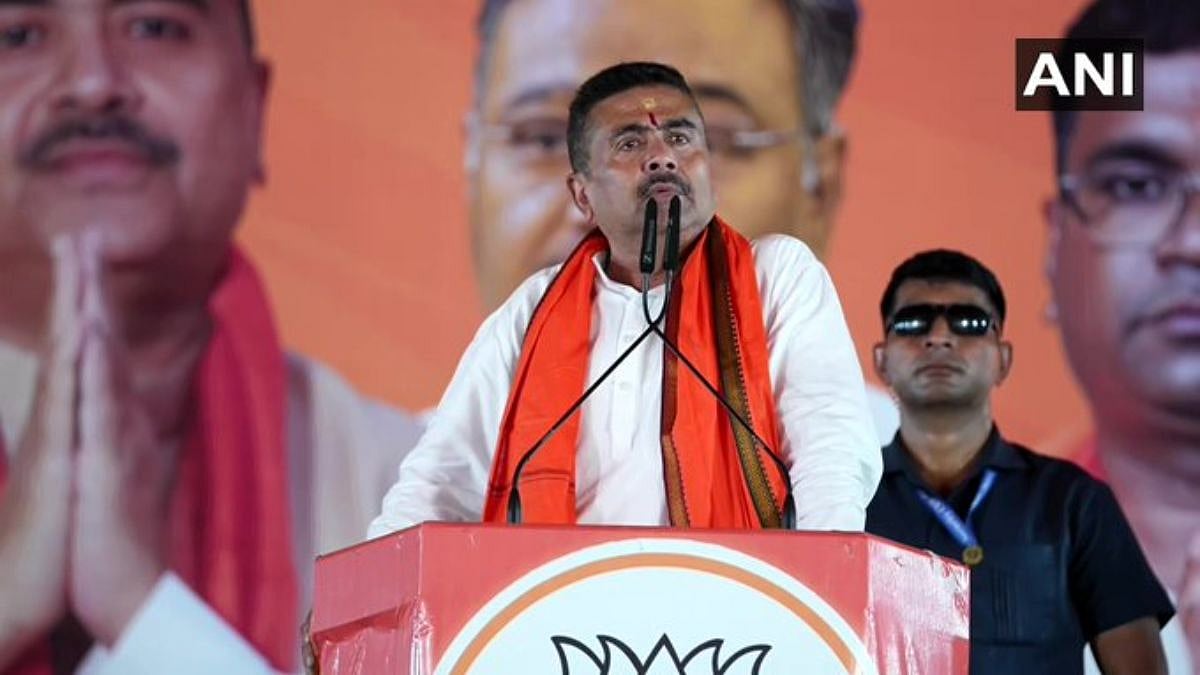
West Bengal’s political landscape has undergone a profound shift. The Bharatiya Janata Party’s decisive victory in the 2026 Assembly elections, winning 207 seats and ending the Trinamool Congress’s 15-year rule, marks not just a governmental change but a cultural and ideological transformation.
At its core stands Suvendu Adhikari, sworn in as Chief Minister on May 9, 2026. His elevation signals the BJP’s clear choice of hardline Hindutva politics in Bengal, tempered by a deliberate organisational balance through Somik Bhattacharya as state party president.
Adhikari personifies the hardline shift. A former Trinamool heavyweight and key architect of the 2011 Nandigram movement, he switched to the BJP in late 2020 after growing disillusioned with Abhishek Banerjee’s rise. Since then, he has aggressively championed Hindu consolidation, border security, action against illegal immigration, and highlighted atrocities against Hindus in Bangladesh.
His direct defeats of Mamata Banerjee—in Nandigram in 2021 and Bhabanipur in 2026 by over 15,000 votes—cemented his image as the leader who could take on the Trinamool’s ecosystem head-on. By making him Chief Minister, the BJP has chosen assertive Hindutva leadership with mass appeal and administrative experience over a pure RSS insider.
Hardline politics with electoral appeal
This hardline tilt is evident in Adhikari’s politics. He has focused on cultural assertion, temple outreach, alliances with Hindu organisations like Bharat Sevashram Sangha, and framing the mandate as a “Hindutva call”.
In a border state with a nearly 30 per cent Muslim population and regional instability after Bangladesh’s political changes, his emphasis on demographic security and protection of Hindu identity has resonated strongly. The strategy mirrors assertive models seen in Assam, prioritising core ideological concerns while building cross-caste Hindu unity.
Yet, the BJP has consciously avoided an all-out hardline image by balancing Adhikari’s aggressive posture with Somik Bhattacharya as state president. Bhattacharya, with his RSS background but moderate Bengali bhadralok persona, projects a more measured and inclusive face of the party.
In a recent interview, he revealed Prime Minister Narendra Modi’s directive to prevent any communal incitement from BJP leaders or workers. He notably cautioned that provocative actions, such as shouting “Jai Shri Ram” at passing Muslims, would insult the sacred chant itself.
This balance is strategic. While Adhikari drives the ideological engine as Chief Minister, Bhattacharya ensures organisational restraint and broader acceptability.
A deliberate division of roles
The duality is not accidental. In several BJP-ruled states, RSS pracharaks lead both government and party. In Bengal, the party has split roles deliberately—hardline Hindutva through the Chief Minister and calibrated moderation through the state president.
Dilip Ghosh, with strong Sangh roots, has been accommodated in the ministry to maintain ideological continuity, but the top two positions reflect a calculated equilibrium suited to Bengal’s complex social fabric.
Governance realities further demand this balance. Adhikari brings rare administrative experience from his time as a senior Trinamool minister, giving him intimate knowledge of the state’s bureaucracy, its strengths, and its fault lines.
The new government must deliver on industrial revival, employment, law and order, women’s safety, and action against infiltration. At the same time, Trinamool retained a significant 41 per cent vote share, and many of its welfare schemes still enjoy public support. Abrupt disruptions could alienate voters the BJP needs to consolidate.
Governance challenges ahead
Fiscal challenges add urgency. Unresolved dearness allowance issues, the ambitious Annapurna Bhandar scheme promising Rs 3,000 monthly to women, border fencing, and voter list scrutiny require pragmatic execution.
Adhikari’s insider understanding makes him effective here, but Somik Bhattacharya’s moderate positioning helps prevent governance from being painted as purely communal, preserving space for development outreach.
This hardline-yet-balanced approach addresses Bengal’s unique realities. Unlike Assam, Muslims here are spread across many constituencies. Hindu consolidation must, therefore, coexist with outreach to maintain social harmony and economic focus.
Adhikari’s family political legacy, bachelor status, and combat experience against Trinamool machinery equip him for the aggressive front, while Bhattacharya’s liberal image safeguards the party’s wider appeal.
Nationally, this experiment is significant. By choosing a crossover mass leader like Adhikari for the hardline role and balancing him with Somik at the organisational helm, the BJP demonstrates adaptability in eastern India’s culturally distinct terrain.
Success could validate Hindutva’s expansion beyond its traditional strongholds. Failure in welfare delivery or over-polarisation, however, could trigger backlash in a state long accustomed to coalition-style and welfare-centric politics.
A test for Bengal and the BJP
Locally, expectations are high. Adhikari must restore administrative credibility at Nabanna, curb political violence, and revive the economy. His dedication of victories to party workers and “martyrs” signals strong cadre support and zero tolerance for past alleged vendettas.
Bengal stands at a historic crossroads. With Suvendu Adhikari, the BJP has embraced hardline Hindutva leadership. But by keeping Somik Bhattacharya as party chief, it is attempting a careful balance between ideological assertion and pragmatic governance.
Whether this fusion delivers a stronger Bengal or exposes new fault lines will define not only the state’s future but also the BJP’s national project in India’s diverse east. The coming months will test if hardline vision and organisational balance can successfully reinforce each other.
Sayantan Ghosh is the author of two books, Battleground Bengal and The Aam Aadmi Party.

