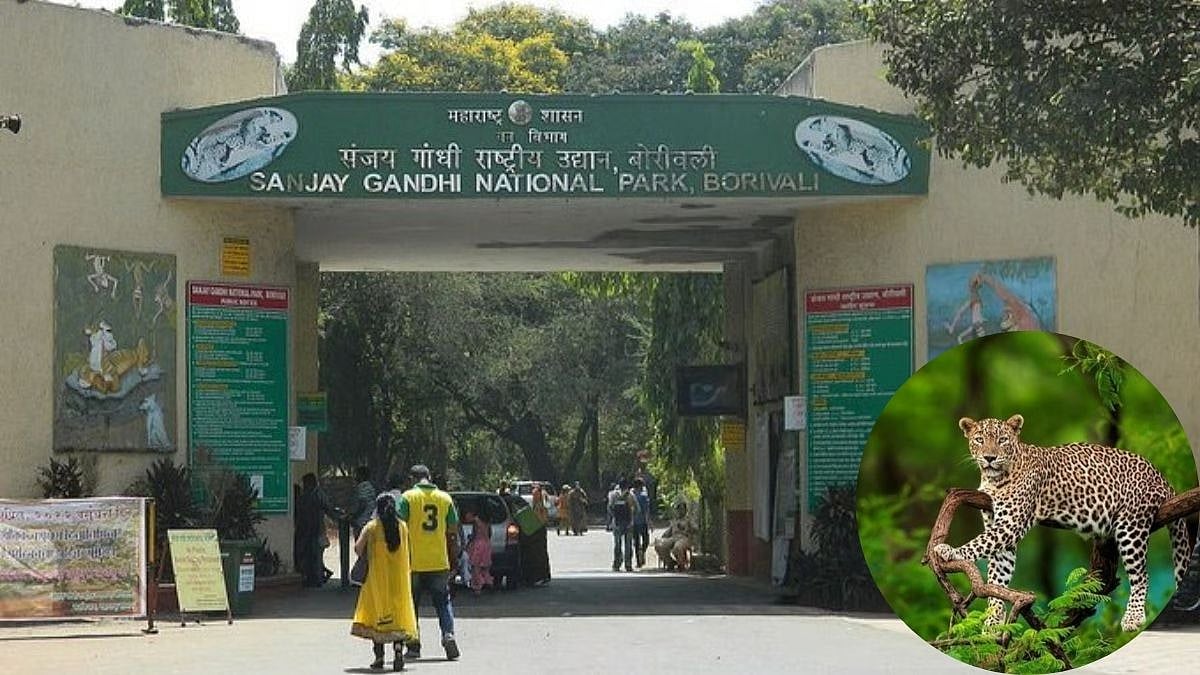
No part of the Sanjay Gandhi National Park or the city of Mumbai will ever commemorate 60-year-old Vijay Sukharu Sapte, a civic worker who was allegedly shot dead in the thick, verdant environs of the protected forest earlier this week by poachers who mistook him for a wild boar. However, the unfortunate death has renewed the debate about the 103 sq km expanse of the forest and its protection, including the Master Plan of the Brihanmumbai Municipal Corporation (BMC), which seeks to drastically reduce the forest and its surrounding eco-sensitive areas.
This matters gravely because habitation and commercial use of land along the existing boundaries of the SGNP—in Mumbai and Thane—have already hemmed in wildlife and, in some cases, led to animal-human conflicts and increased instances of poachers laying traps and snares. Poaching has not been uncommon in the SGNP. Besides wild boar, the thicket has seen traps and snares laid for deer, hare and other animals prized for their rare meat and skin. Macaques were found shot dead with bows and arrows in March this year when forest officials combed Thane’s Upvan area of the SGNP. Over the years, deer and leopards have been found trapped or dead. Hunting protected wild animals is a criminal offence under the Wildlife (Protection) Act, 1972.
Poaching Raises Questions Over Forest Security
While the difficult terrain presents a challenge for forest officials attempting to patrol and secure all parts of the SGNP, it is concerning that poaching and hunting incidents continue despite anti-snare drives. Clearly, officials have to tighten their vigilance, monitor the area more thoroughly and conduct a review to screen out compromised individuals in the force or among the tribal villages.
How did the poachers, who lay in wait for the boar, venture nearly half a kilometre into the forest? Other questions surrounding Sapte’s killing—the death certificate issued on WhatsApp, the swift funeral and the protocol civic workers must follow to identify themselves, among others—will also have to be unravelled. Accountability for his death must be established, and compensation must be paid to his family.
BMC Master Plan Threatens Wildlife Habitat
Beyond the individual tragedy lies the issue of protecting the forest, including its wildlife, from deliberate and planned incursions that the BMC’s plan would introduce. On the grounds of promoting eco-tourism, the plan includes the development of nearly 60 square kilometres of the SGNP by unscientifically dividing it into three eco-sensitive zones and permitting construction in two of them.
This risks displacing tribal communities and gravely threatens wildlife corridors and the waterbodies that animals use. The few existing roads in the SGNP have already disrupted wildlife habitats and allowed poachers to move around more easily. The planned commercialisation will further jeopardise wildlife habitats and make poaching and hunting easier.
Protecting wildlife—and human lives—calls for doing away with the plan.
To get details on exclusive and budget-friendly property deals in Mumbai & surrounding regions, do visit: https://budgetproperties.in/

