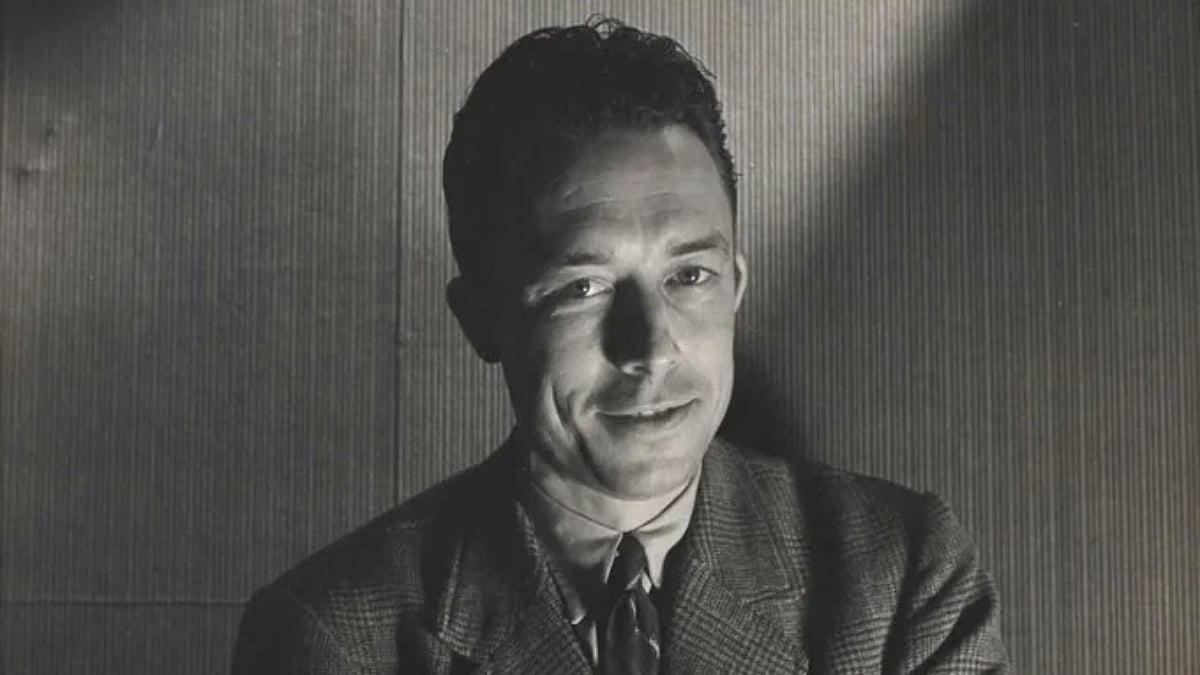
In these times of extreme ideological rigidity, increasing zealotry and global chaos, one voice that shows us the path is that of Albert Camus, the legendary French existentialist and Nobel laureate whose birth anniversary falls on November 7. Camus remains vital today because his philosophy addresses modern burnout, social isolation, and institutional uncertainty. Rather than offering easy comfort or dogmatic answers, his work helps people navigate a fast-paced and unpredictable world. Camus spent his life speaking out against totalitarianism, ideological violence, and intellectual shortcuts, championing human rights and clear-eyed honesty instead. His philosophy doesn't profess; it propels people through the process of philosophical pragmatism. His work focused less on abstract metaphysics and more on concrete human behaviour, morality, and how to live with dignity in an indifferent universe. Camus is not philosophically aloof. He's practically close to us. He thought "according to words and not according to ideas", viewing his work as literature, essays, and art rather than dry academic treatises. He was more a writer than a philosopher. Writing through the trauma of World War II, French colonisation, and totalitarianism, Camus warned against dogmatic violence and “crimes of logic”.
A Practical Philosophy Of Unbelief
An out-and-out non-believer, Camus' unbelief is not a militant and reactionary rejection of all esoteric beliefs. It is practical non-acceptance, which asserts that instead of relying on an unknown supernatural power, humans will have to strive to become self-reliant, pragmatic and much more focused. Ponder his immortal statement from the 1942 novel The Stranger: "I had only a little time left, and I didn't want to waste it on God." Sitting in a prison cell awaiting execution by the guillotine, the protagonist Meursault utters these words with complete honesty and courage of conviction. Facing imminent death, Meursault chooses to focus his remaining minutes on the real, physical world he actually experienced—the sun, the sea, memories, and raw human emotion—rather than spending his last breaths on a deity he does not believe in. To him, turning to prayer at the very end would mean lying about his indifference and his worldview just to appease society.
Camus repudiated all man-made labels and disliked being pigeonholed with a tag. That's why he famously wrote in Notebooks (1951-1959), “I don't believe in God, and I'm not atheist." Any label, however glamorous or cerebral it may sound, is restrictive and limits our world of ideas. Today's neo-intellectuals, who proudly introduce themselves as atheists, might learn a lesson in humility from Camus. Their schoolboy atheism is a mere fashion statement which lacks reason and conviction. Though Camus' writings show a moralistic bent, his morality didn't stem from theism, nor did it descend from heaven. Camus believed in worldly morality. He was a conscientious non-believer who wasn't an anarchist or nihilist. His iconoclasm has a kind of mellowness which distinguishes him from the irreverent and abusive iconoclast of our times. Camus can be called a 'methodical maverick' who didn't step on anyone's toes.
Moral Accountability In Everyday Life
When Camus says, “Do not wait for the final judgement. It comes every day" (The Fall), you're bound to assess the profundity of this statement. Camus rejects the idea of a single, distant, divine reckoning at the end of time. Instead, he suggests that moral evaluation happens continuously through our daily choices, actions, and silences. The quote implies that every day carries weight and consequence, holding us accountable to ourselves and others in the present moment rather than waiting for a future judgement. As one of the greatest exponents of existential philosophy alongside Jean-Paul Sartre, Camus gave utmost importance to this 'very moment' (yahi ek kshan/lamha). This is an adumbration of Upanishadic Purusharth and Kshanvaad in Eastern philosophy.
Rebellion And Shared Human Dignity
Camus was an eternal rebel. He famously said, “I rebel, therefore we exist" (frequently misquoted as "I rebel, therefore I exist") in the 1951 philosophical essay The Rebel (L'Homme révolté).
It refutes René Descartes' famous rationalist formula, "I think, therefore I am" (cogito, ergo sum), which grounds existence in isolated, individual thought. Camus deliberately writes "we exist" rather than "I exist". When an individual stands up and says "no" to oppression, tyranny, or an absurd universe, they assert a shared standard of human dignity. Rebellion is not just a destructive act; it is an affirmation that other human beings also suffer under or oppose the same injustice. It transforms isolated individuals into a collective community. The ongoing protests in the country have an element of Camus' collective rebellion streak and spirit.
To encapsulate, Camus' work focused less on abstract metaphysics and more on concrete human behaviour, morality, and how to live with dignity in an indifferent universe. Reading just one page of Camus enriches and intellectualises the mind.
Sumit Paul is a regular contributor to the world’s premier publications and portals in several languages.
Level up your brain the fun way. Play daily games and quizzes on FPJ Smart!
To get details on exclusive and budget-friendly property deals in Mumbai & surrounding regions, do visit: https://budgetproperties.in/

