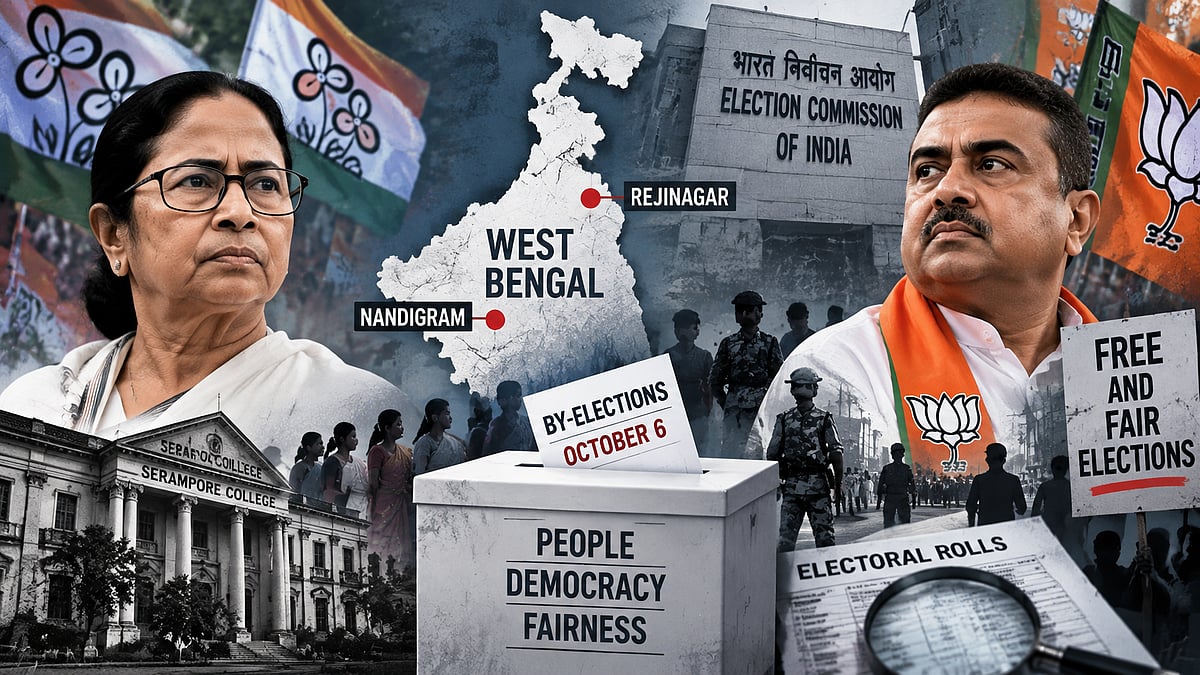
Politics in West Bengal is increasingly becoming bizarre. The results of the two Assembly by-elections scheduled for October 6 are unlikely to affect the stability of the BJP government. Yet, the contests in Nandigram and Rejinagar are being treated as though they will determine the fate of the Suvendu Adhikari government. There would have been nothing wrong with such political intensity if the ruling BJP and the Opposition Trinamool Congress (TMC), the Indian National Congress, and the Left Front had taken the elections seriously and left no stone unturned in their efforts to win. Elections are meant to test the popularity of governments and the credibility of their opponents. The BJP would have been forced to demonstrate that it had fulfilled the promises made during the last elections.
The Opposition, in turn, would have had to establish that the Adhikari government had failed to govern and had encouraged self-appointed vigilantes attacking institutions, such as Serampore College, which pioneered the concept of universal education in the early nineteenth century. Unfortunately, the ruling party appears to be relying on methods that raise questions about the fairness of the electoral contest. Nandigram was won by Adhikari, who had to vacate the seat after winning from two constituencies. A defeat in Nandigram would diminish the sheen of the BJP’s electoral victory. Pressure reportedly forced Mamata Banerjee’s candidate to withdraw, prompting her party to support the Congress nominee, Milan Pradhan. The subsequent arrest of Pradhan in connection with a nearly two-decade-old pending case has inevitably raised questions about the timing and purpose of the action. Arresting an opposition candidate at this juncture demands particularly careful scrutiny. Legal proceedings must not become instruments for influencing electoral outcomes. The contrast with neighbouring Bihar, where inaction in an old case involving the Chief Minister has enabled him to remain in power, adds to the perception of selective application of law. The two situations deserve examination on their facts, rather than political convenience.
In Rejinagar, the TMC candidate, Rabiul Alam Chowdhury, first announced his withdrawal and then reversed the decision within hours. His account of pressures faced by party workers has added to concerns about the conditions in which elections are being conducted. Banerjee also has grounds to question the Election Commission’s impartiality. Its interim decision to freeze the TMC’s name and familiar flowers-and-grass symbol has created an unusual situation. The dispute is now before the Supreme Court. The controversy over electoral rolls adds another dimension. The claim that 22 lakh of the 27 lakh deleted names have been challenged requires verification, but it highlights the need for transparent procedures. West Bengal deserves an election in which voters can participate without fear and the verdict belongs to the people, not to those controlling the machinery surrounding it.

