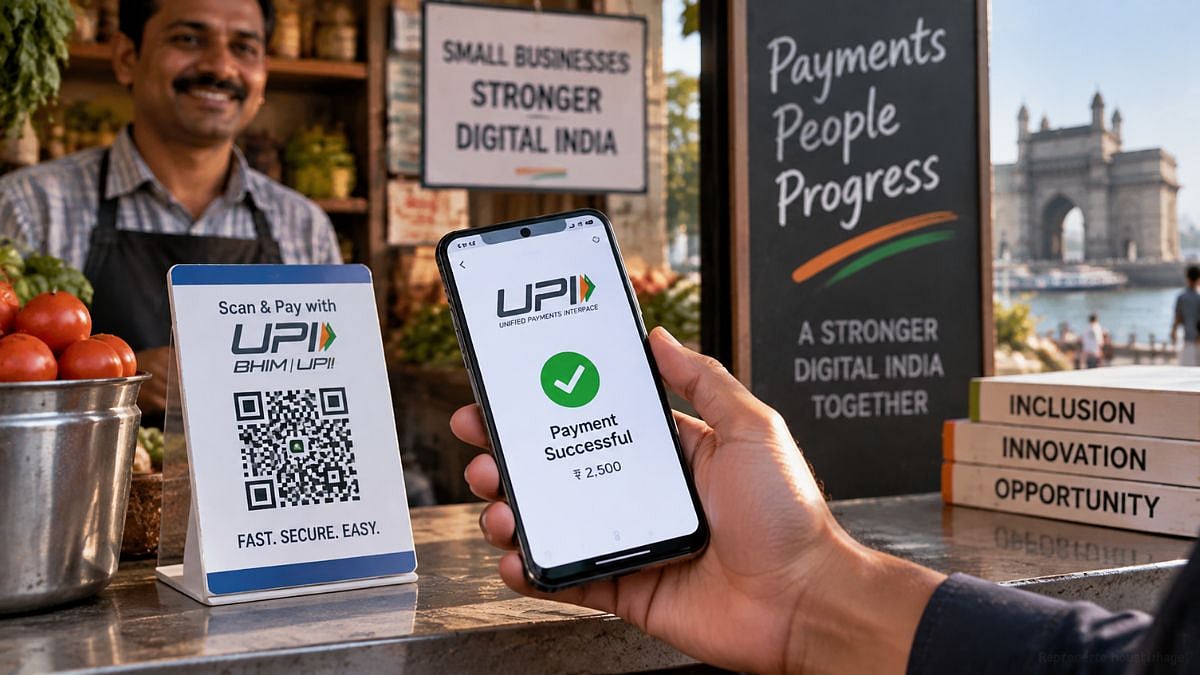
India’s decision to resort to a limited Merchant Discount Rate, or MDR, on UPI transactions marks a significant change in the economics of the country’s most successful public digital payment infrastructure. From mid-October, a 0.4 per cent MDR, or a transaction fee for want of a better term to describe it, will apply to person-to-merchant payments above Rs 2,000, capped at Rs 300 for transactions of Rs 75,000 and above for all United Payment Interface or UPI payments in this country.
MDR Structure And Exemptions
However, it will remain free, as will merchant payments, up to Rs 2,000. Certain essential sectors, including railways, telecom, insurance, and fuel, will instead face a flat Rs 5 charge above the threshold. The government says the change is intended to make the UPI ecosystem financially sustainable while supporting investment in infrastructure, cybersecurity, and innovation.
However, the controversy is about more than the arithmetic of 0.4 per cent. When you aggregate the small fee gauged out of transactions above the threshold level, then the total amount would be a significant $2 billion. Banks will capture around 40 per cent of the money made from this transaction fee, while the rest will go to payment platforms, such as Google Pay, Paytm, and PhonePe.
Impact On Fintech Competition
The big players’ existing network, and the new money that they will earn, may well act as a barrier to entry by a new small fintech player. Even though the existence of fees should theoretically help newcomers make money from day one, the price of handling the large volume of transactions, which do not attract an MDR fee, will be difficult for them to manage compared to the entrenched PhonePes and Google Pays of the world.
Nevertheless, the argument for an MDR remains strong. UPI is no longer a small experimental payment system. It processed about 24 billion transactions worth USD 312 billion in August this year alone, according to some estimates.
UPI’s Appeal To Small Businesses
The idea of UPI succeeded partly because it made the act of paying almost invisible. A vegetable seller, taxi driver or neighbourhood shop could accept a payment without having to think about transaction costs. Customers, meanwhile, loved not carrying around cash all the time.
The new MDR introduces a cost into that system, which more likely than not will be passed on to buyers. For tiny and small enterprises operating on thin margins, transaction costs can matter considerably, and they are more likely to pass it on to buyers. The government has exempted small merchants meeting specified thresholds and has proposed support for expanding digital acceptance, but the effectiveness of those safeguards will depend on their implementation. If costs are passed on to inflation, even if minutely, they will rise.
The central question, therefore, is whether the MDR will remain within the payment ecosystem, rather than migrating into the price paid by consumers.

