The Persian Gulf conflict is dragging on with renewed military clashes in the Strait of Hormuz for the past two days. Engulfed by the fear of continued supply disruption, the oil market reacted with higher prices, with Brent going to $115 a barrel and European gas rates reaching the highest level since mid-April.
Without a genuine ceasefire, shipping traffic along this transport route, so crucial for the world energy market, will not normalise anytime soon. In other words, the risk of energy price swings remains high.
UAE exit adds fresh complexity to oil market
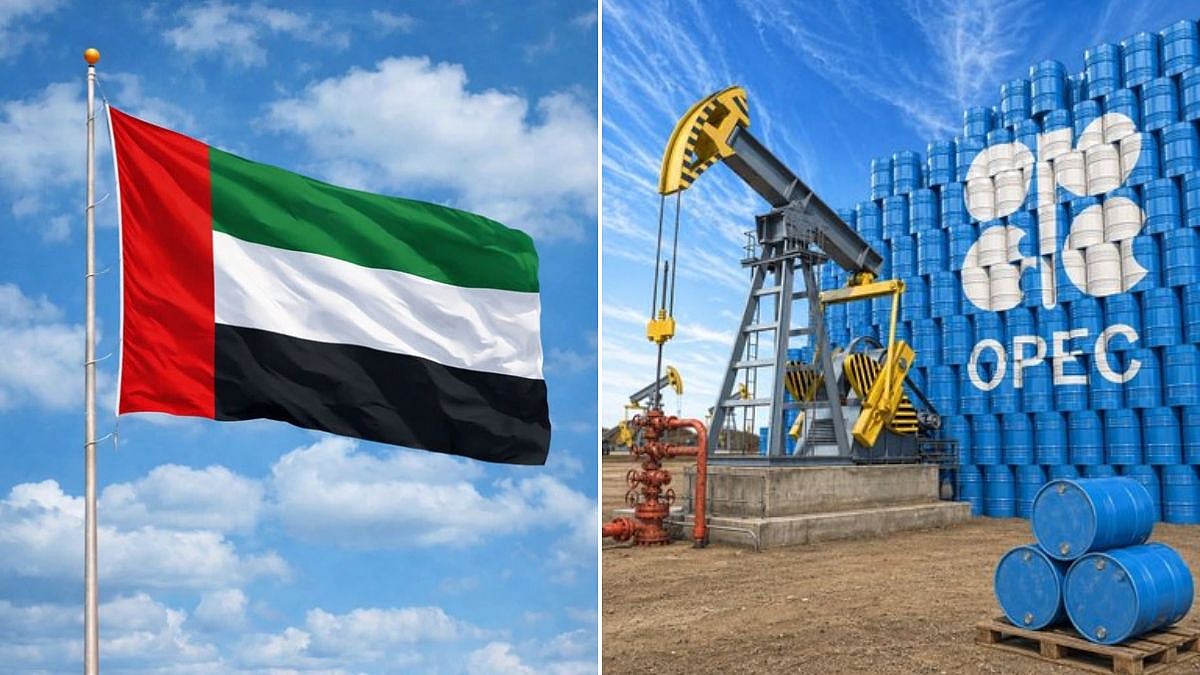
Meanwhile, the United Arab Emirates’s (UAE’s) decision to exit the oil cartel OPEC+ has added another dimension to the complexity. At a recent virtual meeting, the seven OPEC+ countries refrained from commenting on the UAE decision.
In recent years, the UAE has been consciously seeking to reduce its dependence on oil export revenue by diversifying into non-oil economic activities, partially triggered by global consensus on energy transition that meant moving away from polluting fossil fuels towards renewable energy.
When seen from this perspective, the UAE’s decision to sever its six-decade-long relationship and exit from OPEC+ is not a big surprise. The exit will allow the UAE to increase its crude oil output towards its five million barrels per day (mbpd) production target as and when transit through the Strait of Hormuz restores and trade normalises.
Higher production likely to weigh on oil prices
However, the disruption caused by the recent military action in the region will mean the UAE will likely reach its production target with a time lag, say late 2027 or in 2028. When it materialises, the additional supply will weigh on global oil prices.
At the same time, higher energy production and exports will lift government revenue and support budget surplus and balance of payments. The UAE was operating 20% below its sustainable capacity to adhere to OPEC+ quotas. The decision to exit reflects long-running tensions over OPEC+’s strategy of supporting prices through production restraint.
The UAE accounted for around 10% of production among the OPEC+ eight — the group of producers bound by voluntary output cuts. But its production quota of approximately 3.4 mbpd was well below its reported capacity of 4.3 mbpd, leaving around 0.9 mbpd of potential output unused.
Growing tensions weaken OPEC+ influence
For the UAE, the formal share of the 1.65 mbpd voluntary cuts was only around 144,000 bpd. But the producer argued that the quota system didn’t reflect its production potential. After investing $150 billion to expand capacity and targeting 5 mbpd by 2027, it was no longer willing to remain constrained.
Intra-OPEC tensions have intensified as US shale and supply growth in Latin America have eroded OPEC+’s market power. With the group’s ability to support prices weakened, the value of sacrificing output has become harder to justify. Several members have already produced above their quotas or called for the scrapping of quotas.
The exit of OPEC’s third-largest producer substantially weakens the organisation and raises questions over its survival as an effective cartel. As the UAE increases output outside OPEC, the group’s share of global supply will decline, reducing its ability to manage prices. It could also undermine the value of membership for other producers with large reserves or ambitions to raise output. Venezuela is a good example.
Other members may rethink OPEC membership
The UAE’s exit and a potentially weakened OPEC+ may encourage other members to consider leaving the cartel to pursue their own priorities.
OPEC can respond in two ways. It may be forced to consider relaxing its current strategy to retain members that may be questioning the value of membership.
Alternatively, the UAE’s exit may reveal that Saudi Arabia and Russia were unwilling to compromise on their unofficial but widely believed goal of targeting prices around $100 per barrel, even at the cost of losing a major producer. In that case, the UAE’s departure could lead to a slower unwind of production cuts now that the loudest dissenter is out of the room, pointed out an expert.
Lower oil prices may benefit India in long run
Subject to restoration of normal passage through the Strait, with higher production and weakened pricing power, crude prices are bound to decline over time. This would be good news for major importing and consuming countries like India. Lower oil prices will help reduce energy inflation and possibly shore up the rupee. But it is not going to happen in a hurry.
G. Chandrashekhar is a commodity markets specialist. Views are personal.

