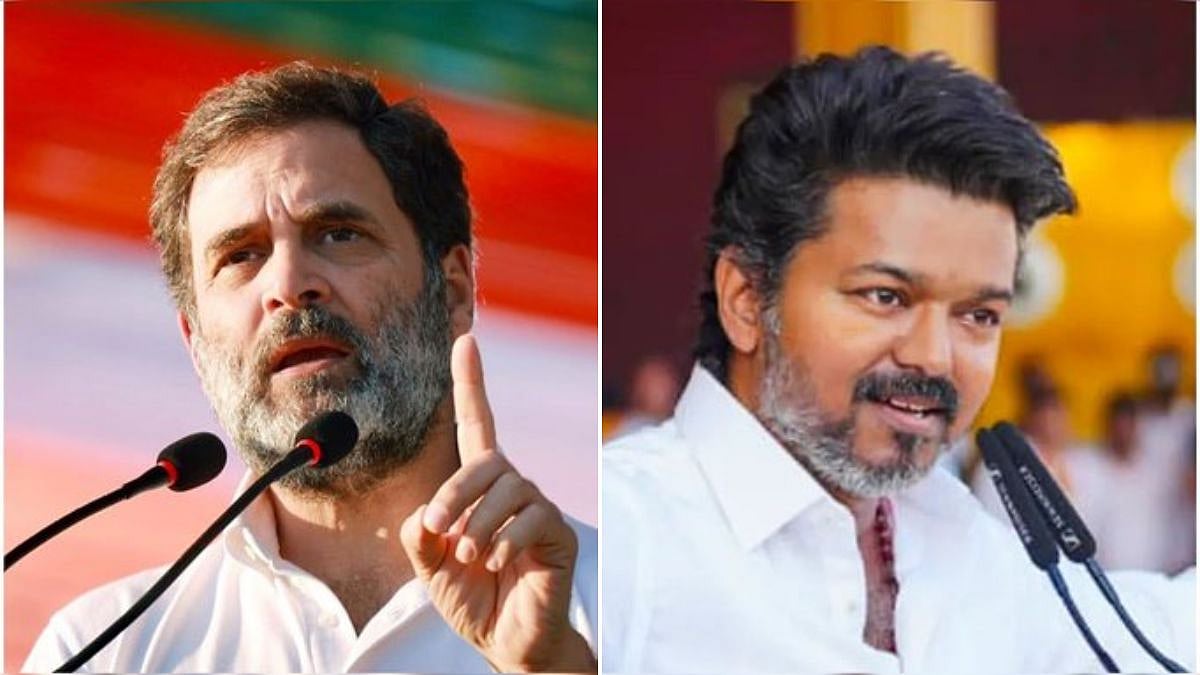
The lack of a vociferous roar of disapproval over the Congress party’s nimble-footed traipse in Tamil Nadu into the arms of Vijay’s fledgling TVK, abandoning a decades-old ally, is more than a local tactical shift; it is a virtual admission of the INDIA bloc’s peculiar and endless elasticity.
Congress shifts alliances in Tamil Nadu
Perhaps it is a survival instinct thing for each of the different parts of the bloc. Yet, this ability to adjust to electoral mathematics seems to have left the alliance overall in much less political space than it previously occupied.
The DMK’s wounded yelp of being backstabbed is entirely understandable, considering the two parties have been together now for ten years, looking more like a durable marriage than one of convenience; in the partnership, it survived the tempests of the UPA and the 2G spectrum trials.
Yet, the relationship has always been more symbiotic than parasitic. In Tamil Nadu, the Congress has seen its fortunes rise when the DMK’s sun was at its zenith and its numbers dwindle whenever the Dravidian major faltered.
Congress faces organisational weakness
Yet, this symbiosis highlights a fundamental weakness: the Congress possesses no grassroots organisation in Tamil Nadu to boast of.
It has long functioned as a high-prestige tenant in the DMK’s sprawling house, trading national legitimacy for regional seats.
By shifting to TVK’s embrace, the Congress is not showing strength, but rather its permanent state of dependency on whichever regional anchor currently holds the heaviest gilded chain.
Some Congressmen are being glib when they proffer that the vote was for change and the mandate not for the NDA and, therefore, the new betrothal. Well, the Tamil Nadu electorate does not seem to have voted in favour of the Congress.
INDIA bloc faces widening fissures
Such political chicanery aside, this episode is but the latest in a series of widening fissures across the bloc’s national map.
The ghost of Nitish Kumar’s 2024 exit, who walked away when state-level calculations and personal ambition outweighed national aspirations, continues to define the alliance.
In West Bengal, Congress and Mamata Banerjee have been at each other’s electoral throat, despite Rahul Gandhi’s remonstrations about vote theft.
In Delhi, the Aam Aadmi Party’s 2025 withdrawal from the bloc, following its own electoral decline, has turned a former partnership into a bitter street fight.
Regional compulsions weaken opposition unity
In Maharashtra, the Maha Vikas Aghadi remains a house of cards.
The INDIA bloc highlights a persistent lack of cohesiveness and an alarming tendency to disintegrate when confronted by regional compulsions.
By treating allies as interchangeable parts in an electoral engine, the Congress risks alienating the very regional satraps who provide the bloc its muscle.
If the glue holding them together is merely a shared distaste for the incumbent government, it is proving insufficient to withstand the allure of local spoils.
The national opposition increasingly resembles a collection of state-level fragments, each willing to cannibalise the other for a slightly better view of the treasury benches.
