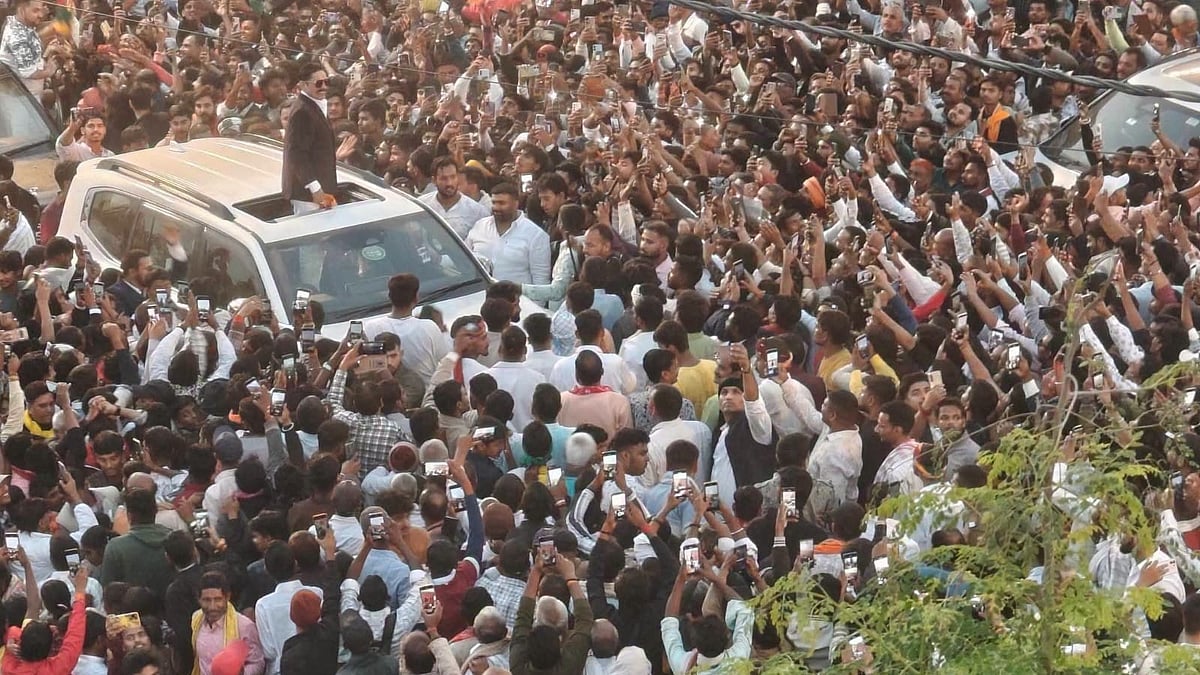
Anant Singh, the MLA from Mokama in Bihar, is no stranger to controversy. He has often hogged the headlines, though usually for reasons connected with his alleged criminal antecedents. This time, however, he found himself in the international press for a very different reason: the wedding of his daughter, Shivangi. The five-day extravaganza, which reportedly attracted nearly 400,000 guests, will be remembered as one of the most spectacular weddings Bihar has ever witnessed. Singh left nothing to chance. Multiple helipads were constructed, luxury convoys organised and a horse race planned. An elaborate feast, featuring hundreds of dishes, was prepared by a large army of cooks. Yet, there was one thing he apparently failed to anticipate: feeding four lakh people is not the same as hosting a select gathering of dignitaries.
Videos from the venue showed guests jostling at food counters, scrambling to catch plates being tossed around and improvising with cardboard, newspapers, and even drinking glasses. The horse race had to be postponed after unruly crowds overwhelmed the racing grounds. Some spectators climbed trees and even high-voltage electricity pylons to catch a glimpse of the spectacle. Roads around Nadwan village were choked for hours, with traffic queues stretching eight to ten kilometres. The extravaganza had clearly outgrown its organisers’ ability to manage it.
The wedding inevitably raised questions about the optics of such conspicuous consumption in a state where 33.76 per cent of the population is multidimensionally poor. Critics have questioned the source of the money and the propriety of such ostentation. Given Singh’s controversial past, these questions cannot simply be dismissed as politically motivated. Yet, there is something selective about the outrage. India has the largest number of poor people in the world, but that has never prevented its wealthy from celebrating weddings on a mind-boggling scale. Indian weddings are, after all, synonymous with extravagance. Our business tycoons often display little enthusiasm for philanthropy beyond donations to religious institutions, but when it comes to marrying off their children, the sky is not the limit.
Those questioning Singh should also recall the wedding of a prominent businessman’s son, when the union government reportedly opened a defence airport to facilitate the arrival of guests in private jets near the company’s township. Such extraordinary official accommodation would be difficult to imagine in most democracies. Yet, it happened here without provoking anything like the present indignation. This is not to defend Singh or the source of his wealth; it is to question the double standards of a society that condemns extravagance selectively. In India, poverty and opulence coexist, often cheek by jowl. The real scandal is not merely that a wedding can cost a fortune, but that a nation so accustomed to inequality has learned to regard such excess as normal.

