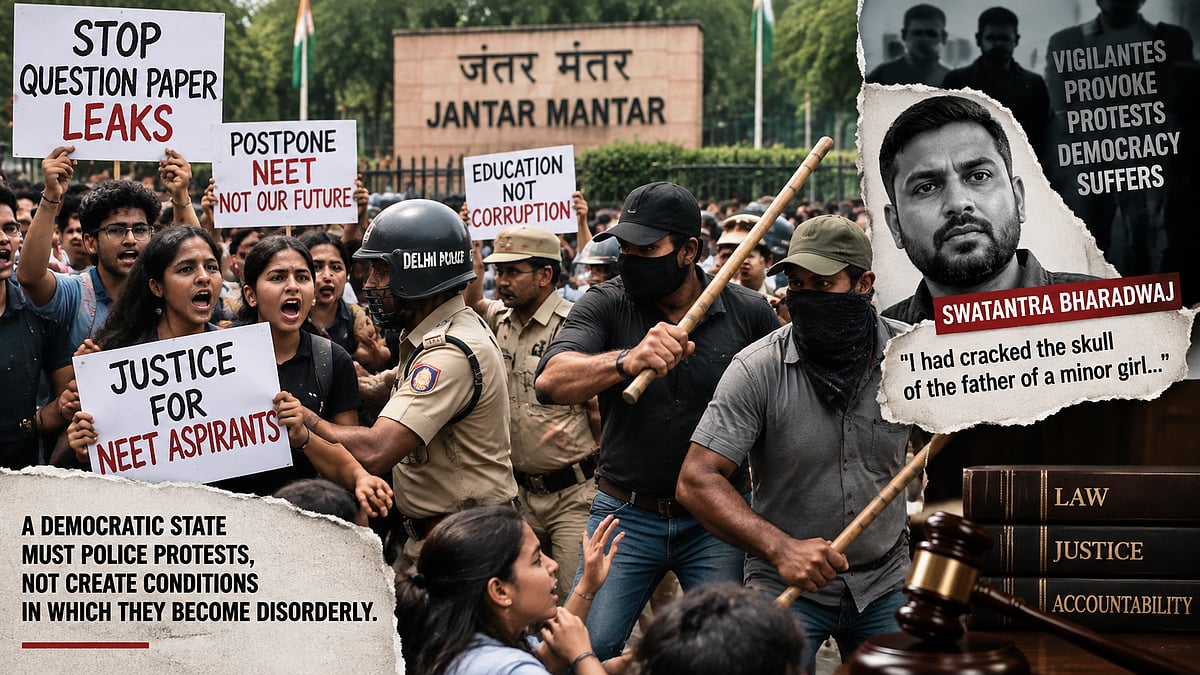
When students gathered at Jantar Mantar to protest question-paper leaks and the postponement of NEET, the police had every right to be there. Maintaining law and order is their duty, even when the protest itself is peaceful. What was disturbing, however, was the presence of men in mufti, armed with lathis, who appeared to attack protesters at the slightest provocation. Their identity has not been disclosed even now. More troublingly, they seemed to move alongside the police as though they were an extension of the official force. There were also apparent agent provocateurs whose conduct seemed designed to provoke the students and give the agitation a violent turn. Some social media influencers, too, seemed determined to portray the protesters as troublemakers rather than citizens exercising a democratic right. The state cannot remain silent when such forces intrude into a peaceful protest.
One name that has now become familiar is Swatantra Bharadwaj. He himself claimed that he had “cracked the skull” of the father of a minor girl participating in the agitation. He even boasted that an attempt-to-murder charge should have been brought against him but implied that his political connections had saved him. He named Delhi minister Kapil Mishra and Union minister Chirag Paswan as his benefactors. Paswan has denied any connection and, significantly, filed a complaint against Bharadwaj for using his name. The police have now arrested Bharadwaj after the students protested against the apparent delay in taking action. The case has since acquired an even more serious dimension, with a separate FIR containing provisions of the POCSO Act over alleged online harassment and threats against the minor protester. It is true that the police response came only after sustained public pressure. That creates an impression of indulgence that the establishment can ill afford.
The Bharadwaj episode carries a lesson that the government must not ignore: law and order cannot be outsourced to vigilantes. The police alone possess the legal authority to control an agitation. If protesters break the law, they must be dealt with firmly and impartially. If they do not, they must be protected from intimidation, provocation, and violence. Allowing unofficial actors to function alongside the police creates an intolerable grey area in which responsibility becomes impossible to fix. Worse, it can transform a legitimate protest into a confrontation and then provide the state with an excuse to suppress it. The allegations against Bharadwaj must be investigated without fear or favour, including those concerning the minor. Political connections, real or claimed, must have no bearing on the course of justice. The government does itself no credit by allowing fifth columnists to fish in troubled waters. A democratic state must police protests, not create conditions in which they become disorderly.

