Like high-adrenaline scenes out of a Mad Max film that keep viewers spellbound, the secular protest movement of the Cockroach Janta Party (CJP) drew its high-octane fuel from social media, leaving a cyber-focused government looking for an exit ramp.
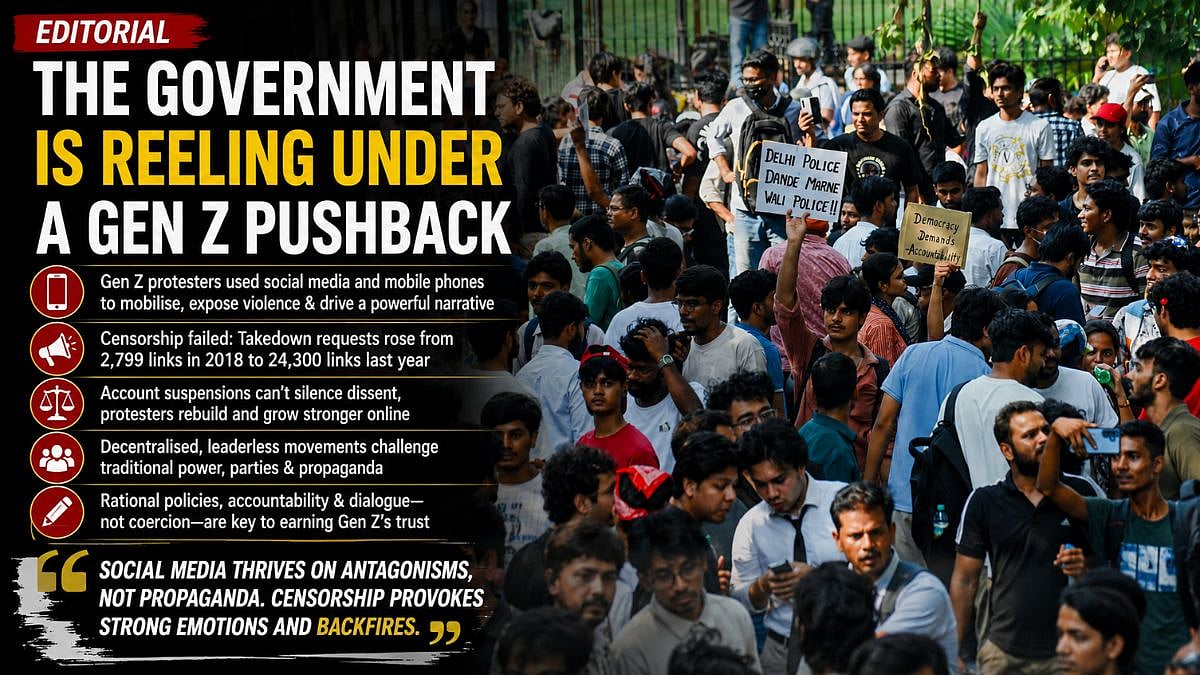
The young protesters in Delhi and elsewhere deployed creative chaos using just mobile phones in the face of indefensible violence by people in uniform and hostility from television networks.
What the government apparently forgot is that social media thrives on antagonisms, not propaganda. Unwittingly, it played into the hands of algorithms.
Social Media's New Reality
The question to ask is whether the lesson has been learnt after all, given the systematic efforts to use governmental authority to block the videos and messages of the protesting youth who threw social media spanners to stop an out-of-control machine.
Frequently, the Union government has been asking platforms such as Instagram and X to pull the plug on influential young people who score hits against those secure behind curtains of power. These accounts are summarily removed.
In some past cases, such crude absolutism failed, and court-directed restoration of accounts has taken place. Other victims, including the CJP, have simply regrown their online bases overnight with a different account.
This new reality should disabuse rulers of the belief that power can be perpetuated using coercion when, in fact, such an interpretation provokes strong negative emotions.
Established parties led by the DMK in Tamil Nadu largely failed to understand the nature of decentralised democracy in the age of social media, and it cost them the last election. C. Joseph Vijay and his upstart TVK scored a victory aided by cinematic charisma and slick video messaging that promised new beginnings.
Censorship And Public Dissent
Filtering out social media content on the student protest is part of a miasma of censorship that has left India a straggler on free speech. Requests to technology companies to block access to content rose from 2,799 links in 2018 to 24,300 links last year, while internet takedown orders soared 252 per cent in three years.
Supporters flood the zone with positive online messaging on the government’s policies and programmes, but the very nature of social media is such that this approach fails against strong counter-opinions and conflicting arguments that capture the winds of dissent.
Police attacks, anguished youngsters, bloodied heads, thuggish agents, satirists, and punchy placards reaped virality so effectively that important personages had to walk back their harsh characterisations of the agitating youth.
Lessons For Political Parties
This is the new reality that political parties and institutions have to live with. Rational policies are good only if they deliver on the social contract that voters signed up for and key institutions responsible for examinations, justice, elections, finance, and law-making retain legitimacy. Imposing authoritarian curbs on a generation that expects a better quality of life in its lifetime is bound to spectacularly fail.

