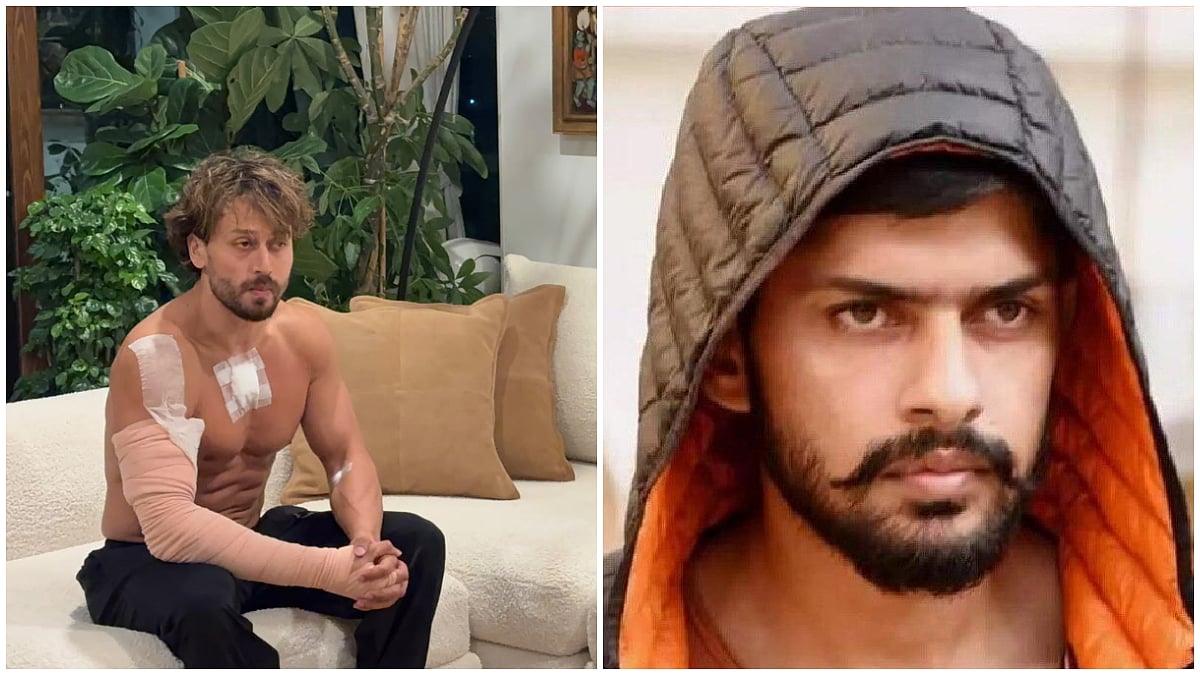
In the light of the attack on actor Tiger Shroff in Mumbai’s upscale and busy Juhu on Sunday evening and the Lawrence Bishnoi gang claiming responsibility for it, questions must point to the law-and-order machinery in states and the Union Home Ministry. The 30-something Lawrence Bishnoi has been held in a high-security prison since 2015, almost continuously in Sabarmati Central Jail, miles away from his native Punjab. However, he appears to conduct his mafia gang operations unhindered.
Bishnoi gang's history of attacks
The high-profile attacks and murders by the Bishnoi gang include that of Punjabi rapper Siddhu Moosewala, multiple targets in Canada, senior Mumbai politician Baba Siddique, who was close to actor Salman Khan, and attacks on Khan’s security-ringed house. Bishnoi had threatened Khan, outside a Jodhpur court, that he would be killed the way he had shot down blackbucks during a hunting spree in Rajasthan in the 1990s. The endangered animal is revered by the Bishnoi clan. A social media post, immediately after the attack on Shroff, also claimed that he had been targeted because he worked with Khan. The three shooters, two teenagers from Haryana’s Sonipat and a 22-year-old from Bihar, were arrested a day later.
Questions over security and enforcement
The hard question about Bishnoi’s crimes from behind bars is inescapable. How is the gangster, held in high-security custody, able to mastermind killings or issue threats to actors and stand-up comedians, among others? It must be a well-coordinated network that can select targets, procure weapons, recruit sharpshooters, conduct recces, and carry out hits with impunity. This is an utter failure of the law-and-order machinery, not only in the states that have seen the killings but also in Gujarat, where Bishnoi has been jailed, and, more so, at the Centre.
Institutional failure to contain gang
The National Investigation Agency is aware that the Bishnoi gang has about 700 members and a hitlist that includes actors and stand-up comedians. A court had expressed displeasure that Bishnoi was able to do an interview from behind bars. The institutional failure to contain Bishnoi and dismantle his network can no longer be overlooked, especially when it claims to have wiped out ‘Red Terror’ or Naxalism from India’s map. The brazenness and impunity with which Bishnoi appears to operate leave enough room to raise questions about the incompetence or, worse, unwillingness to contain him.
Echoes of Mumbai's underworld era
For high-profile people in Mumbai, the Shroff shootout is a throwback to the bloodied streets and shocking hits when the underworld gangs of Dawood Ibrahim and Chhota Rajan were in force. Hit lists, threatening calls, and gunshots were common for high achievers then. The targeted do not seem to be safe today either. But the critical difference is that underworld bosses operated from international cities, whereas Bishnoi calls his shots from inside a high-security prison in India. Or so we are led to believe.

