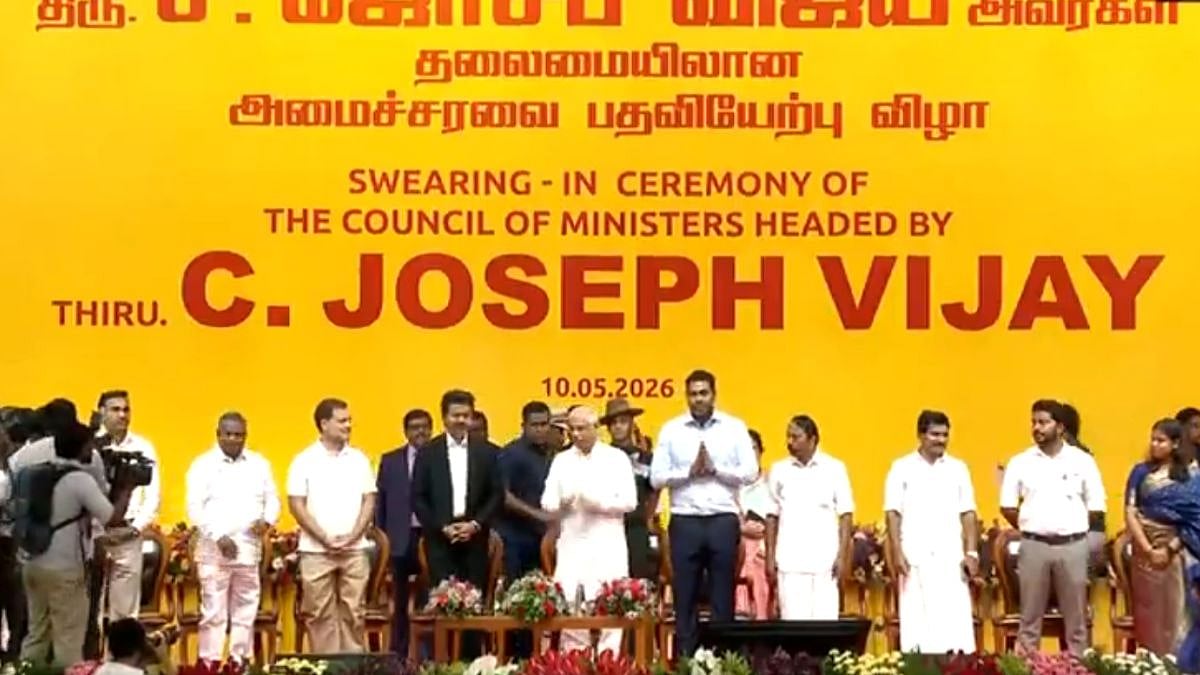
At the end of a week of electoral intrigues and cliffhanger moments, C Joseph Vijay, the leader of the Tamilaga Vettri Kazhagam (TVK), was sworn in as Tamil Nadu’s Chief Minister, although it will take a successful vote in the Assembly floor test on or before May 13 to cement his position. Vijay discovered the travails of a party with no previous experience and allies and, crucially, needing 11 MLAs for a majority, trying to cobble up the numbers to form a government. Although the Congress, with five members, detached itself from the DMK alliance quickly and announced its decision to back him, the matinee idol who overturned the applecart of the Dravidian Kazhagams found himself hobbled by his inexperience in attracting six more members to his fold. His early decision to submit a list of TVK MLAs and the support from the Congress to Governor Rajendra Vishwanath Arlekar was impetuous, as it became incumbent on him to prove that he did have 118 MLAs; his single largest party status would have fully met constitutional norms and settled law on the finality of a floor test. More surprises followed when, unlike the CPI and CPI(M), the support of two other DMK allies, the VCK and the IUML, came just ahead of the deadline to avoid President’s rule. Mystery has surrounded the moves of the two big Dravidian majors who suffered a shock defeat in the polls, with the astounding back channel suggestion by some mid-level leaders that the DMK should offer support to its political foe, the AIADMK, to form the government, even ignoring the latter’s alliance with the BJP. The DMK’s defeated leader, MK Stalin, did not publicly speak of this possibility, but the proposal's inevitable collapse salvaged the ideological space between both parties that has kept one or the other in power and edged out a third formation.
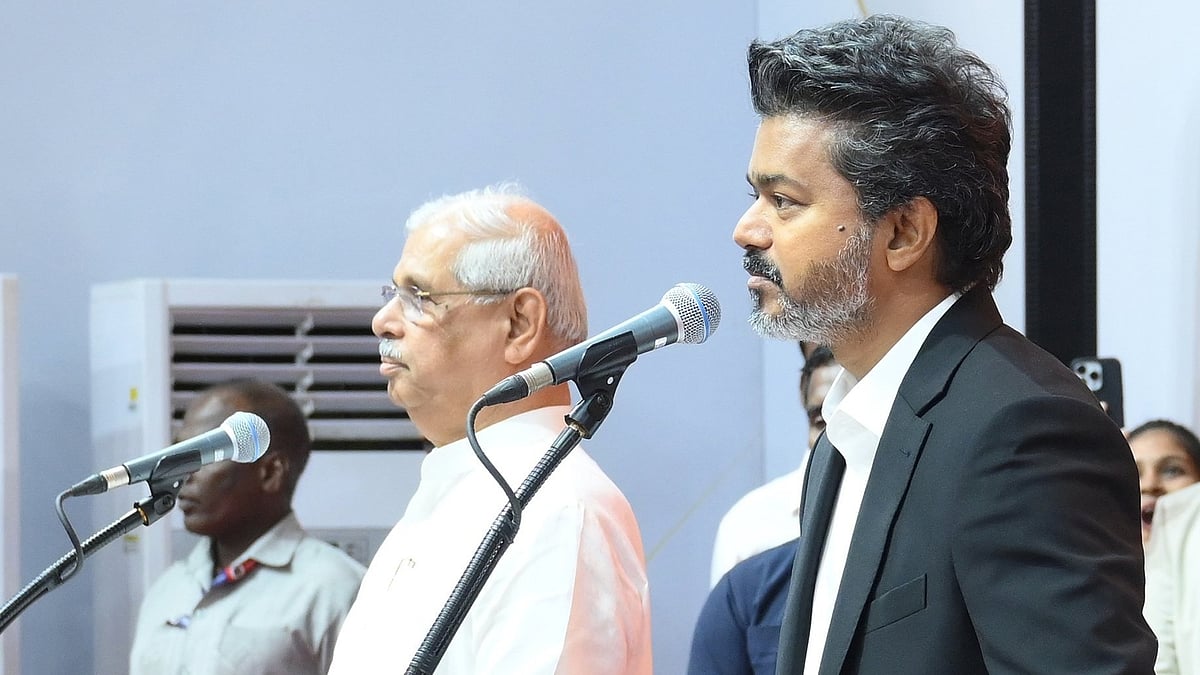
Vijay may be a political greenhorn, but he rides a wave of popular support that has ignored all the obvious deficiencies—of a party where the leader does not know all his legislators well; of weak articulation on major issues such as language and state autonomy held dear by the Dravidian pantheon for six decades; and of the risk of his flock breaking up under various pressures and the sheer inexperience of the majority of TVK leaders. The celebrations may also be threatened by other political permutations and combinations that may emerge. What many see as a watershed moment in TN politics, however, is the rise of a populist who has the means to clean the deeply corrupted governmental machinery in the state. Former DMK minister PTR Palanivel Thiagarajan publicly estimated revenue seepage of 40%-50% in key departments like excise from alcohol, mining, and commercial taxes in 2022. If Vijay manages to stabilise his ride, it is this lost prosperity that he needs to tap to fund ambitious welfare programmes.
