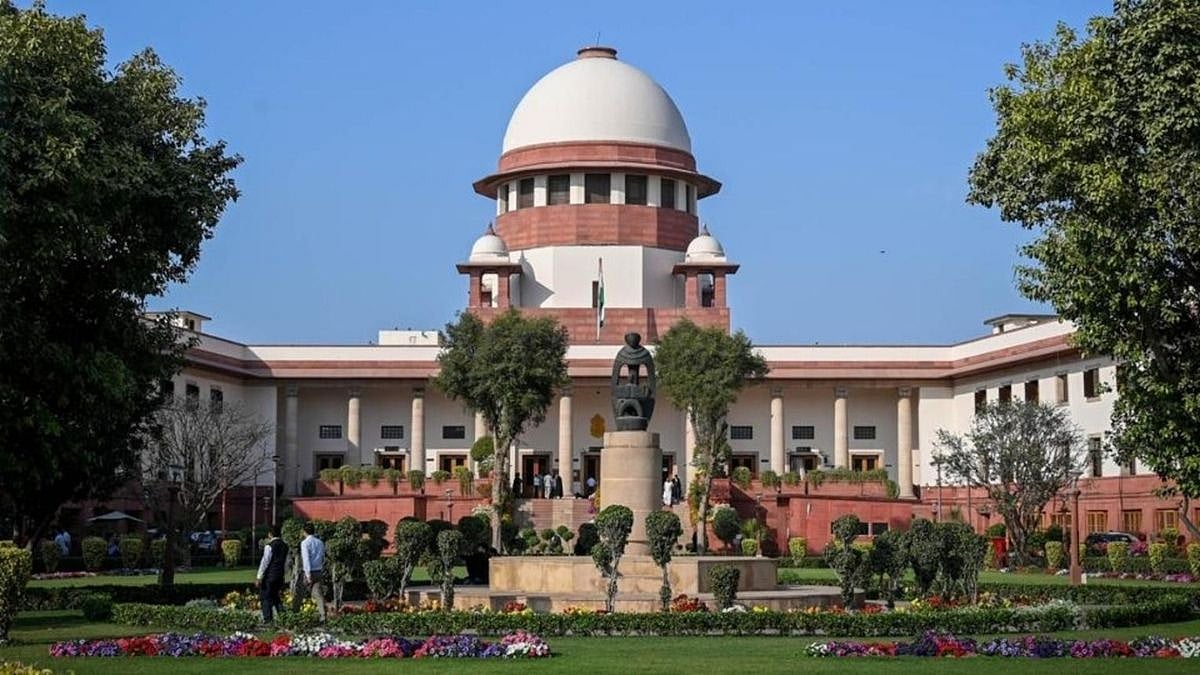
The Supreme Court’s stern warning to the Enforcement Directorate (ED) against meddling in the functioning of other investigating agencies is timely and necessary. The rule of law demands that every institution operate within its statutory jurisdiction, however powerful it may be. A vacation bench of Justices Joymalya Bagchi and V Mohana delivered this message while hearing petitions filed by CPI(M) leader and former Kerala chief minister Pinarayi Vijayan, his daughter Veena, and her husband, Mohammed Riyas.
“Don’t extend your hand beyond your statutory limits,” the bench told the ED, making it clear that the agency could not dictate how the state police or other competent authorities should act on information it supplied.
Case Involves Alleged Payments Of Rs 2.78 Crore
The case concerns alleged payments of Rs 2.78 crore by Cochin Minerals and Rutile Ltd (CMRL) to Exalogic Solutions, an IT company founded by Veena. The ED suspects that the payments constituted illegal gratification intended for Vijayan. These remain allegations.
While investigating the alleged money-laundering offences, the ED shared material with the Kerala Police. Instead of immediately registering a First Information Report (FIR), the police opted for a preliminary inquiry. Subsequently, a single judge of the Kerala High Court directed the Vigilance and Anti-Corruption Bureau to register an FIR.
The Supreme Court has now enabled the petitioners to challenge that order before the High Court’s Division Bench and stayed the investigation for a week. Its observations do not amount to a verdict on the merits of the allegations.
Statutory Powers Have Clear Limits
The distinction drawn by the apex court is fundamental. The ED is entitled to investigate money laundering and prosecute offenders under the laws entrusted to it. Established in 1956, the agency originally handled violations of foreign-exchange control laws under the Foreign Exchange Regulation Act, 1947. Its responsibilities have since expanded to include the enforcement of foreign-exchange regulations and anti-money-laundering legislation. This evolution, however, does not confer unlimited authority.
The ED must be allowed to perform its legitimate duties without political interference, but it must also be held accountable for its actions. Its statutory powers are meant to enforce the law, not to intimidate political opponents or encroach on the jurisdiction of other agencies.
Public Trust Depends On Accountability
The Supreme Court’s warning should serve as a reminder that institutional authority comes with clear limits and corresponding responsibilities. If the ED is to regain public trust, it must demonstrate impartiality, professional competence and respect for the rule of law.
An agency empowered to investigate financial crimes cannot be allowed to become a law unto itself. The ultimate test of its effectiveness is not the number of cases it initiates, but its ability to build credible cases and bring offenders to justice.
The Supreme Court has drawn the line; it is now for the ED to respect it.
To get details on exclusive and budget-friendly property deals in Mumbai & surrounding regions, do visit: https://budgetproperties.in/

