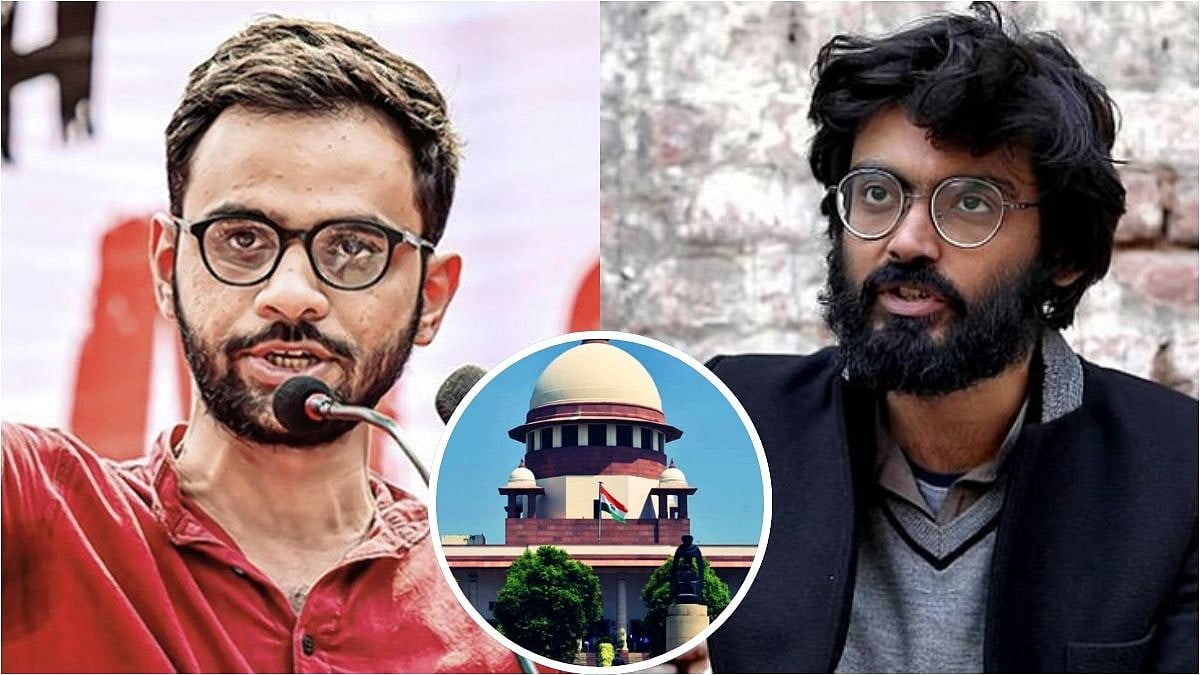
The split verdict this Tuesday by the two-judge bench of the Supreme Court of Justices B.V. Nagarathna and K.V. Viswanathan on the constitutional validity of Section 17A of the Prevention of Corruption Act (1988) has left the vexed question still tantalisingly open: is prior sanction mandatory for an investigation against a government official accused of taking a bribe?
Section 17A, introduced along with a slew of amendments in 2018 to the PCA, made sanction mandatory for investigation and laid down that no police officer could conduct an inquiry or investigation of a public servant accused of taking a bribe without “previous approval” of the competent authority, which could be the Union government, the state government, or the authority vested with the power to dismiss that official from service.
Challenge to constitutional validity
Section 17A, the petitioner Centre for Public Interest Litigation argued, was arbitrary, unconstitutional, and violative of Articles 14 and 21 of the Constitution of India. In operation, it offered legal protection to corrupt public servants by allowing inordinate delays or ways to ingeniously thwart the required “previous approval” by the competent authority.
In several cases, the competent authority required to green-light the approval of the inquiry or investigation was the very office or administrative level that the accused was a part of, making it a conflict-of-interest situation. Together, these implications fundamentally but subtly defeated the very purpose of the Act itself, rendering it toothless even as anecdotal instances of corrupt practices at every level of the government proliferated. In effect, Section 17A became a shield for the corrupt if they knew how to use the spaces between its words.
Government’s defence
The Union government consistently defended it on the grounds that the open-ended threat of inquiry would make honest officers fearful of post-facto criminal investigations into their bona fide decisions, due to which governance would suffer. The verdict would have tilted the scales one way or the other.
Divergent judicial views
However, the two judges took divergent views — Justice Viswanathan upheld Section 17A and mandated an independent screening structure, such as the Lokpal or Lokayukta, for providing the mandatory approval, while Justice Nagarathna rejected this to record that the section itself was unconstitutional and, in some ways, protecting corrupt public servants. The case has been referred to a larger bench of the Supreme Court.
Uncertainty continues
Till it passes through the labyrinthine legal procedure with a clear verdict at the end — which could take a few years — the question of prior sanction or previous approval for investigating allegedly corrupt officials remains wide open.
Intent versus impact
The objective of introducing Section 17A was to strengthen the PCA by expediting investigations into bribe-taking officials. The intent, on the face of it, was laudable, but reading between the lines, it has continued to allow corruption in the corridors of power to flourish. Had the Supreme Court taken a firm stand against Section 17A, it might have gone a long way in addressing corruption in public offices.