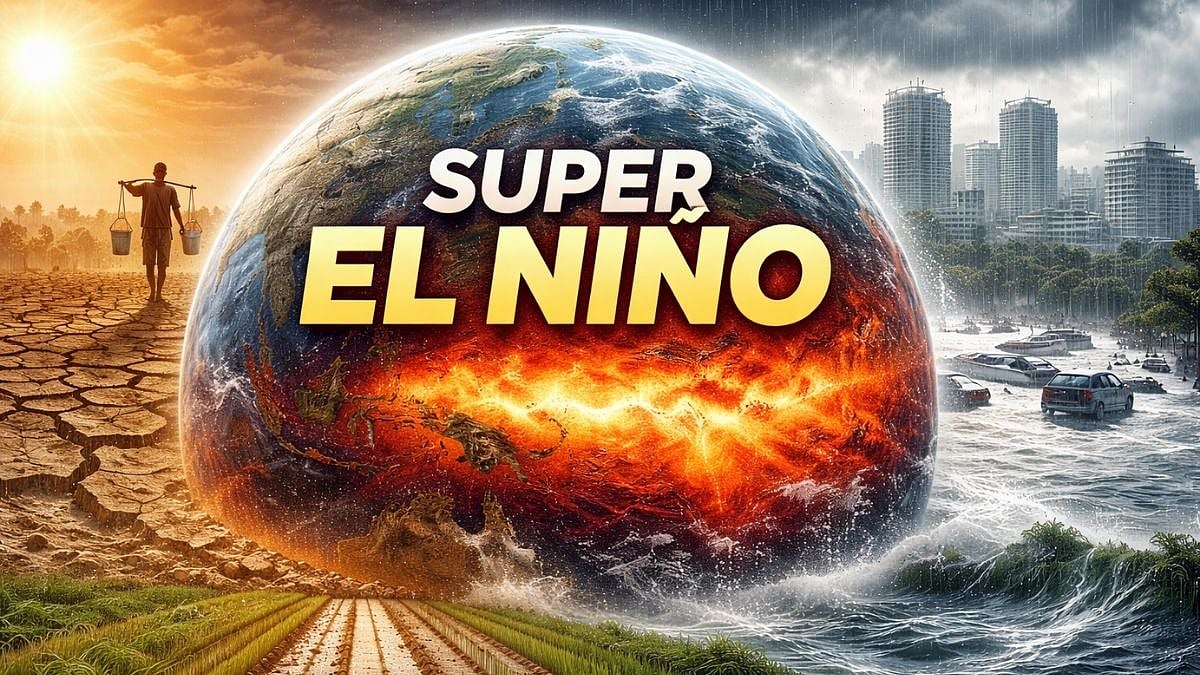
Urban residents and farmers alike are bound to feel anxious, as weather forecasters around the world point to a likely El Nino climate phase setting in during the later part of 2026. It is true that there is no consensus on the scale of this familiar phenomenon that could make next year the hottest on record, but the earliest projection from the European Centre for Medium-Range Weather Forecasts (ECMWF) is strongly positive for a super El Nino year.
Uncertainties mark the extent of impacts of such weather phenomena, which arise from higher sea temperatures in the tropical Pacific Ocean, but they clearly influence the course of drought, floods, and hurricanes worldwide.
Two severe El Nino years in the recent past, 1997-98 and 2015-16, had varying impacts; the Indian subcontinent largely escaped a crippling drought that was anticipated in the first due to a positive countervailing weather phenomenon called the Indian Ocean Dipole.
This year, the India Meteorological Department (IMD) has forecast deficient southwest monsoon rainfall at 92% of the long-period average, with a variability margin of 5%. Such a depressing outlook stands in contrast to recent years of plentiful rainfall.
Credit rating agencies have issued cautionary notices for agriculture to prepare for a long tail effect of an aberrant monsoon, adding a worrying layer of unpredictability to confounding disruptions in the fertiliser and fuel markets due to the Iran war.
These pointers warrant advance preparations at the national- and state-level departments handling water, irrigation, disaster management, and food and urban affairs.
Forecast models and global indicators
If an El Nino sets in from September to October this year, the potent effects would be felt in 2027. Evidence of what could be anticipated would be available over the next several months, when the sea surface temperature in the equatorial Pacific Ocean rises above particular thresholds.
The ECMWF expects a 50% chance for an anomaly of a 2.5 degrees Celsius temperature rise by October (the El Nino threshold is half a degree over the long-period average), while the US forecasts talk of a 25% chance of a super El Nino developing by the end of this year.
What stands out are two models from Europe that even expect the anomaly to be 3 degrees, which would make this the strongest El Nino ever recorded.
Need for preparedness and research
Science-based forecasting is a welcome opportunity to validate the models against actual observation in each year’s monsoon, calling for a commitment to research at weather organisations.
The 2026-27 experience will be invaluable to test the link between the El Nino Southern Oscillation and the associated phenomenon and the extent of monsoon variability, influenced by the IOD.
What governments should do is prepare the reservoirs to harvest any and all rainfall to serve both the agriculture and drinking water needs of populous cities. The flood mitigation machinery also needs to be battle-ready.

