The war on Iran is at its terminal end, though peace talks are moving towards an uncertain territory between Trump’s daily bluster and bluff and Iran’s cautious rigidity. One round of talks has already happened, and another is in the pipeline; how soon it happens depends on how much or how little Trump speaks.
Pakistan, a failed state by every logic, has surprisingly emerged as a great mediator, and the world is watching with great expectation for when permanent peace will prevail in the Middle East.
But in this ‘war of choice’, as depicted by the Trump administration, who is the real winner? The unanimous answer will be Iran, which is badly wounded, but the world is in awe of its tenacity to fight the combination of global and regional superpowers with great courage. This war has broken the myth of American hegemony, but Israel has emerged as the biggest loser.
Historical context and shifting perception
Israel was a product of colonial politics, like Pakistan in South Asia. The guilt of Western powers due to the persecution of Jews over centuries, epitomised by Hitler’s Holocaust, gave birth to Israel after the Second World War. It was not easy for Israel to survive in the Middle East surrounded by Muslim countries, but because of its civilisational will to survive at any cost and the unconditional support of the USA, the Jewish state thrived and became a regional superpower.
But the way events have unfolded and Israel has reacted militarily since October 7, 2023, when it was attacked by Hamas and the whole world sympathised with Israel, has raised serious questions about the intent of its leadership.
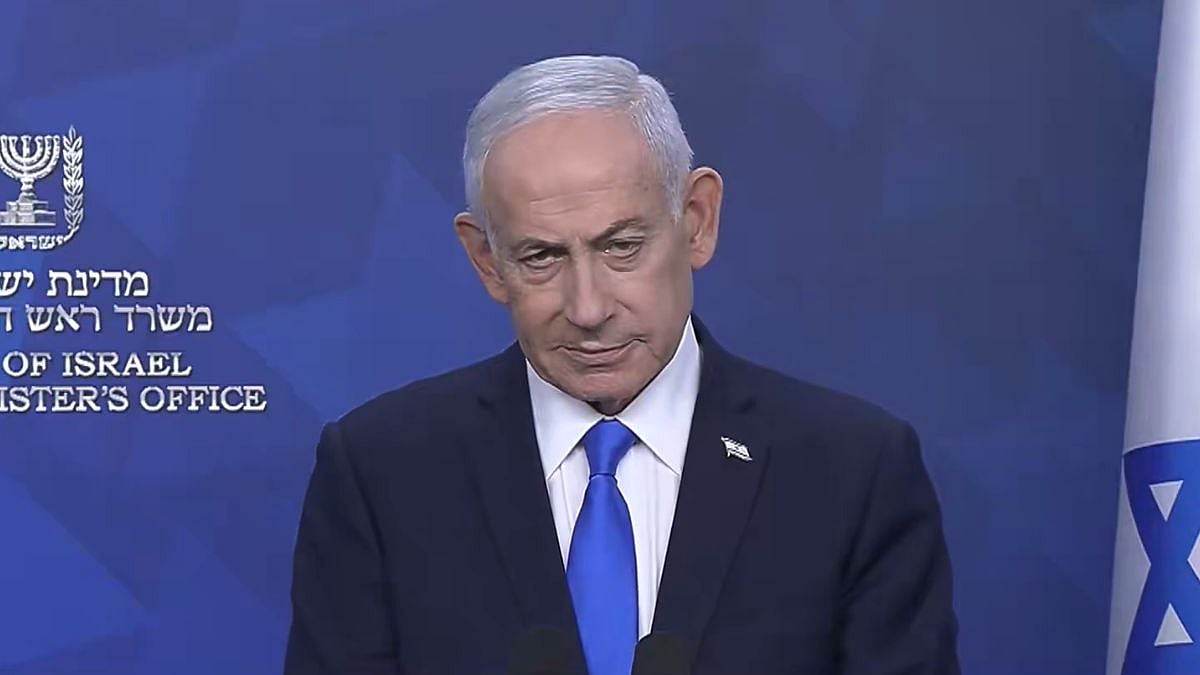
Now, in the era of digital podcasts, when the views of top intellectuals are easily available, Benjamin Netanyahu is seen as the villain. Several Jewish intellectuals and journalists are scathing in their criticism of Netanyahu’s conduct. Be they veteran journalist Gideon Levy, seasoned economist Jeffrey Sachs, or author of many books Yakov Rabkin, all are predicting doom for Israel and blaming far-right Zionists for its fall.
There is no doubt that the Hamas attack on Israel was a despicable act, and it was condemned by all in one voice, but Netanyahu’s uncontrolled retaliation on Gaza, which killed more than 76 thousand people, mostly innocent children and women, has not helped Israel’s cause. The whole of Gaza is flattened and has been made unliveable.
This was a genocidal act for which the International Court of Justice has called Netanyahu a war criminal and has issued an arrest warrant against him. Most mysteriously, even the Biden administration did not try to stop him.
Once a ceasefire was brokered in Gaza, it was believed that the Middle East would witness peace, but an attack on Iran by Israel with the help of Trump has confirmed the belief that far-right Zionist elements in Israel have turned the country into a rogue state.
Global criticism and declining support
Iran has its own blemishes, no doubt. It has created many terrorist organisations in the name of Islam, but it can’t be faulted for the war this time. It was a devilish game. Trump and Netanyahu both conspired to annihilate Iran but failed miserably.
What was more despicable was Israel’s repetition of the Gaza act in South Lebanon. Innocent civilians were killed, and village after village was burnt, without any concern for human rights and global public opinion. This war has tremendously diluted sympathy for Israel globally, which it had attained because of the Holocaust at the time of its creation.
Today, in the US, the land of its greatest supporters, sympathy for Israel is greatly down. According to a Pew Research Centre survey (done between March 23 and 29), “60% of US adults have an unfavourable view of Israel, up from 53% last year; 59% have little or no confidence in Netanyahu to do the right thing regarding world affairs, up from 52% last year.”
As reported by Al Jazeera, "A Gallup poll reveals 41% of Americans now sympathise more with Palestinians, while 36% are more favourable to Israelis. Before Hamas's act was followed by the genocidal war in Gaza, 54% of Americans sympathised more with Israel and only 31% with Palestinians.
Debate around Zionism and ideology
Israel was a creation of Zionism, a political ideology that should not be confused with Judaism. It is a modern phenomenon. Jews, as a nation, have been living without a state for almost two thousand years, scattered around the globe.
They were the most persecuted community, but with the rise of nationalism in the 19th century, a section of Jews strived to have their own homeland where they could live without fear and in peace. The pogrom in 1881 against Jews in Russia was the trigger point, and an ‘assimilationist’ like Theodor Herzl reached the conclusion that a state for Jews was needed.
Under his initiative, the first Zionist Congress was held on August 29, 1897, with delegates from 16 countries participating. Even then, a large section of Jews were opposed to a separate Jewish state. One of the richest men then, Edmund de Rothschild, a Jew, opposed the very idea and said, “One must not have eyes bigger than one’s stomach.”
Over the years, many territories, including Palestine, Cyprus, El Arish on the Egyptian border, and Uganda, were discussed as possible sites for the Jewish home. Finally, a consensus was reached on Palestine. In the 1917 Balfour Declaration, a seal was put on Palestine. And after the Second World War, Israel was created in 1948, despite the Arab countries' objections.
This new state successfully fought many wars since then, but it was a genocidal war in Gaza that brought condemnation from across the world, and serious questions were raised about Zionism. Veteran journalist Gideon Levy described the war in Gaza as a “complete death of morality".
He frequently calls Israel an "apartheid state” vis-à-vis Palestinians. Sachs wrote on September 30, 2024, “Israel’s ideology of genocide must be confronted and stopped.” Yakov Rabkin, who wrote books on Zionism and Israel, says, “Zionism has seeds of fascism and structural xenophobia."
Ongoing debate and moral questions
I know this debate will continue. Israel will now be viewed more critically. This war has further amplified the critical voices. There is no debate about the Jews' state, about the existence of Israel; the debate is about the leadership that is at the helm and about the ideology that is Zionism.
Jews deserve a state; they deserve to live in peace, as do others, too. Leaders like Netanyahu, in their messianic zeal for a greater Israel, have done more damage to the cause of Jews and Israel than any good. The Iran war may end soon, but the moral question will continue—can an ideology be allowed a free run without any human concern just because it was persecuted in the past?
The writer is Co-Founder, SatyaHindi.com, and author of Hindu Rashtra. He tweets at @ashutosh83B

