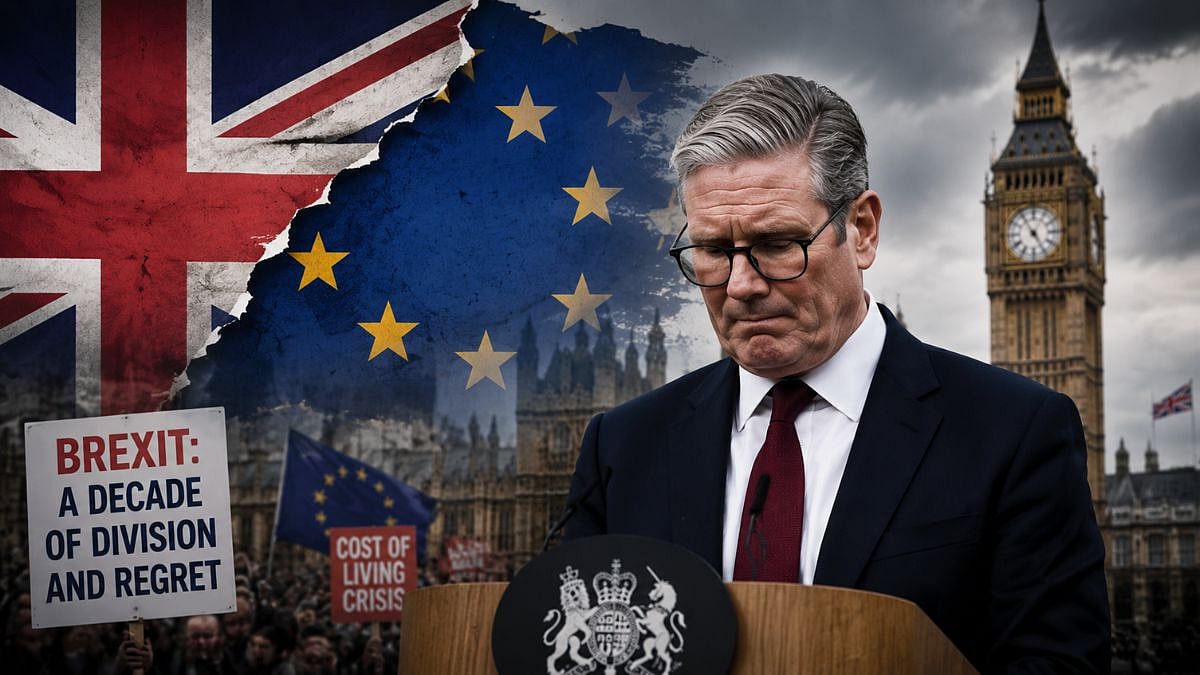
The resignation of Prime Minister Keir Starmer marks yet another chapter in the extraordinary political instability that has gripped Britain over the past decade. Few in Britain would have been genuinely surprised by his departure. He inherited a nation deeply scarred by the divisions unleashed by the 2016 Brexit referendum, whose votes began to be counted exactly ten years ago this week.
Since then, the country has struggled to find a sense of purpose or cohesion. Economic stagnation, rising unemployment, soaring living costs and the growth of populist politics created a hostile environment for any government.
Yet, Starmer’s critics argue that he compounded these difficulties by displaying a tendency to compromise when firmness was required and by failing to produce imaginative policies capable of restoring public confidence in the Labour Party.
Political Instability Deepens
The severe drubbing suffered by Labour in the local body elections left him with little political room to manoeuvre. His resignation makes him the sixth Prime Minister to leave office in as many as 10 years, underscoring how turbulent British politics has become.
The emergence of Andy Burnham as Starmer’s successor now appears inevitable, with other Labour contenders rallying behind the former Mayor of Greater Manchester following his by-election victory.
However, the road ahead offers little respite. Burnham inherits virtually the same set of problems that overwhelmed his predecessor. Britain’s public services remain chronically underfunded, and reviving them would require resources that the Treasury can scarcely spare.
At the same time, pressure is mounting to increase defence spending after President Donald Trump’s insistence that European nations should no longer expect the US to underwrite their security indefinitely. Any substantial military expansion would inevitably necessitate painful cuts elsewhere, even as citizens continue to expect the protections of a generous welfare state.
Added to this is the complicated task of managing relations with Washington during Trump’s remaining tenure in the White House. Starmer’s judgement was questioned after he appointed a controversial ambassador to Washington, whose alleged links to the Epstein affair later became a political embarrassment, even if the Prime Minister himself was unaware of them.
Britain's Unfinished Brexit Questions
Britain’s party-centric parliamentary system nevertheless provides a measure of continuity amid frequent changes at the top. Governments do not necessarily collapse because one leader departs, as one individual is swiftly replaced by another. Yet, the ease with which prime ministers can be changed should not obscure a more troubling reality.
Britain is still searching for answers to questions that have lingered since Brexit. How to revive growth, restore confidence in public institutions, and reconcile competing expectations of security, prosperity and social justice?
Andy Burnham may soon occupy 10 Downing Street, but redemption will come not from a change of faces but from the emergence of a convincing national strategy capable of uniting a weary and increasingly impatient electorate.
