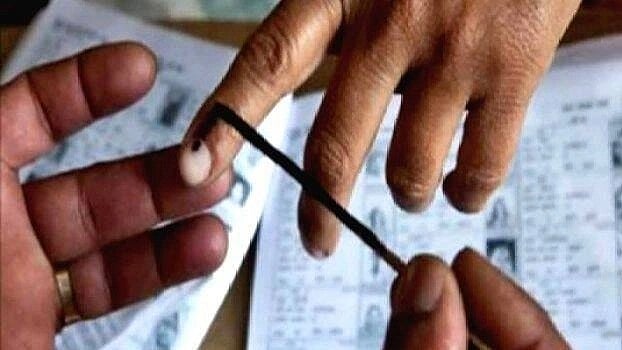
A year after the special intensive revision (SIR) of electoral rolls began in Bihar, the massive exercise, subsequently extended to several other states and union territories, has set off multiple concerns over documentation, voter deletion, disenfranchisement, and the legal meaning of citizenship itself. Though the Supreme Court has clarified that determining citizenship is beyond the Election Commission (EC) and the SIR exercise is mainly aimed at removing duplicate and deceased voters, the larger question is: if citizenship is the criteria for determining voting rights, then what makes someone an Indian citizen?
The citizenship rules under the Constitution and the Indian Citizenship Act, 1955, are pretty simple and demystify what determines who is an Indian. The four primary pathways to citizenship are birth on territory, birth to a citizen (descent), naturalisation, and registration. In addition to these, the CAA of 2019 creates a specific pathway to naturalisation/registration for religious minorities from Afghanistan, Pakistan, and Bangladesh. Most people acquire citizenship by birth, which is logical because most people do not naturalise or register as citizens. This is true not just for India but also for the rest of the world.
Like the US, India, too, had birthright citizenship between 1955 and 1986. This was amended in 1986 to make citizenship by birth conditional on either parent being an Indian citizen. In 2003, the rule was further amended to deny anyone born in India after December 3, 2004, to a parent who was an illegal immigrant. Given India’s historically patchy documentation, combined with the receding right to citizenship at birth, it means that documentary evidence of citizenship is an elusive exercise for many. Suffice it to say that not all citizens of India have birth certificates, or school-leaving certificates.
The gradual withdrawal of absolute citizenship by birthright means that reliance on documentary evidence has increased over time, which in any case has been scarce in India. Not all citizens have caste certificates, land records, LIC certificates or government employment documents. All of this means that if presumptive citizenship is questioned and the burden of proof is on citizens, then a lack of documents to prove citizenship is likely to impact voting rights of millions of people. In Bihar, 47 lakh voters were struck off the electoral rolls; in Bengal, 91 lakh, of which 27 lakh could not vote in the recent assembly election because their voting rights were under adjudication.
Mass notice issuances and deletions in Bihar and West Bengal led to deep anxieties that the SIR mimics the National Register of Citizens, shifting the fundamental legal burden from a presumption of civic inclusion to a constant requirement to prove legitimacy through documents. Strict documentation metrics will require appropriate authorities to resolve anomalies and logical discrepancies. As layers of filters and complications have been added to determine the eligibility criteria for voting, what emerges is a Gordian knot: difficult to untangle and equally hard to make sense of what’s happening and why. In the second phase of SIR in 12 states, about 7.2 crore names have gone out of electoral rolls.
No one has been stripped of citizenship so far by the SIR exercise, but who knows what comes next. While upholding the SIR as a legitimate exercise, the SC in May did draw a line that the EC decides who can vote but not who is a citizen. This is a sound reassurance, but it does not lessen the anxiety of millions of Indians, particularly the poor, less educated, and least literate, who do not know what happens if their names are struck off the electoral rolls after the 2026 SIR. So, is SIR the first warning? And what waits beyond? The tribunals, the burden of proof for which, in many cases, is difficult to produce? What happens in such a scenario then?
These are difficult questions worrying millions of citizens who always believed that their citizenship, more so in an age of Aadhar, pan cards, and digital payments, is beyond question. But when a state goes about asking its citizens to prove their citizenship, the poor are the ones who are likely to fail more than the rich, not because they are not citizens but for the reason that they are the ones who have not done their paperwork properly. The daily wagers, the street vendors, the construction workers, the migrants, and many others who do odd jobs are the ones who suffer not because they belong less but because they never understood the legal meaning of citizenship and did not expect that they would be asked to prove it one day.
This is a sad consequence of the SIR process that many experts, activists, and opposition parties say is exclusionary rather than inclusive in nature. They claim that since the process shifts the burden of proof onto registered voters to supply legacy documents and fill forms under tight administrative timelines, it risks targeted exclusion. A key argument against the ongoing SIR is that it marks a significant departure from the last such exercise conducted in 2003, which was spread over six months and relied on existing voter rolls and voter ID cards (EPIC). Moreover, voters are now required to produce legacy data from 2002-2004 rolls, even if already registered, and the burden of proof lies heavily on the elector.
Beyond procedural issues, the human dimension to the SIR process cannot be overlooked. Stress, fear, and anxiety among voters over possible deletion from electoral rolls and problems faced by elderly people and daily wagers underscore various difficulties of the situation on the ground. By requiring existing voters to establish their eligibility again, the SIR raises questions about the presumption of citizenship attached to electoral rolls and the potential for exclusion through procedural complexity. The larger argument against the SIR is the broader constitutional concern: despite the SC’s legal validation, the blurry line between electoral eligibility and citizenship risks altering the very nature of electoral inclusion in India.
Here is a simple question: should the EC and the Indian state not accept the documents people have instead of asking them to hunt for relics from the past to prove their lineage?
The writer is a senior independent Mumbai-based journalist. He tweets at @ali_chougule

