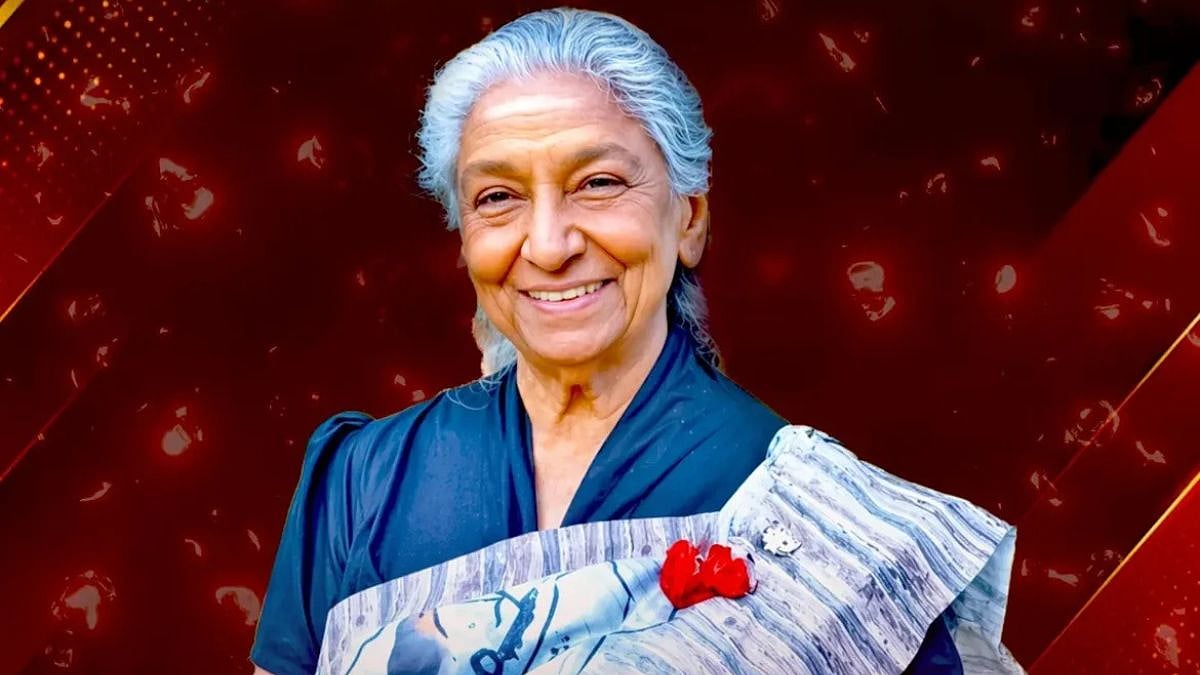
Much like Lata Mangeshkar, Sistla Sreeramamurthy Janaki, or just S. Janaki, was a legend whose mellifluous voice broke into melody and magic to offer such lilting numbers that moved a nation to tears—joyful tears. In fact, many of us who grew up listening to her songs often forgot the movies in which the numbers played, but never the songs! Born in Andhra Pradesh's Guntur in April 1938, her passing on July 11 was a humungous loss to the world of mostly cinema. She also rendered devotional numbers apart from pop, disco, and film music. Fluent in several languages, including her mother tongue Telugu, she sang in Malayalam, Hindi, Punjabi, and Bengali, as well as English, Japanese, German, and Sinhala. Her first steps into the musical arena were through Vidhiyin Vilayattu in 1957. She was just 9 and offered songs in six different languages the same year—a record that has probably never been broken.
Winner of multiple prizes, including four national awards and 33 state movie awards, Janaki also clinched the prestigious Kalaimamani Award from the Tamil Nadu government. But when she was offered the Padma Bhushan in 2013, she refused it, saying that it came too late in her 55-year-old career. Besides, she also rued the lack of recognition for South Indian artists. They were always sidelined, she felt, and she was not far from the truth. With no formal training in classical music but with a fantastically disciplined upbringing by an Ayurvedic doctor father and a teacher mother, she learnt the secrets of success—passion and dedication. And the basics of music flowed from Nadaswaram Vidwan Paidiswamy. A public performance at nine did not go to her head; rather, it made her humbler and helped her realise what a vast ocean music was and that one could never completely fathom it even if one were to live an eternity.
But her numbers, 40,000 in Hindi, Bengali, Tamil, Telugu and Malayalam—like, for instance, Thendral Vanthu Theendumbothu (from Avatharam), Chendoora Poove (from 16 Vayathiniley), Pagale Vennela (from Swathi Muthyam), Sun Ri Piya (Mard), Yaar Bina Chain Kahan Re (Saaheb), and Gori Ka Sajan (Aakhree Raasta)—moved and melted a nation hungering for peace after devastating wars. In fact, often referred to as the “Nightingale of the South”, Janaki was as popular and as unforgettable as Lata—only that Southern music found it difficult to cross the Vindhyas, while Hindi songs had easy access across the length and breadth of India. The reason is not hard to find: northerners were more pushy with their PR, not so their southern counterparts. And while singers like Lata emerged as powerful beacons of light, Janaki and her southern ilk remained in the shadows. Or just about.

