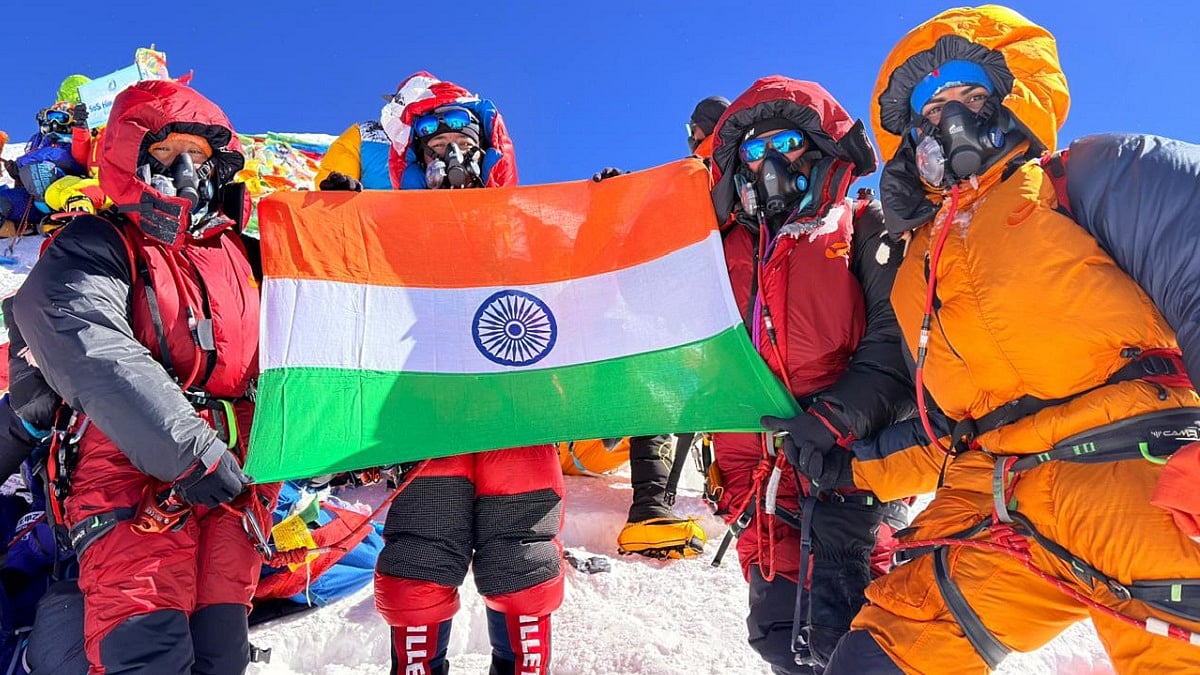
It is getting crowded on top of Mount Everest. On May 20, 2026, the world’s tallest mountain looked less like the last frontier of human endurance and more like the security queue at Chhatrapati Shivaji Maharaj International Airport during a delayed monsoon departure, and the base camp like the Churchgate station at rush hour. That May day, 274 people summited from the Nepal side alone. At that altitude, where the air contains barely a third of the oxygen available at sea level, the traffic jam was not just metaphorical. The remarkable thing about Everest today is that the challenge increasingly appears to lie not in climbing the mountain, but in finding the correct sequence of windows through which one is permitted to attempt it. First comes the climbing season itself, a narrow April-to-May corridor squeezed between Himalayan winter and monsoon. Then comes the weather window, often no more than a few days when the jet stream briefly relaxes its grip on the summit ridge. There is the acclimatisation window at base camp, where climbers spend weeks trudging up and down the mountain, persuading their bodies to get used to less oxygen. And then there are the geopolitical windows. China whimsically closes or restricts the Tibetan side of Everest for political anniversaries, diplomatic sensitivities or for some other opaque reason that even Chinese whispers don’t articulate. If all these stars align, climbers may finally reach the summit itself: a tiny snowy bump scarcely larger than a cramped single-room chawl in Mumbai. Perhaps ten people can stand there comfortably, though the use of the word ‘comfort’ may be one huge stretch of the meaning of the word. Most climbers remain for no more than five or ten minutes before descending. “Getting to the top is optional. Getting down is mandatory,” runs the mountaineer’s maxim. That cuts the Warhol fifteen minutes of fame window substantially. Let’s reduce it to The Selfie Second at Everest.
Yet, the mountain retains its hold on the imagination. More than 7,500 people have summited. Several hundred books have been written about Everest, maybe only slightly fewer than the number of people who have actually climbed it. The mountain also accumulates less memorable material. Everest’s slopes remain littered with abandoned oxygen cylinders, shredded tents and the archaeological remains of decades of ambition. The path to Everest is, thus, paved with garbage. At times the world’s highest peak resembles the aftermath of a major music festival conducted by survivalists. Everest, nevertheless, continues to inspire precisely because it strips human beings to essentials. Sherpas do it. Bankers do it. Billionaires do it. Influencers with satellite phones and sponsored fleece jackets do it. Erik Weihenmayer, blind, did it. Even Mark Inglis, a double amputee, did it. Let’s do it. Let’s all summit Everest. Why? As one George Mallory famously said, “Because it’s there.” So, apparently, is everybody else.
