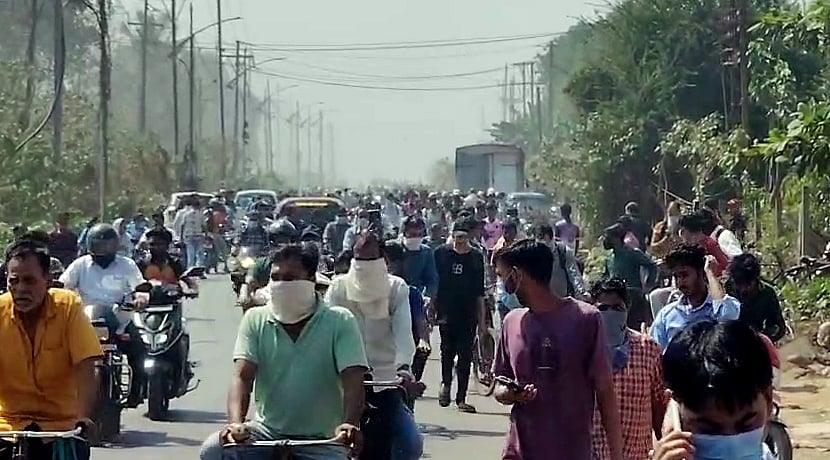
The leakage of oleum gas from a chemical company in Palghar, an urban-rural-tribal settlement about 100 kilometres from Mumbai, on Monday was shocking but provided a window to several aspects of handling such disasters. That no deaths or major injuries were reported was heartening, but within a three-four kilometre radius of the chemical factory, situated in the Maharashtra Industrial Development Corporation (MIDC) area, hundreds of locals showed eye irritation and breathing difficulties. That thousands—some reports say 2,600 people—were evacuated by the district administration, which serves as the District Disaster Management Authority, with relative calm also needs to be commended.
The oleum interacted with surface gases and turned into deadly sulphur trioxide gas, causing discomfort; potentially higher volumes of leaks might have caused casualties. The investigation will reveal how and why the leak occurred in the chemical factory, and appropriate action will have to be taken against the errant factory. However, Palghar’s response to the leak, beginning 2 a.m., saw coordinated action by the MIDC Fire Brigade, the district administration, and the local police. People were advised not to believe social media or other sources and were repeatedly asked to take the basic measures of covering their noses with damp handkerchiefs, moving in the opposite direction of the leak, sealing doors and windows, and so on. Schools and other institutions remained shut. Neighbouring units in the MIDC were shut down, and workers were sent home.
All of these were as per the international best practices and the basic protocols in the event of an industrial disaster involving gas leaks, a lesson that India learnt painfully when more than 40 tonnes of methylisocyanate leaked from the Union Carbide factory in Bhopal on December 2-3, 1984. Nearly 4,000 died instantly, or in a few days, while a staggering 500,000 people were affected; many have not been rehabilitated. The Bhopal gas tragedy remains the world’s worst industrial disaster in any city. A country that lived through the tragedy is expected to have stricter checks in place to prevent gas leaks, especially when factories are located in densely populated urban areas, with stringent checks regularly conducted by the inspecting authorities. Prevention is, after all, the first step of the international protocol in handling industrial gas leaks.
It appears that Palghar got away lightly, but every city across India, especially the satellite cities of larger metros and Tier-II cities where industrial areas are situated, remains vulnerable to such industrial disasters. Within seconds, it could turn the areas across a city into zones of death and destruction. Gas leaks also contribute to air pollution, which calls for a different level of response than the immediate rescue, relief, and health responses. While basic protocols like immediate evacuation, isolation, and repair-calibration must be made familiar to all authorities and people, there is no alternative to prevention as a strategy in industrial gas leaks.

