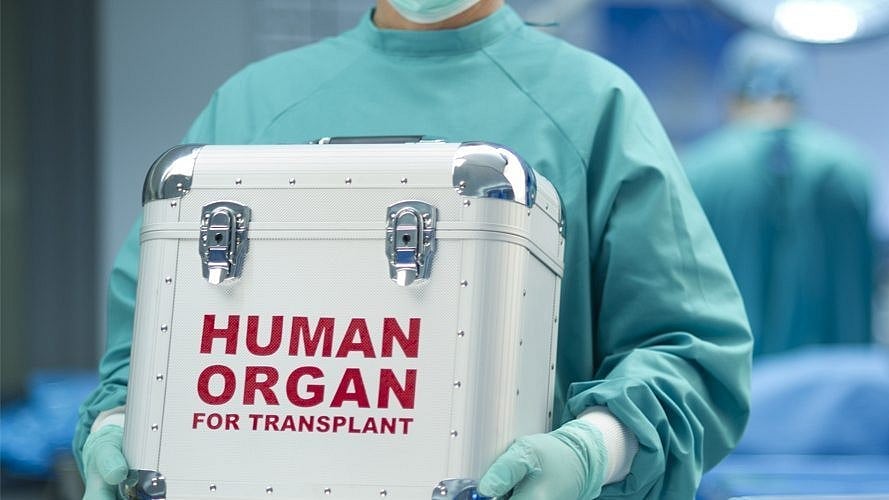
The story of ten-month-old Alin Sherin Abraham, the youngest organ donor in the country, is both heart-rending and life-affirming. Declared brain-dead after a road accident in Pathanamthitta, the infant became a beacon of hope when her parents chose to donate her organs at Amrita Hospital in Kochi.
Her liver, kidneys, heart valves and corneas saved five lives, including that of a six-month-old child. In their darkest hour, the family transformed personal tragedy into a profound public good.
Credit is due not only to the grieving parents but also to the child’s grandfather, a former panchayat president, whose clarity of thought helped guide a timely decision.
Organ donation is a race against time; once brain death is declared, the window for viable transplantation is narrow. In countless cases across India, hesitation born of shock, social pressure or misinformation closes that window.
By the time families decide, organs are no longer usable. Alin’s family chose differently, demonstrating that awareness and resolve can turn loss into life.
Kerala’s organ donation framework
Kerala occupies a unique position in the country’s organ donation landscape. Through coordinated efforts, such as the Kerala State Organ and Tissue Transplant Organisation, the state has built systems that facilitate swift retrieval and allocation, including green corridors for rapid transport.
Equally inspiring is the work of Fr Davis Chiramel, a Catholic priest who donated a kidney himself and founded the Kidney Federation of India to promote organ donation. His advocacy underscores a powerful truth: donation is not merely a medical procedure but a moral act of solidarity.
Breaking social and religious taboos
Yet, despite enabling laws and institutional support, organ donation in India remains constrained by religious and social taboos. Some families fear that tampering with the body will deny the soul eternal rest. Such beliefs, though deeply held, are not rooted in scriptural mandates.
Most faith traditions uphold compassion and the saving of lives as the highest virtues. Reframing organ donation as an act of charity consistent with religious teachings could help dismantle these barriers.
Need for public conscientisation
Public conscientisation is the urgent need of the hour. Thousands languish on transplant waiting lists, their lives suspended between hope and despair. A functioning heart, a viable kidney or a healthy liver can restore not only life but also dignity and productivity. The science is available; what is lacking is social acceptance and timely consent.
It was fitting that Chief Minister Pinarayi Vijayan personally consoled the bereaved parents. Their sacrifice deserves not only official recognition but also emulation. As the grandfather poignantly observed, they lost one child but gained four. In that simple arithmetic lies a profound moral lesson: in giving, we multiply life.
Alin Sherin Abraham’s brief existence has left an enduring legacy. If her story can inspire even a fraction of families to overcome fear and hesitation, countless lives may yet be saved.
