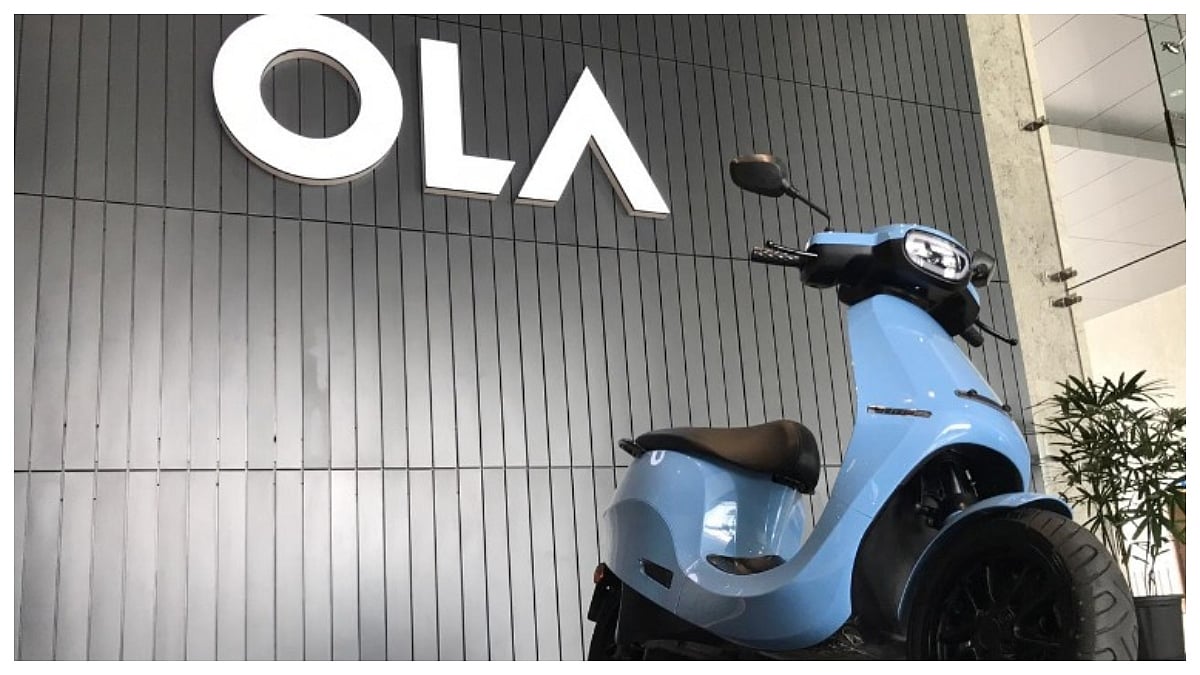
Ola’s Bhavish Aggarwal has founded three companies worth over a billion US dollars before turning 40—Ola Cabs (now OLA Consumer), Ola Electric and Krutrim AI. A consumer court in Goa asked the Bengaluru police to arrest him earlier this year.
It was a mundane affair. A man bought an Ola S1 Pro scooter, which stopped working. He took it for servicing but did not get it back. The consumer court issued summons for the Ola Electric chief, which he ignored. This is what led to a bailable arrest warrant. The Bombay High Court granted a stay on Aggarwal’s arrest shortly afterwards.
Product issues and customer complaints
Ola Electric’s list of troubles is seemingly endless. Overheating batteries, software bugs, faulty suspension design and poor servicing have plagued its products. Angry customers are recording more than 80,000 complaints every month, according to leaked internal estimates. The Union government’s Central Consumer Protection Authority (CCPA) and the market regulator Securities and Exchange Board of India (SEBI) have opened separate investigations into the company.
After making a splash with its initial public offering (IPO), Ola Electric’s shares are currently trading around 60% below their IPO price, destroying Rs 56,000 crore of shareholders’ wealth.
The company, however, remains upbeat. A message to investors on 1 April announced that the company is seeing a “sharp V-shaped market share recovery.”
Sales performance and market position
This is based on two-wheeler sales climbing to 10,117 units in March. That is three times more than what it sold in February but less than half of its nearest rival, putting the company, which once held more than half the electric vehicle market in India, at fifth position, behind legacy players TVS Motor, Bajaj Auto and Hero MotoCorp and the newcomer Ather Energy. Industry watchers have questioned whether these include heavily discounted exchanges being counted as fresh sales.
The company’s optimism seems to stem from improvements in clearing backlogs after outsourcing product servicing to third parties last November. The question is: can repairing a bad product meet the gap?
The answer lies in how the company was built. Investor hype and state subsidies may have outpaced financial prudence and product quality.
Design glitches and safety concerns
In 2017, Ola Electric Mobility Private Limited was set up as a wholly-owned subsidiary of ANI Technologies, the parent company of the cab-hailing platform Ola Cabs. With multiple rounds of investment from Matrix Partners, Tiger Global and SoftBank, it became a standalone billion-dollar company in 2019 without a product to its name.
In May 2020, it acquired an Amsterdam-based electric vehicle maker with an untested prototype and started setting up a 500-acre production facility. This prototype would become the first Ola S1 and S1 Pro. Brandishing his nationalist credentials, founder Bhavish Aggarwal announced on 15 August 2021, “Just like the revolution that gave us our freedom in 1947, this one will give us our freedom from petrol.”
In less than 18 months, Ola Electric had taken the S1 and S1 Pro models from a lab in Europe to the doorsteps of customers across India. Established automobile giants with over a decade of research in electric vehicles would take two more years to hit the market.
Within months of the rollout, social media platforms were flooded with scathing reviews from angry customers seeking a refund. The scooters were shutting down on their own because of overheating. Many early adopters had road accidents because of the vehicle suddenly stopping while travelling at high speeds. Others found that a software glitch made the scooter reverse when it was supposed to accelerate.
According to a detailed report on the news portal The Morning Context, three-fourths of all Ola Electric scooters have faced problems with the human-machine interface (HMI), leading to battery malfunctioning, sudden stoppages, shaking or overheating. The HMI is the operating system of the electric vehicle, which connects the rider’s manual prompts to the hardware.
S1 and S1 Pro users also faced the wheel detaching from the body on braking, even without hitting any obstacle. The designs initially used a single-fork suspension attached to one side of the wheel made from an aluminium alloy, carried over from the untested Dutch prototype. Roads in India are uneven and riders tend to carry extra frontal weight. That is why automakers take years to carry out extensive localisation, using a twin telescopic fork for the front wheel made from steel or die-cast aluminium.
While denying any culpability for accidents, later models have quietly switched to a more conventional twin-fork suspension. Older scooters continue to run without such modifications, as Ola Electric denies any defect exists. Had the company pushed what it knew were faulty products to assuage investors and meet governmental deadlines?
Betting on subsidies
The investment information provider ICRA Limited (earlier Investment Information and Credit Rating Agency of India Limited) downgraded Ola Electric’s credit rating in May 2025 because of the slump in two-wheeler sales, noting that Rs 2,829 crore out of the Rs 5,550 crore raised during the IPO was parked in fixed deposits to nurse interest payments instead of expanding production.
Whether the company can scale up lithium-ion cell and vehicle production to keep apace various subsidy timelines can make or break the company.
Ola Electric is the only automaker in India to benefit from two Production Linked Incentive (PLI) schemes—the Champion OEM (original equipment manufacturer) incentive under the Automobile PLI and the Cell PLI schemes. Additionally, the company received subsidies under the Union government’s now-defunct FAME (Faster Adoption and Manufacturing of Hybrid and Electric Vehicles in India) scheme and additional benefits from the Government of Tamil Nadu, where the Ola Futurefactory is located. In March 2025, Ola Electric became the first Indian electric two-wheeler maker to receive the Automobile PLI, worth Rs 73.74 crore.
The Automobile PLI scheme’s eligibility criteria focuses on growth. A new company starting from scratch can show higher growth. Ola Electric became the sole company to get PLI certification for four electric scooters in August 2024, and the Roadster X+ electric motorbike was certified this week. This allowed it to slash prices, giving the company an early push, with high sales driving incentives and gaining investor confidence.
The company has missed the deadline for installing 5 gigawatt hour Advanced Chemistry Cell (ACC) battery manufacturing capacity by 2025, resulting in no subsidies being released. This might explain why the company hyped its launch of home batteries, powered by the 4680 Bharat cell, as a pivot to profitability.
Falling in style
A company which promised to deliver ten lakh electric vehicles every year (84,000 a month), it is now celebrating 10,000 sales.
Whether the push towards home batteries indicates confidence in Ola Electric’s turnaround is anyone’s guess. Such moves echo a broader pattern in India’s startup ecosystem, where highly valued firms have collapsed, leaving investors, customers and workers exposed. Fresh in memory is the case of BYJU’s, the ten-billion-dollar educational technology start-up, whose founder, Byju Raveendran, has not set foot in India since 2023. Over 5,000 former employees were thrown out without being paid for months.
Ola Electric told investors in February that the reduced production outlay is actually a ‘structural reset’ for long-term profitability. A ‘leaked’ video from March shows Aggarwal motivating sales and service agents to focus on customers after the “ups and downs” of the previous months. While assuring small investors and workers to hang tight, Aggarwal himself seems to be minimising risk.
Last December, he sold shares in Ola Electric worth Rs 200 crore when the stock was at a 52-week low, making investors jittery. The company claimed this was just to remove “a critical overhang,” to pay off a “promoter-level” loan. In March, Aggarwal took new loans for his latest artificial intelligence (AI) venture, Krutrim AI. This was done by pledging around 8% of his stakes in Ola Electric (worth Rs 604.44 crore) for debt financing.
As the toy astronaut Buzz Lightyear says at the end of the animated Disney classic Toy Story, “This isn't flying, this is falling with style!” An apt quip for many a brazen tech billionaire like Aggarwal.
Sourya Majumder and Paranjoy Guha Thakurta are the authors of An Unflattering Story About Ola’s Bhavish Aggarwal: Behind the incredible rise and impending fall of an Indian unicorn. Both are independent journalists.

