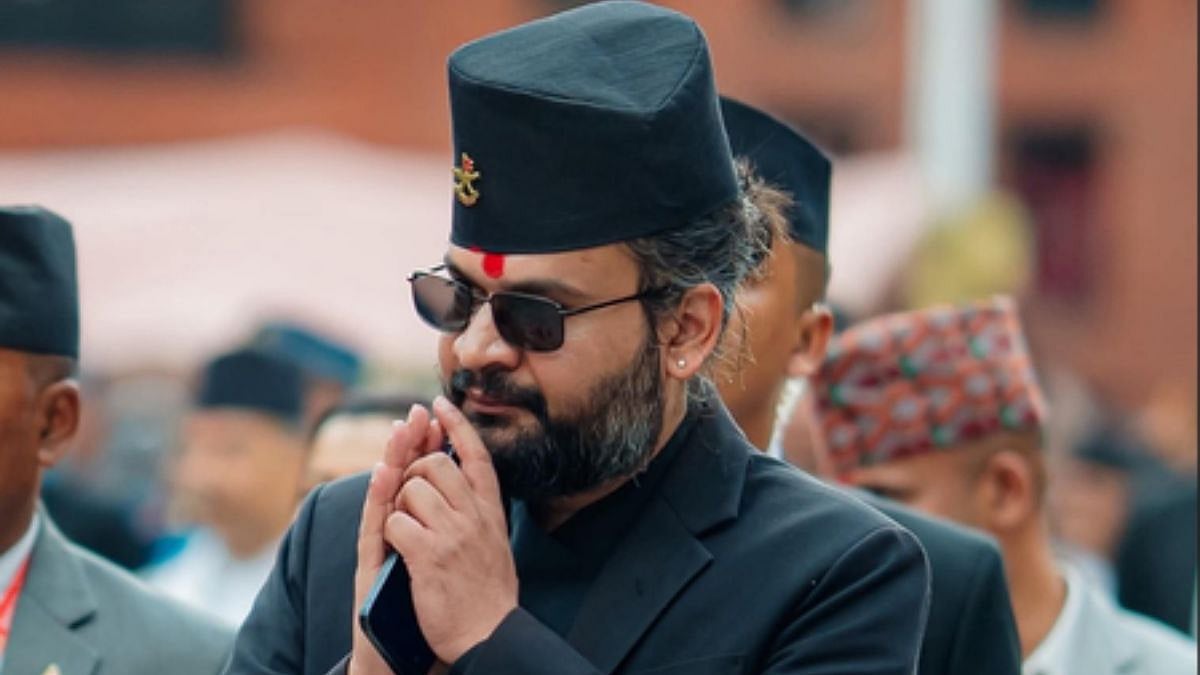
Rastriya Swatantra Party (RSP), led by rapper-turned-politician Balendra Shah, destined to be new Prime minister, has overturned decades of political dominance by traditional parties and signalled a generational revolt against the entrenched political class. The scale of the upset is unprecedented in Nepal’s post-monarchy politics. For the first time since the abolition of the monarchy in 2008, the country’s two principal political pillars—the Nepali Congress and the communist Communist Party of Nepal (Unified Marxist–Leninist) got worst drubbing —have been pushed to the margins by a political formation that barely existed a few years ago. The election outcome reflects a deep public impatience with corruption, policy paralysis and the revolving-door politics that has produced chronic instability in Kathmandu.
A Youth quake in Nepali Politics
The sweeping performance of the Rastriya Swatantra Party is essentially the story of a generational uprising. Nearly half of Nepal’s electorate now belongs to younger age groups, many of whom have grown increasingly frustrated with traditional politics. Shah, who first gained prominence as the mayor of Kathmandu, symbolised an outsider capable of challenging the old elite. His campaign deliberately departed from conventional political style—relying heavily on digital outreach, grassroots activism and a message centred on transparency, accountability and administrative reform.
For many urban voters and first-time participants, the election became less about ideology and more about a desire for systemic change. The RSP positioned itself as a pragmatic alternative, refusing to adopt rigid ideological labels while promising a modern governance framework, digital transparency and a decisive crackdown on corruption. The party also capitalised on the energy generated by youth protests that had shaken the political establishment over the past year. These protests exposed the widening gap between Nepal’s youthful society and its’ ageing leadership, ultimately creating the political space for Shah’s dramatic ascent.
Challenges Before new government
If Shah assumes the office of prime minister, he will confront enormous expectations. The very forces that propelled him to power may quickly become sources of pressure if reforms are slow to materialise. Nepal’s governance structure is notoriously complex, characterised by fragile coalition politics, bureaucratic inertia and limited institutional capacity. A new political party with minimal administrative experience will have to quickly learn the art of governing a difficult state apparatus.
Equally daunting is the challenge of meeting the aspirations of Generation-Z voters who were instrumental in the RSP’s victory. Young Nepalis expect swift progress in areas such as job creation, corruption control, digital governance and urban development. Yet Nepal’s economy remains structurally fragile, heavily dependent on remittances and tourism. Delivering rapid economic transformation will require structural reforms, political stability and effective administrative leadership. Maintaining unity within a rapidly expanding party will also test Shah’s leadership abilities.
The Collapse of the Communist Establishment
The elections also mark a major setback for the Communist Party of Nepal (Unified Marxist–Leninist) led by K. P. Sharma Oli who lost even his seat. Once one of Nepal’s most formidable political forces, the party suffered a sharp erosion of public support. Several factors contributed to this decline. Critics had accused the Oli administration of increasingly authoritarian tendencies and policy mismanagement. The government’s handling of youth protests further damaged its credibility and intensified public dissatisfaction.
Equally significant was the fragmentation within Nepal’s broader communist movement. Years of factional struggles diluted ideological cohesion and weakened organisational strength. For many voters, communist parties that once promised social justice and political transformation began to appear indistinguishable from the traditional elite they had once opposed.
Why the Nepali Congress Faltered ?
The Nepali Congress, historically regarded as the principal democratic force in Nepal, also suffered a dramatic decline. The party’s ageing leadership struggled to connect with younger voters who were seeking new political narratives and leadership styles. Moreover, allegations of corruption and governance failures over successive administrations had eroded the party’s moral authority.
Another factor was the party’s inability to present a compelling reform agenda. While the RSP framed the election as a movement for systemic renewal, the Nepali Congress appeared trapped in defensive politics, unable to offer a clear roadmap for economic revival or administrative reform.
Credible Elections and Public Faith
Amid intense political competition, one encouraging aspect of the election was its orderly conduct. The polls were administered under the supervision of a widely respected former chief justice Sushila Karki, whose integrity helped ensure public confidence in the process. Despite logistical challenges posed by Nepal’s difficult terrain and political tensions, the voting process remained largely peaceful and transparent.
The credibility of the electoral process has strengthened faith in Nepal’s democratic institutions. At a time when many democracies struggle with declining trust in electoral systems, Nepal’s successful management of the vote represents a positive institutional achievement.
Implications for India
For India, the emergence of a new leadership in Kathmandu presents both opportunities and uncertainties. Historically, Nepal’s communist parties maintained closer strategic engagement with China, occasionally straining relations with New Delhi. The arrival of a new political force may alter that equation.
New Delhi would be well advised to engage the new leadership with patience and pragmatism. Rather than appearing intrusive, India should prioritise mutually beneficial initiatives—expanding cross-border connectivity, accelerating hydropower cooperation and strengthening trade integration. The objective should be to rebuild trust while recognising Nepal’s desire for strategic autonomy.
China’s Strategic Calculus
China, which invested significant diplomatic energy in cultivating Nepal’s communist leadership, will closely watch the emerging political landscape. Beijing has pursued infrastructure projects and connectivity initiatives aimed at strengthening its economic presence in Nepal.
With the weakening of traditional communist parties, China may recalibrate its approach and attempt to establish working relations with the new government. Shah’s administration is likely to pursue a balanced foreign policy that maintains engagement with both India and China while prioritising Nepal’s national interests.
The Road Ahead
Nepal’s electoral upheaval marks a turning point in the country’s democratic evolution. The rise of the RSP signals the arrival of a new political generation determined to challenge entrenched power structures. Yet electoral success alone cannot guarantee transformation. The real test lies in translating popular enthusiasm into effective governance and sustainable economic reform.
If Shah succeeds in delivering transparency, stability and development, Nepal could enter a new era of democratic consolidation. If not, the same restless electorate that dismantled the old political order may once again seek another alternative. Either way, Nepal’s latest election has demonstrated that its democracy remains dynamic, unpredictable and capable of dramatic reinvention. ENDS
(Writer is strategic affairs columnist and covered Nepal for 6 years for a premier national English daily of India during the transition of Democracy.)

