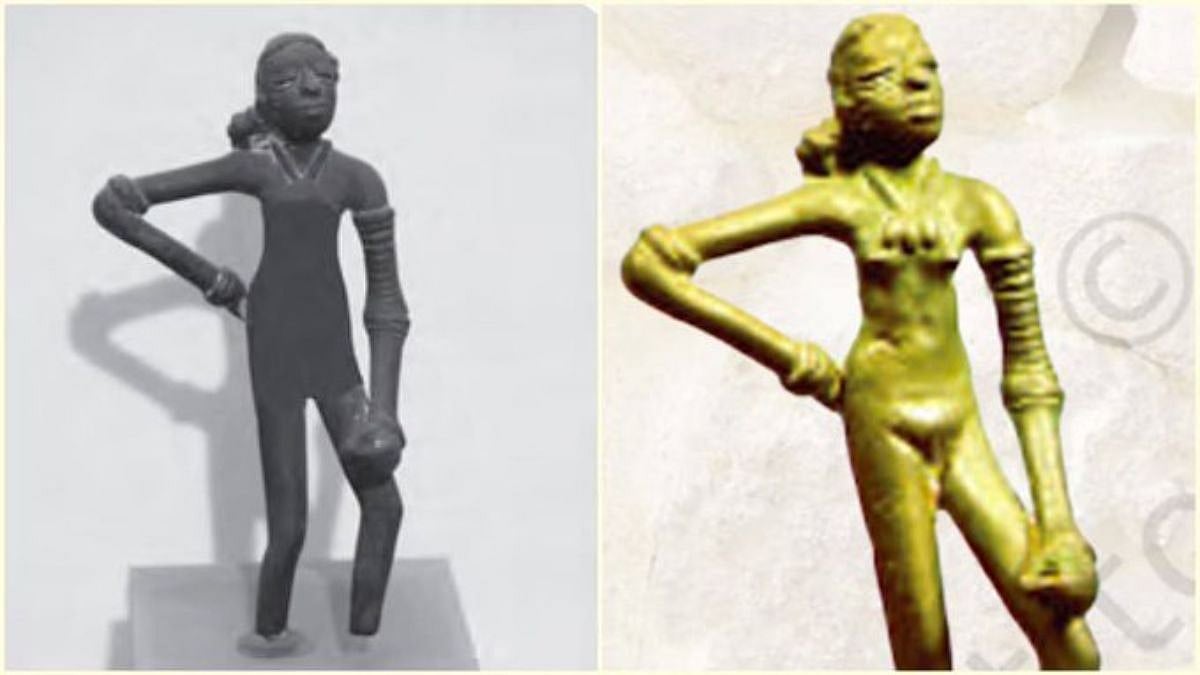
History is among the most contentious of subjects across countries and cultures. Its revisionism is expectedly controversial, especially when ideologically inflexible or reactionary forces are in power. Ideological revisionism, as opposed to fact-based revisionism, is a slippery slope, as was seen in the recent controversy over the iconic Dancing Girl photograph in a Grade 9 school textbook. The NCERT, an autonomous institution, for reasons best known to its mandarins, decided that the Dancing Girl figurine, discovered in Mohenjo-daro dating back to 2600 BCE and a lasting symbol of the Indus Valley Civilisation, which millions of students have studied in Indian schools, needed to be covered up. Its latest edition of the textbook had the figurine modified with a layer of clothing.
The subsequent uproar and sharp reactions from historians led to the NCERT’s assurance that the figurine would be reverted to the original, both in the digital and print versions of the textbook. It is absurd by any yardstick for the NCERT—its mandarins and textbook editors—to be offended by the seeming nudity of the Dancing Girl and rush to cover her up in the crude manner that they did. This is, after all, the land of the Kamasutra, the cradle of sculptures in all nuances of nudity, and the foundation of an entire civilization, as it were. From temple art to world-renown heritage sites, such as the Ajanta and Ellora caves, voluptuous women with barely covered torsos have adorned India’s architecture, history, and mythology. Revisionism cannot take it all away or cover up something. For a few officials, who may or may not have even a nodding acquaintance with the incredibly rich depth of India’s civilisational history—not history as a mere nation after 1947 but as a civilisation that inspired so much around the world—to arbitrarily decide to cover the Dancing Girl up to bestow modesty on her is not only ridiculous but dangerous too. This is not the only revision that has been done in the past few years, or decades, if the timeline is taken back to the attempts under the late Atal Bihari Vajpayee’s first government when Dr Murli Manohar Joshi, as the human resources development minister, sought to revise history books. The efforts have gained greater currency under the present-day government.
Revisionism, in itself, can be positive or negative, depending on how it is used as a tool. Black history or indigenous people’s suffering at the hands of Christopher Columbus came to be recognised in the US due to fact-based revisionism, but ideological revisionism now threatens to deny an event like the Holocaust. In the hands of India’s ideologically reactionary and rationally deficient mandarins, it could mean an alteration of how history is presented, even the subtle erasure of an archaeological lodestar like the symbols of the Indus Valley Civilisation. This controversy goes beyond the textbook.

