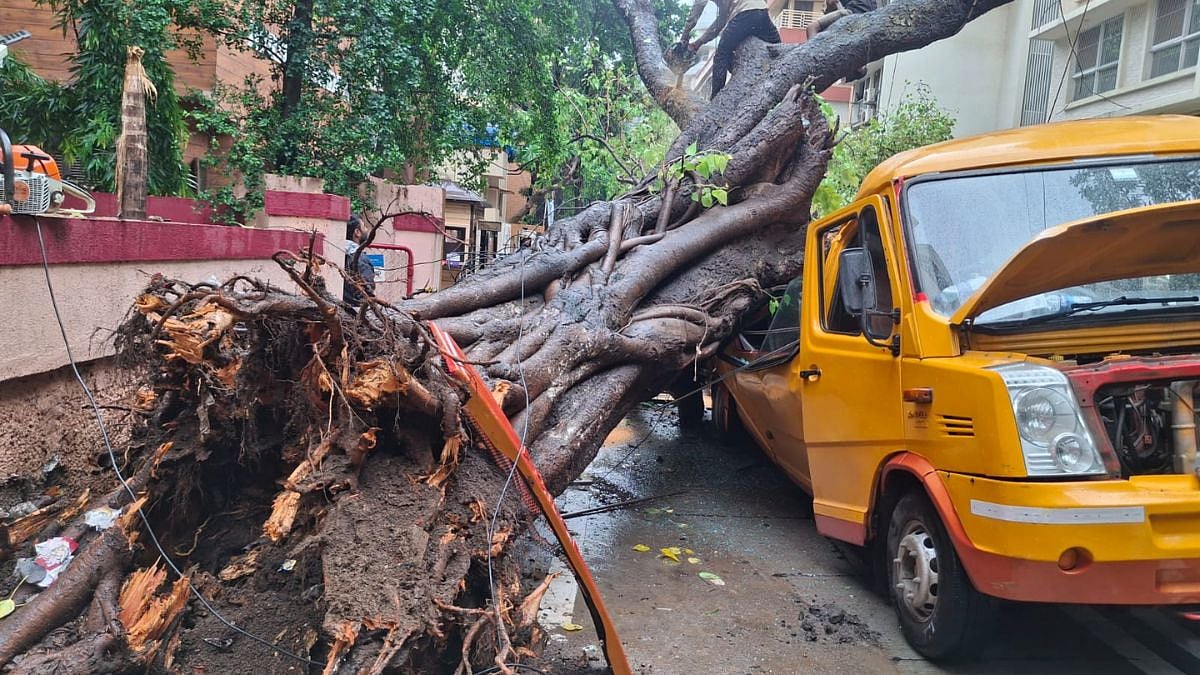
For how many years will millions in Mumbai, and the larger Mumbai Metropolitan Region, risk death each time they step out in the monsoon because of the sins of omission and commission of the urban local bodies? In less than a week since heavy rainfall started, an 11-year-old died after a massive tree fell on a school bus, and a senior citizen lost his life after falling into an open manhole in Mumbai.
A 17-year-old girl in Thane and a 42-year-old woman in Dombivli died of electrocution. These are not deaths caused by natural calamities or monsoon-related incidents, as the term goes; these are akin to murders by the Brihanmumbai Municipal Corporation (BMC) and other authorities in the Mumbai Metropolitan Region that could—and should—have been prevented.
Accountability Cannot Wait
People are forced to fall back on their luck to safely get through the monsoon—also extreme heat or polluted air—or risk death in such tragic ways because those in charge of urban governance are lackadaisical in following the basic safety protocols or are compromised by the prevailing nexus with contractors.
Accountability is at a premium. It has been so for decades, irrespective of the political party in power in the BMC and other urban local bodies. Perhaps, to counter this perception, BMC Commissioner Ashwini Bhide suspended four officials with alacrity, and the BMC filed a police complaint against the contractor in the manhole death case. But that is locking the door after the horse has bolted.
Ironically, only four days earlier, the civic body had assured the Bombay High Court that no deaths would occur due to manholes this year when the division bench of Justices A.S. Gadkari and Kamal Khata heard the contempt petition in a case filed in 2013.
Rebuking the BMC for its "casual" approach towards open manholes that continue to claim lives, the judges observed, "The city cannot continue to suffer." Protective grills have been laid beneath over 70,000 drain covers, which are often opened for rainwater to flow out; however, another 3,000 remain to be covered with grills, says the BMC.
Monsoon Preparedness Beyond Drains
Every open manhole is a hidden death trap, as are thousands of potholes, live wires hanging in flooded streets, and trees whose roots have been disturbed or concretised during road work. Earlier, the High Court had pulled up officials of the Thane Municipal Corporation for failing to pay compensation in pothole-related accidents.
The BMC received over 7,000 complaints about potholes in only two months last year; this year has seen a similar trend despite the Rs 17,000 crore road concretisation work being undertaken. Monsoon preparedness is not merely the cleaning of nallahs and drains; it is also ensuring that every tree is stable, every manhole is covered, and no potholes trip people up.

