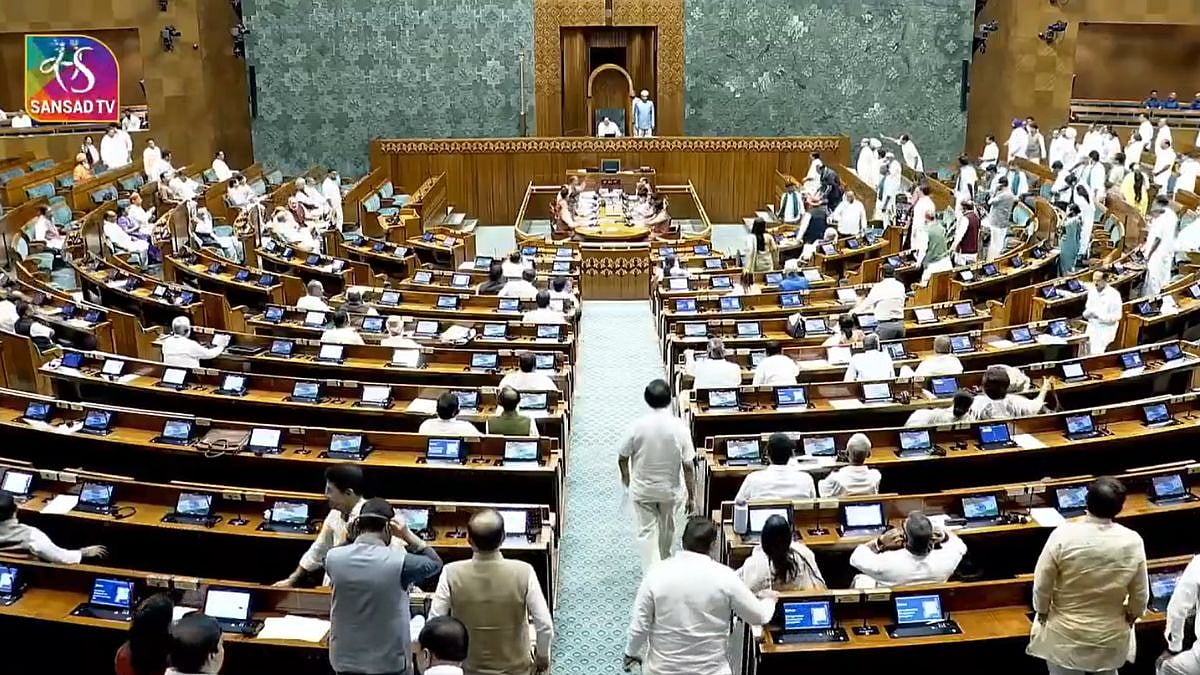
Parliament’s monsoon session was a clear example of how a parliamentary session should not be conducted. From the manner in which it ended, without the customary word of thanks from the Speaker, it appeared that the treasury benches were eager to bring the proceedings to a close. The session began on July 20, the day students had chosen to march to Parliament House to protest against the handling of competitive examinations. The brutal manner in which they were dealt with did little credit to the government. They were not terrorists threatening the security of the state but students protesting against government agencies playing with their lives, as the cancellation of the NEET examination had demonstrated. The police action was not merely barbaric; the presence of unidentified personnel wearing masks and beating students with severity made it even more disturbing. Some policemen reportedly did not wear nameplates, making identification difficult, while lethal weapons were also used.
Such allegations demanded an explanation from Home Minister Amit Shah, who is otherwise known for his combative interventions in Parliament and his ability to silence the Opposition. Yet, he chose not to attend the Houses while maintaining that he was regularly attending his office on the parliamentary premises. Prime Minister Narendra Modi, vocal when attacking the Opposition outside the House, too preferred to stay away. If their absence created the impression that they were unwilling to face an angry Opposition, they have only themselves to blame. The government may claim satisfaction that 12 Bills were passed during the 19 days that the Houses met. But that statistic conceals a serious failure. Except for a brief discussion on the Bill dealing with irregularities in examinations, the other 11 Bills were passed virtually without debate or discussion. Parliament is the country’s highest law-making body, and the quality of legislation depends on the quality of scrutiny it receives.
Bills drafted by officials need to be examined, questioned, and chiselled by both the ruling party and Opposition members. They can identify structural flaws and unintended consequences. When such discussion is absent, the danger of laws entering the statute book without adequate public scrutiny increases. Laws that are properly drafted, debated, and amended are more likely to stand the test of time. It is no accident that the old penal codes survived with relatively few amendments. The Opposition, however, cannot escape blame. Disruption cannot become a substitute for scrutiny. It was their duty to examine the 12 Bills, expose dangerous clauses, if any, and propose improvements. A parliamentary majority is not a licence for legislative haste. Nor is parliamentary opposition a licence for perpetual disruption. Both sides owe the country a functioning Parliament. The monsoon session failed that test and left the country poorly served again by those entrusted with democratic governance today.

