There is a simple truth about the human body that physicians have understood for centuries. One cannot decide that a particular organ may suffer while the rest of the body will remain unaffected. If the heart weakens, the lungs begin to struggle. If the lungs falter, the brain soon feels the consequences. The human body is a single, integrated system in which distress in one part slowly becomes distress for the whole. The modern world operates in much the same way, even though nations often behave as if they live in isolation.
The modern world has perfected a curious moral skill. Nations have learnt how to be deeply outraged about some wars and curiously patient about others. Leaders condemn certain violations of sovereignty with thunderous speeches while describing similar events elsewhere as complex regional matters. Yet, the world we inhabit is no longer arranged into neat compartments.
Countries frequently treat conflicts and crises as if they can be geographically contained. Wars are described as regional matters, humanitarian disasters as distant tragedies, and political instability as somebody else’s problem. Yet, the architecture of the global economy and the realities of geopolitics repeatedly remind us that such thinking belongs to another era. The world today is deeply interconnected through human migration, energy systems, supply chains, financial markets, and technology networks. When instability emerges in one region, its affects travel swiftly through these invisible arteries of global interdependence.
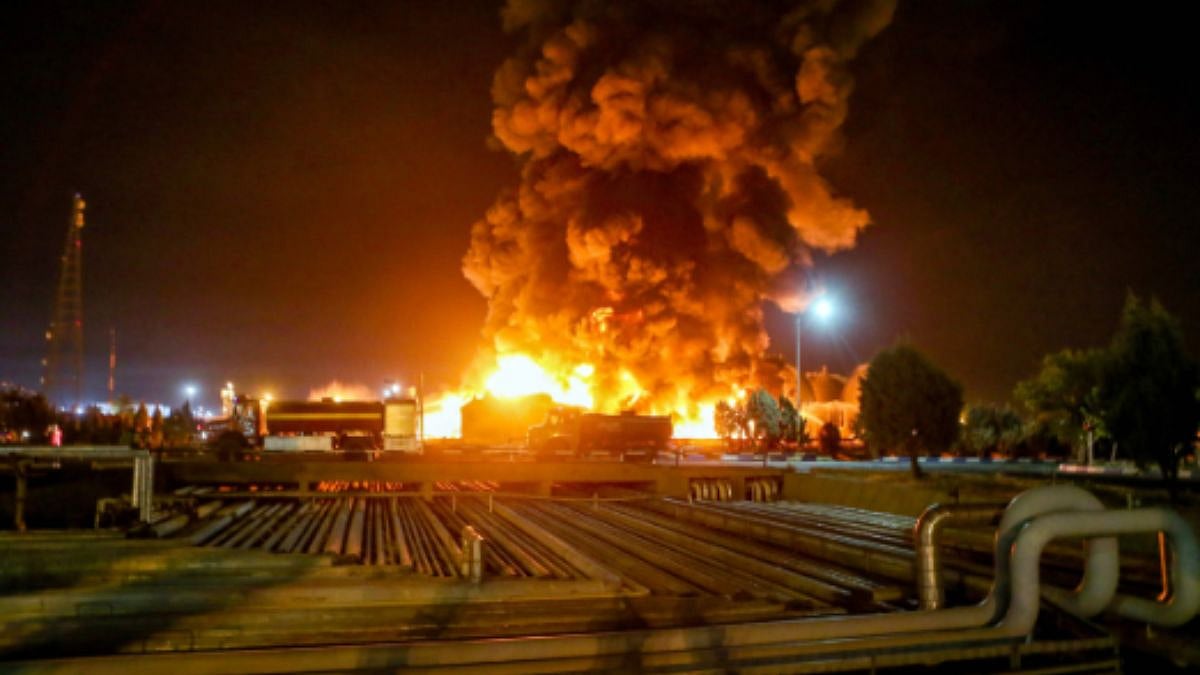
The ongoing hostilities in West Asia offer a striking illustration of this reality. Military confrontations involving powerful nations rarely remain confined to their immediate geography. They quickly transform into global economic and strategic disruptions. The Strait of Hormuz, a narrow maritime corridor linking the Persian Gulf with the wider world, carries a significant share of global oil supply. Any disruption there reverberates through energy markets across continents, influencing fuel prices, manufacturing costs, and inflation levels in countries thousands of miles away.
Industries dependent on global logistics, from electronics to pharmaceuticals and fertilisers, begin to experience delays and cost pressures. Financial markets globally react immediately to the uncertainty. Governments far removed from the battlefield are forced to recalibrate fiscal and energy policies.
Despite this evident reality, global political behaviour continues to reflect a troubling pattern of selective engagement. The justification frequently invokes humanitarian values, democratic principles or strategic necessity. Yet, the application of these principles is rarely consistent.
The institutions created after the Second World War were built on the hope that rules-based cooperation could prevent the recurrence of destructive global conflicts. Multilateral frameworks, such as the United Nations and other international forums, were designed to encourage dialogue, restraint, and collective problem-solving. Over time, however, the effectiveness of these institutions has been increasingly tested by the realities of power politics.
The deeper lesson emerging from these realities is not merely economic but philosophical. Leadership in the twenty-first century requires a broader understanding of responsibility. National interest and global stability are no longer opposing ideas. They are closely intertwined.
This interconnected world, therefore, demands a more mature style of leadership than the one often displayed in contemporary geopolitics. Demonstrations of power may produce short-term tactical advantages, but long-term stability requires a deeper commitment to cooperation and restraint.
Selective morality has quietly become one of the defining characteristics of modern geopolitics, and it lies at the heart of many of the tensions shaping today’s world. Powerful nations often frame interventions in the language of values while overlooking comparable suffering elsewhere when strategic interests are absent. Entire regions have endured prolonged hardship without meaningful global mobilisation. Several African nations struggled for decades with fragile economic growth, internal violence, and humanitarian distress, while receiving limited sustained global attention. The absence of consistent global engagement during such periods illustrates how geopolitical priorities often overshadow universal principles. Just as the human body cannot isolate pain to one organ, the global system cannot isolate instability to one region.
India’s own experience reflects this imbalance. For decades, the country has faced repeated cross-border terrorism and security challenges that have resulted in significant loss of life and economic disruption. Yet, these challenges were frequently treated by parts of the international community as regional security issues rather than as threats with broader implications. Only when similar security concerns began affecting Western societies did global discourse shift towards recognising the dangers of transnational terrorism more urgently.
This selective morality has consequences far beyond the immediate crises it ignores. It gradually erodes faith in multilateral institutions and encourages unilateral behaviour by nations that feel their concerns are not adequately recognised. No nation, however large or economically self-sufficient it may appear, can insulate itself from disruptions elsewhere.
Political instability that forces migration flows can transform social and political dynamics across entire continents. The modern world has quietly woven humanity into a shared strategic ecosystem. Every disturbance in this system eventually finds pathways into the lives of people who may seem geographically removed from the original crisis.
History offers examples of such foresight. After the devastation of the Second World War, countries that had once been bitter adversaries chose to build institutions that encouraged cooperation and reconstruction. That vision shaped decades of global economic expansion and relative geopolitical stability. The lesson from that period remains relevant today. Durable peace emerges not from selective intervention but from shared responsibility.
The world cannot choose which of its wounds it is willing to ignore. Every conflict that is dismissed as distant, every injustice that is treated as peripheral, and every instability that is considered someone else’s problem eventually returns in unexpected ways. Markets will reflect it, societies will experience it, and future generations will inherit its consequences.
Humanity is not a loose collection of independent parts. Recognising this may be the first step toward rebuilding a global order that is wiser, fairer, and more stable than the one we are currently struggling to sustain. If justice were applied as selectively in physics as in geopolitics, gravity itself would collapse.
Dr Srinath Sridharan is a policy researcher and corporate adviser. X: @ssmumbai

