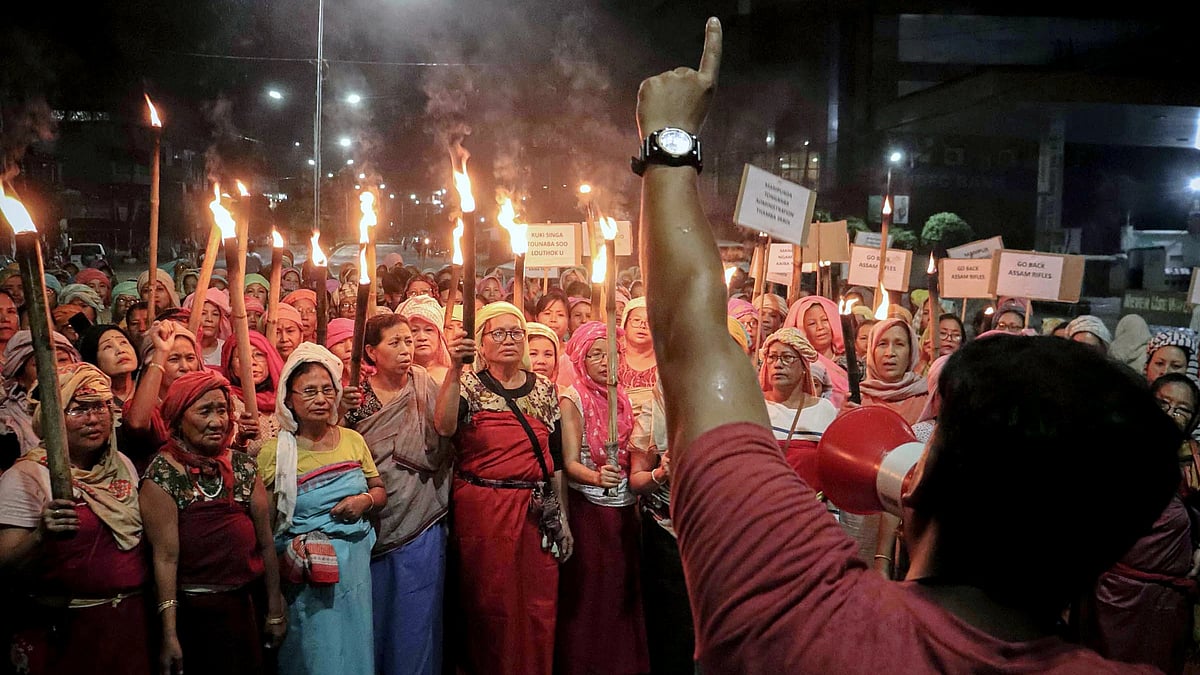
If one incident from the orgy of violence that engulfed Manipur three years ago refuses to fade from national memory, it is the gang rape and unspeakable torture of a young Kuki woman. She did nothing to invite the brutality. Her only “crime” was her ethnicity and her religious identity. That alone marked her for degradation in a state where law collapsed and prejudice ruled.
The horror lay not merely in the act but in its orchestration. She was allegedly detained by Meitei women and handed over to black-shirted hoodlums who operated with impunity, emboldened by political patronage and administrative paralysis. They violated her body and dignity through the night and left her for dead, assuming she would not survive to testify. They were wrong. She lived—for three agonising years.
Justice denied
Those three years were sustained by a fragile hope: that justice, however delayed, would eventually arrive. It never did. While her rapists enjoyed freedom and creature comforts, she battled shattered health, recurring hospitalisations, and unbearable psychological trauma. On January 10, 2026, her battered body finally gave up. Justice did not merely arrive late; it never arrived at all.
Failure of the state
Her death is not an isolated tragedy. It is a damning indictment of the Indian state. From the delayed filing of the FIR to the glacial CBI probe that produced no arrests, no charges, and no accountability, every institution that owed her protection failed her. President’s Rule, imposed long after the violence peaked, has proved no balm for survivors still waiting for relief, rehabilitation, or recognition.
She was, perhaps, the ugliest symbol of Manipur’s violence, but she was not its only victim. Thousands lost homes, livelihoods, and loved ones. Many continue to live in relief camps, stripped of dignity, compensation, and hope.
The cost of political calculation
What happened in Manipur was not spontaneous chaos; it was the outcome of a political calculation that sought to keep the Imphal Valley “pure” and marginalise the hills and their people. That calculation has exacted a brutal human cost. When sexual violence becomes a weapon and perpetrators walk free, the message is unmistakable: some lives matter less than others.
A national moral stain
That is why her death has reignited demands for accountability and for a separate administrative arrangement for the Kuki people—not as a political bargaining chip, but as a desperate plea for safety and survival. CPM leader Brinda Karat called it a “national shame”. She is right.
This young woman was not just a daughter of Manipur; she was a daughter of India. Her death, without justice, stands as a permanent moral stain on our governance, our politics, and our conscience. Until her tormentors are punished, Manipur’s wounds will not heal—and neither will the nation’s.

