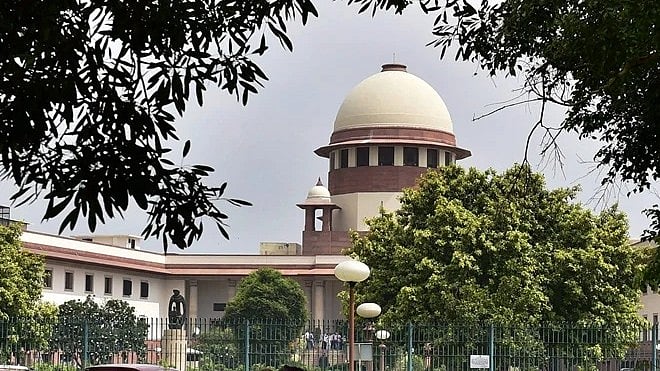
In a consequential order, the Supreme Court has issued directions to be implemented by state governments to achieve the objective of a key provision of the Right of Children to Free and Compulsory Education (RTE) Act, 2009, providing equity for economically weaker sections and disadvantaged groups.
RTE largely remains on paper
There is little doubt that the RTE, created through a landmark constitutional amendment, has remained mostly on paper for children of underprivileged backgrounds despite the passage of time. Section 12 of the law clearly states that a school should admit students from underprivileged backgrounds to 25% of seats in Class I and ensure that they get free elementary education throughout. What made the law stand out was its applicability to private schools, besides government and aided institutions, and that too in the student’s neighbourhood.
Poor compliance highlighted




In practice, there are significant shortcomings in the working of the RTE Act, as a study carried out in Delhi by the National Commission for the Protection of Child Rights (NCPCR), the empowered agency, showed some years ago; the top achievement was 18% of seats filled, and universal compliance was absent. Little has changed, and the SC bench consisting of Justices P.S. Narasimha and A.S. Chandurkar took note of the lamentable state of affairs that continued in spite of statutory child rights commissions being set up.
Judiciary stresses accessibility
The court reiterated the judiciary’s role in making the admissions process accessible, effective and efficient against the background of steep digital asymmetry in many parts of the country, especially in rural areas. Many were not able to benefit from the right to education. The SC bench was passing orders on a long-pending petition against a Bombay High Court judgement, which offered no relief to a parent because he had failed to apply online.
Call for coordinated action
The detailed order of the SC should spur all sections to breathe new life into the RTE provisions on equity and fraternity, with the NCPCR in the lead. State governments and Union Territories must issue suitable rules under Section 38 of the law in consultation with the NCPCR, state commissions and advisory councils.
Key reforms suggested
The court considered the suggestions made by amici curiae for states to open online portals to help parents, in line with the RTE’s Section 12 mandate, and for schools to publish the seat strength and reservation for EWS/DG; help desks to be set up by states or schools or citizen service centres to help parents apply without paying fees; and a complaints redress mechanism to be created.
Need for awareness and implementation
These and other initiatives should be made known to the community widely through media advertisements and local campaigns. Dispute settlement committees must be available to all. These are much-needed reforms, and the state governments must adopt them without delay.
