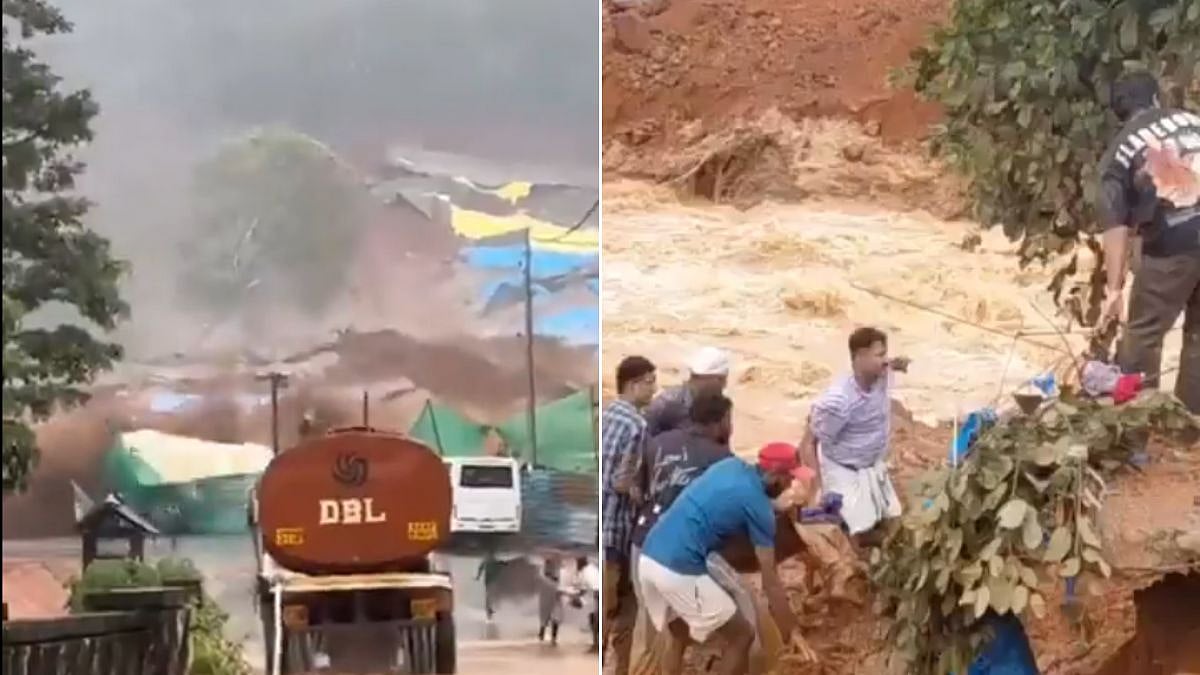
Critics of the twin-tube road tunnel project in Kerala’s Kozhikode-Wayanad section, aggressively pursued by the erstwhile LDF government, will feel vindicated that their worst fears have come true with a deadly monsoon mudslide that has killed at least three people and possibly buried many more. The tunnel was pitched as a dream solution to connect Anakkampoyil in Kozhikode district with Meppadi in Wayanad, cutting travel time and making better medical care accessible to remote communities. Drilling through an ancient mountain that experiences peaks of 100 cm of rainfall a day in the Western Ghats to create an 8.3 km tunnel, using powerful explosives, is a highly complicated endeavour that cannot be hastily executed to create a political showpiece. The project proposal did not go through a credible environmental impact assessment and was, unsurprisingly, fraught with the danger of great walls of mud sweeping down on the construction site, which is exactly what happened. Nor is this the first instance of a deadly mudslide in the Wayanad region: nearly 300 people perished in Mundakkai, while Chooralmala too witnessed a number of deaths in July 2024. The UDF government is correct to call the latest landslide a man-made disaster because its predecessor, led by Pinarayi Vijayan, relentlessly pursued all avenues to initiate the project despite warnings on ecological sensitivity by the Madhav Gadgil Western Ghats Ecology Expert Panel and even by the less rigorous Kasturirangan Committee formed to water down its recommendations.
Environmental And Legal Questions
The UDF government, led by Chief Minister VD Satheesan, has instituted a comprehensive inquiry into both the technical and legal aspects of the Rs 2,134 crore project, but the Supreme Court recently took a summary view of it as one of “national importance”, overruling several technicalities raised on environmental grounds. Such flawed reasoning can only open the door to more ill-advised projects in ecologically fragile areas, with deadly consequences for local communities. In the case of Wayanad, years of deforestation, illegal mining, and unsustainable economic activities have increased the risk of disasters during each monsoon. On the twin-tube tunnel project, the Kerala High Court earlier took the conservative stand that it could only review procedural correctness and not the technical issue of environmental soundness, which officials should vouch for.
Need For Scientific Review
Unfortunately, such narrow interpretations have led to the loss of life and ecology, with the victims made to run from pillar to post for rehabilitation and compensation, as in Mundakkai. Pinarayi Vijayan’s government contributed to the view that some Marxists see nature protection as a nuisance, affecting extraction, industrialisation, and monetisation. Ironically, Marx viewed nature and society as complementary and metabolic, affecting each other, an insight that the LDF government chose to ignore. Now, a full independent scientific audit of the tunnel project is essential, and the government must be open to the prospect that the best outcome may be not to pursue it after all.

